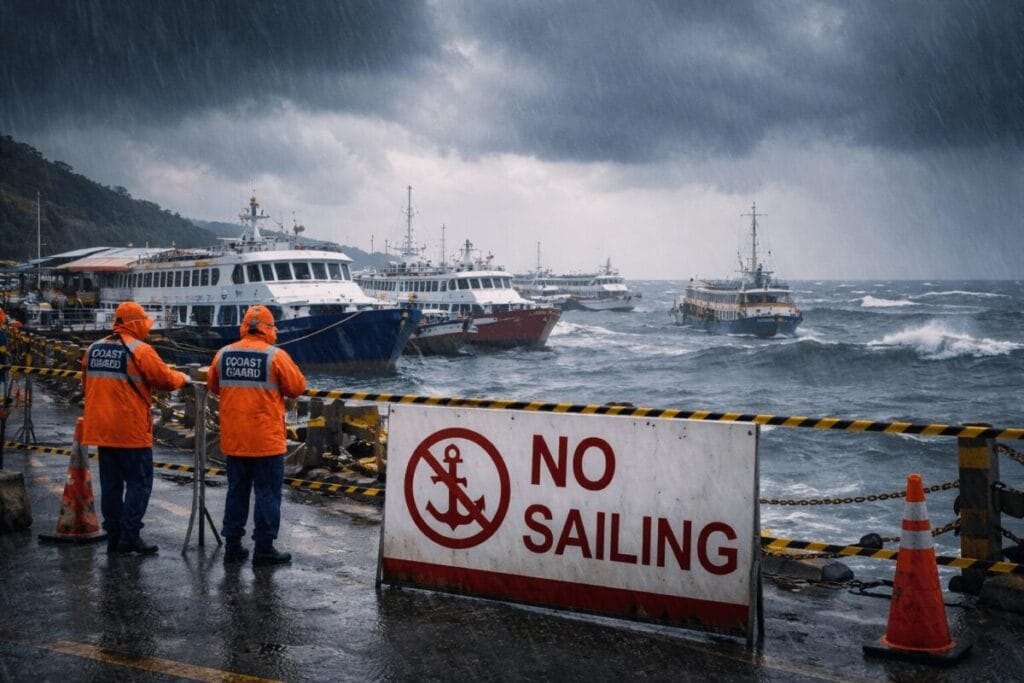
Authorities in the Philippines have suspended sea travel across parts of Eastern Visayas and Northeastern Mindanao. The move follows severe weather linked to a prevailing shear line. Officials aim to protect passengers, crew, and vessels from rough seas and intense rainfall.
The Philippine Coast Guard (PCG) station in Sultan Kudarat enforced the suspension early Saturday. The order covers all vessel types, including passenger ferries, cargo ships, and fishing boats. Routes connecting key ports in Eastern Visayas and Northeastern Mindanao remain closed until further notice.
Weather officials issued an early morning advisory that prompted the decision. Maritime authorities acted quickly to prevent potential accidents at sea.
Areas Covered by the Travel Ban
The suspension affects several provinces known for inter-island connectivity and tourism.
In Eastern Visayas, the affected provinces include:
- Eastern Samar
- Leyte
- Southern Leyte
In Northeastern Mindanao, restrictions apply to:
- Dinagat Islands
- Surigao del Norte
- Surigao del Sur
- Agusan del Norte
These areas rely heavily on ferry transport for daily commuting, tourism, and trade. The suspension disrupts travel plans, especially for weekend passengers and cargo operators.
Local government units continue to coordinate with port authorities. Officials will assess sea conditions before allowing vessels to resume operations.
What Is a Shear Line and Why It Matters
A shear line forms when cold northeasterly winds meet warm easterly winds. This weather pattern creates dense cloud formations and continuous rainfall. It often affects the eastern sections of the country, especially during the northeast monsoon season.
The current shear line has triggered moderate to heavy rainfall across several provinces. Forecasts indicate rainfall between 50 and 100 millimeters over the weekend. This level falls under a Yellow rainfall warning, which signals possible flooding in low-lying areas.
Higher warning levels indicate more serious risks. An Orange warning signals 100 to 200 millimeters of rain. A Red warning means rainfall may exceed 200 millimeters, raising the threat of widespread flooding and landslides.
Disaster risk reduction offices monitor these alerts closely. They activate emergency response protocols based on rainfall intensity and local vulnerability.
Flooding and Landslide Risks Increase
Persistent rain increases the risk of flooding in urban centers and coastal communities. Low-lying barangays and areas near rivers face higher exposure. Poor drainage systems may worsen the situation in densely populated towns.
Landslides also pose a serious threat in mountainous and sloping terrain. Saturated soil can collapse without warning. Communities in landslide-prone zones must remain alert.
Authorities urge residents to monitor local advisories. Evacuation centers remain on standby in high-risk municipalities. Emergency teams have prepared rescue equipment and relief supplies in case conditions worsen.
Impact on Tourism and Local Travel
Eastern Visayas and Northeastern Mindanao attract domestic travelers year-round. These regions offer pristine beaches, diving sites, and eco-tourism destinations. Ferry routes connect islands and serve as a lifeline for tourism businesses.
The temporary halt affects resort bookings, island-hopping tours, and cargo deliveries. However, safety remains the top priority. Maritime experts stress that navigating rough seas during a shear line can lead to accidents, especially for small vessels.
Tourists planning trips to affected provinces should check official advisories before departure. Airlines and land transport services continue to operate where weather permits. Travelers may consider adjusting itineraries or delaying non-essential trips.
Government Response and Public Advisory
The Philippine Coast Guard maintains strict safety standards during adverse weather. Port authorities conduct risk assessments before reopening routes. Officials will only lift the suspension once sea conditions improve.
Weather agencies continue to monitor the shear line. Updates are released several times daily. These advisories guide maritime operators, disaster teams, and local officials.
Authorities encourage the public to:
- Monitor official weather bulletins
- Avoid unnecessary sea travel
- Prepare emergency kits
- Charge mobile devices and secure power banks
- Stay in contact with local authorities
Preparedness reduces risk during sudden weather changes.
When Will Sea Travel Resume?
Sea travel will resume once the weather stabilizes. Officials will reassess wind speed, wave height, and rainfall intensity. The suspension may lift in phases, depending on regional conditions.
Maritime operators must comply with safety inspections before sailing. The government aims for zero casualties during weather disturbances.
The Philippines experiences seasonal weather systems throughout the year. Shear lines commonly affect eastern coastal regions during the cooler months. Travelers should include weather monitoring in their trip planning, especially for island destinations.
Travel Planning During Weather Alerts
Visitors to the Philippines should stay flexible during the rainy season. Travel insurance that covers weather disruptions can offer added protection. Booking refundable accommodations also helps manage sudden changes.
Tourism offices continue to support stranded passengers. Local governments often assist with temporary shelter and information services.
Despite the disruption, the country remains committed to safe and sustainable tourism. Authorities prioritize human safety over convenience. Once conditions improve, maritime routes will reopen, restoring access to the archipelago’s eastern corridors.
For now, travelers are advised to remain patient and vigilant as the shear line continues to influence weather patterns across Eastern Visayas and Northeastern Mindanao.
For more travel news like this, keep reading Global Travel Wire