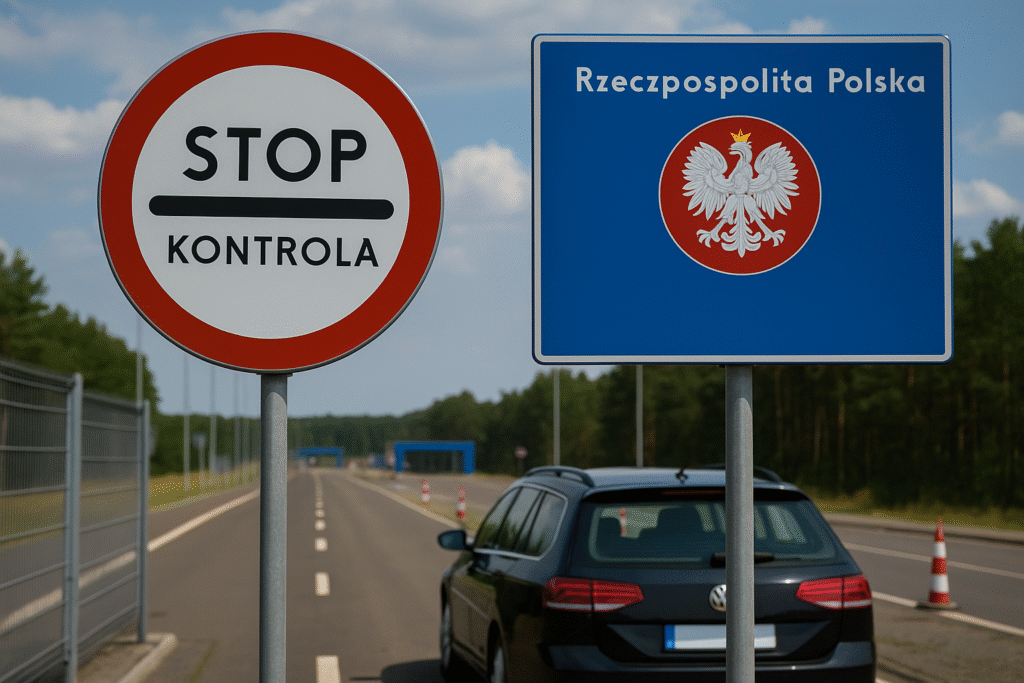
Poland has officially extended its temporary border control measures with Germany and Lithuania until April 4, 2026, citing heightened security risks and migration pressures. Initially introduced on July 7, 2025, the checks were set to expire on October 4, but the government announced a six-month prolongation. This move underscores Warsaw’s determination to strengthen national security while responding to the challenges of illegal crossings and migration flows affecting the European Union.
The decision impacts travelers moving between Poland and Germany as well as Poland and Lithuania, two major routes used by both commuters and tourists. Currently, border checks are enforced at 50 points along the Polish-German border and 13 along the Polish-Lithuanian border, significantly slowing down travel across these regions.
Why Poland Extended the Border Checks
The Polish government explained that the extension is part of a broader strategy to protect national security and maintain control over migration. Officials emphasized that rising illegal crossings, particularly from the east, continue to challenge the stability of the region. According to data released by Polish authorities, tens of thousands of unauthorized border attempts were recorded in 2025 alone, especially along the border with Belarus.
Interior Minister Mariusz Kierwinski, speaking at the Munich Migration Meeting, highlighted Poland’s refusal to accept EU-wide migrant relocation policies. He stressed that immigration control remains a sovereign matter, and Warsaw will not allow external regulations to compromise national interests. This strong stance reflects Poland’s broader policy approach to migration, which prioritizes border protection over EU redistribution mechanisms.
Impact on Travel and Tourism
For travelers, the extended checks mean longer waiting times at crossings, potential delays, and stricter document inspections. While the Schengen Area typically allows free movement, EU rules permit temporary reintroduction of border controls in exceptional circumstances. Poland’s move demonstrates how regional security issues can reshape travel within Europe, even in areas usually associated with open borders.
Tour operators and businesses reliant on cross-border trade are expected to feel the impact. Transport companies, in particular, have already reported delays due to added inspections. For tourists, this means planning ahead, carrying proper documentation, and preparing for extended wait times at busy checkpoints such as Frankfurt (Oder)–Słubice and Kuźnica–Grodno.
Poland’s Border With Belarus
Alongside the German and Lithuanian frontiers, Poland also faced disruptions on its eastern border with Belarus in September 2025. The temporary closure was a response to the Zapad-2025 joint military exercises conducted by Russia and Belarus, which Warsaw viewed as a potential security threat.
During the closure, critical freight and passenger routes were suspended. However, after the exercises concluded, Poland reopened key rail and road crossings, including Terespol–Brest, Kuźnica–Grodno, and Kukuryki–Kozlowicze. The swift reopening helped restore the flow of goods and passengers, easing logistical bottlenecks that had developed during the shutdown.
Broader European Context
Poland’s border decisions are part of a wider European migration debate. The EU has struggled to develop a unified approach to handling asylum seekers and irregular migration. While some member states support burden-sharing through relocation quotas, Poland remains firm in opposing such measures, arguing they undermine sovereignty.
With over 25,000 illegal crossings reported on its eastern borders in 2025, Poland has positioned itself as a frontline defender of the EU’s external frontier. Its role as a gatekeeper has drawn both criticism and support within the union. Some European leaders commend Poland for prioritizing security, while others argue that unilateral border controls threaten the Schengen principle of free movement.
Tourism Industry Response
The tourism sector in Poland and neighboring countries is adapting to the new reality. While major cities such as Warsaw, Kraków, Gdańsk, and Wrocław continue to attract millions of visitors annually, travelers now face the added step of border checks when arriving by road or rail from Germany and Lithuania.
Industry experts suggest that the effect on inbound tourism will be moderate, as air travel remains unaffected. However, regional tourism—particularly weekend trips and cultural exchanges across borders—could see a decline. Many small towns along the Polish-German border rely on cross-border visitors for local trade, and extended controls may discourage spontaneous travel.
Security Versus Open Borders
The tension between maintaining open borders for tourism and trade and ensuring national security remains at the heart of the debate. Poland’s latest extension signals that, for now, security takes precedence. The government has repeatedly argued that illegal migration and geopolitical instability in Eastern Europe necessitate stronger border management.
While the EU continues discussions on a common migration and asylum policy, Poland is pursuing its own path. Whether this approach will remain long-term or eventually shift toward compromise is still uncertain. For travelers, however, the reality is clear: border checks will remain in place until at least April 2026.
What Travelers Should Know
- Documentation: Carry a valid passport or national ID card when crossing into Poland from Germany or Lithuania.
- Travel Delays: Expect longer queues at border checkpoints, especially during weekends and holidays.
- Transport: Freight companies and long-distance bus operators may adjust schedules to account for inspection delays.
- Tourism Plans: While popular destinations remain accessible, travelers should plan itineraries with extra time for border procedures.
Conclusion
Poland’s decision to prolong border checks with Germany and Lithuania reflects the intersection of security, migration, and tourism in today’s Europe. By extending the controls until April 2026, Warsaw underscores its commitment to sovereignty and national safety, even at the expense of convenience for travelers.
As Europe continues to grapple with migration challenges and geopolitical instability, the balance between free movement and secure borders will remain a defining issue. For tourists and businesses alike, Poland’s policy marks a significant reminder that travel within Europe can still be shaped by shifting political and security realities.
For more travel news like this, keep reading Global Travel Wire