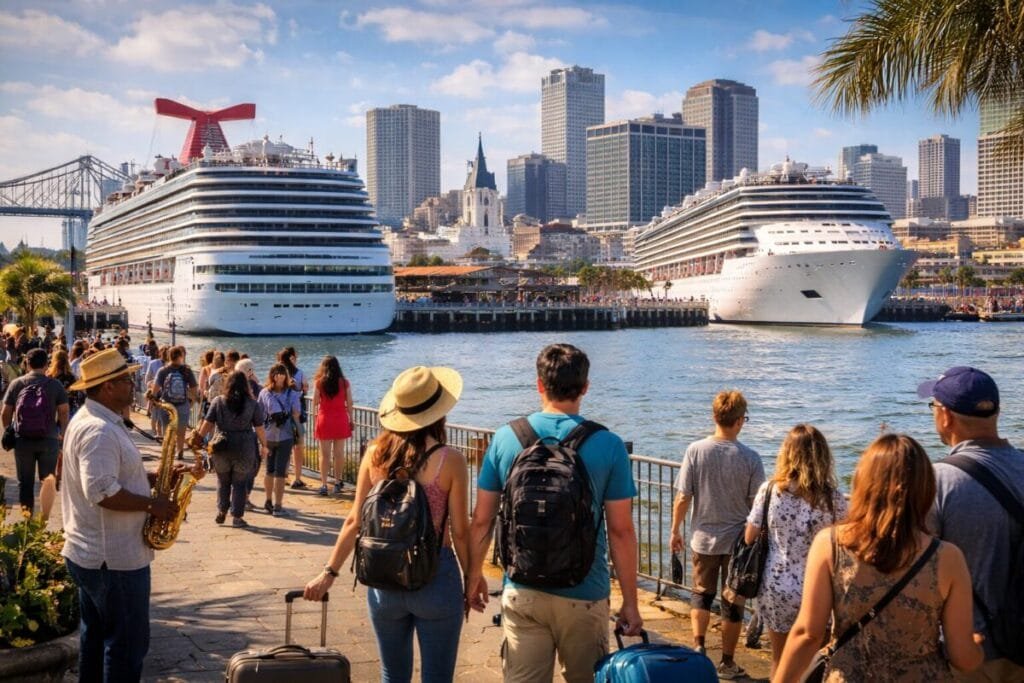
The Port of New Orleans closed 2025 with more than one million cruise passenger movements. The port recorded over 1,067,000 travelers during the year. This milestone marked the ninth time the port crossed the one million mark. New Orleans strengthened its position as a top cruise hub and expanded its reach across both river and ocean markets. Cruise brands increased vessel capacity and scheduled more departures, which boosted demand and supported the city’s tourism revival.
Cruise travel rebounded across the United States after pandemic disruptions. New Orleans led the resurgence with strong numbers and steady growth. Domestic and international travelers returned to the city to enjoy its culture, cuisine, and nightlife before boarding ships. Many travelers extended their stay to explore regional attractions before or after their cruises.
Record Setting Months and Consistent Growth
The Port of New Orleans continued a multi-year growth trend. The port served more than 1.2 million passengers during 2024. That performance set a new record and created strong momentum for the following year. March 2025 became the busiest month in port history with over 165,000 passengers. Increased cruise capacity played a key role in the surge, and demand exceeded expectations during peak travel windows.
The port stands out among U.S. facilities because it offers both river and ocean departures. This dual model attracts travelers who want immersive river journeys along the Mississippi as well as longer ocean itineraries across the Gulf and Caribbean. The river segment supports winter and spring travel, while ocean routes drive strong summer and fall demand. The mix smooths seasonal fluctuations and creates stability for the hospitality sector.
A Major Boost for the Local Economy
Cruise tourism at the Port of New Orleans generates large economic returns. The cruise segment delivers hundreds of millions in annual impact to the region. Hotels, restaurants, museums, music venues, transportation firms, tour operators, and retailers benefit from sustained visitor spending. Thousands of local workers rely on tourism to support their families.
The port draws travelers from across the United States. Roughly ninety percent of passengers originate from outside Louisiana. Most travelers spend at least one night in the city before or after sailing. Cruise passengers book more than 300,000 room nights each year. This supports the region’s hotel ecosystem and increases occupancy during high-demand periods. Visitors also spend heavily on dining and entertainment. They explore local neighborhoods, listen to jazz, and enjoy Creole and Cajun cuisine before boarding their ships.
Drive-Market Strength Creates Competitive Advantage
New Orleans thrives as a drive-to cruise port. Travelers from Texas, Mississippi, Alabama, and Florida can reach the city within a few hours. This reduces the need for air travel and creates a frictionless start to cruising. Families also choose New Orleans for multi-day road trips that combine sightseeing with cruising. The city’s walkable districts and waterfront access add to its convenience.
New Orleans enhances the cruise experience by offering unique pre-cruise options. Travelers can tour the French Quarter, shop along Magazine Street, and visit museums and historic homes. This urban immersion differentiates the port from others that lack major tourism districts near their terminals. Cruise lines highlight the city as a destination that pairs culture with ocean adventure.
River Cruises Gain Momentum Along the Mississippi
River cruising continues to grow at Port NOLA. The Mississippi River became a major draw for travelers seeking slow-paced journeys with cultural and culinary themes. River ships offer sightseeing, lectures, and excursions to historic ports along the river. Many travelers view river cruises as an alternative to European river itineraries.
The combination of river and ocean cruises makes New Orleans unique within the U.S. market. River cruises run year-round, which supports employment and enhances tourism continuity. Travelers can book river voyages during cooler seasons when beach destinations slow down. This creates steady visitor flow and strengthens hotel and dining revenue.
Infrastructure and Passenger Experience Improvements
The port invested heavily in passenger experience. Terminal upgrades improved check-in times and reduced boarding delays. Ground transportation options expanded to help travelers move easily between hotels and terminals. Baggage handling improved through new logistics systems. These upgrades support ship turnaround efficiency and enhance traveler satisfaction.
Cruise lines announced plans to introduce larger and more modern ships to New Orleans. Larger vessels increase passenger capacity and broaden itinerary options. Expanded offerings attract a more diverse traveler base, including families, retirees, and international tourists.
Looking Ahead to Continued Expansion
The outlook for 2026 and beyond remains strong. Cruise lines confirmed more deployments and longer itineraries from New Orleans. The port expects further growth in drive-market demand and international arrivals. With continued investment, the Port of New Orleans stands ready to handle increased volume and more varied ship classes.
New Orleans benefits from a rare combination of cultural wealth, entertainment value, and strategic positioning. Its dual cruise model, strong economic impact, and national draw make it a leader in the U.S. cruise industry. The city offers travelers a two-in-one trip that pairs world-class urban tourism with ocean or river adventure.
A Top Destination for River and Ocean Cruising
The Port of New Orleans enters the future with confidence. It demonstrates how a city rich in culture can leverage cruise tourism for long-term growth. Travelers receive convenience, entertainment, and authentic local experiences. Local businesses gain revenue and stability. The region gains jobs and sustained appeal. New Orleans continues to prove that few destinations can match its unique blend of culture, cuisine, river charm, and ocean cruising.
For more travel news like this, keep reading Global Travel Wire