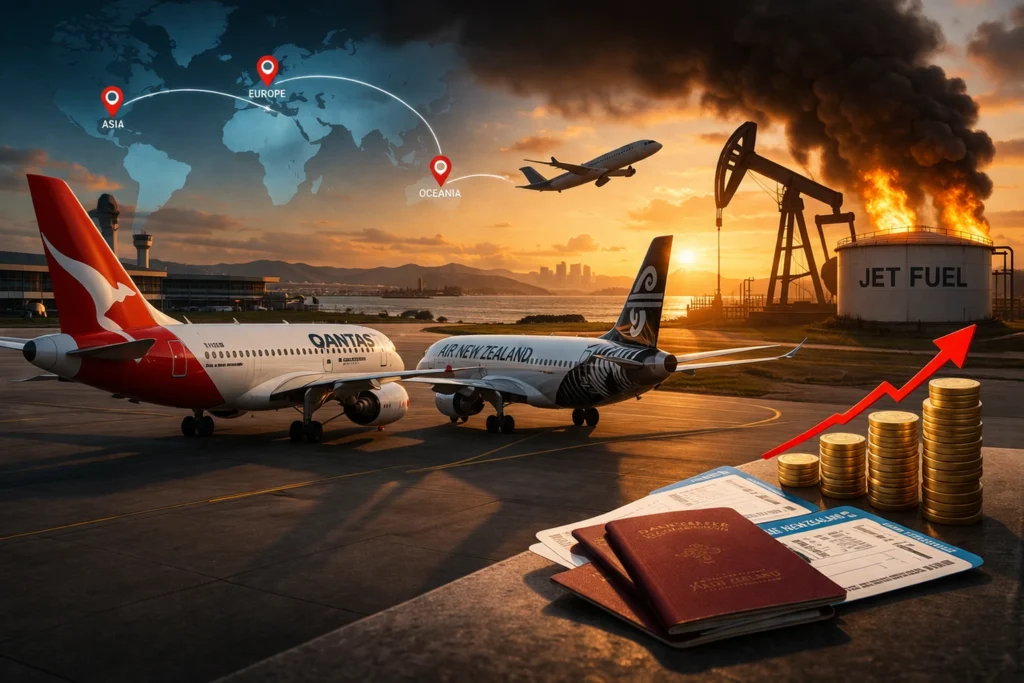
Qantas and Air New Zealand have increased ticket prices across key routes. Rising jet fuel costs have triggered this move. The surge stems from escalating tensions in the Middle East.
Fuel prices have jumped sharply in recent weeks. Airlines now face higher operating costs across their networks. They must adjust fares to maintain financial stability.
Fuel Prices Drive Industry Pressure
Jet fuel remains one of the largest airline expenses. It can account for up to 35 percent of total costs. Recent price spikes have created immediate challenges for carriers.
Prices have surged from around 85 dollars per barrel to nearly 200 dollars. This rapid increase leaves little room for absorption. Airlines must act quickly to manage expenses.
As a result, fare increases have become unavoidable. Airlines aim to balance cost recovery with customer demand.
Ticket Prices Rise Across Routes
Airlines have introduced fare increases across different routes. However, the changes vary by distance and demand. Short-haul routes see smaller adjustments.
Long-haul flights show more noticeable increases. These routes consume more fuel and face higher operational costs. Flights connecting Asia Pacific with Europe face the greatest impact.
Passengers on these routes now pay higher fares. Airlines continue to monitor demand closely.
Travel Demand Remains Strong
Despite higher ticket prices, travel demand remains steady. Airlines continue to report strong bookings on major routes. Load factors remain high across international flights.
This resilience gives airlines some flexibility. They can pass on costs without losing many customers. Travelers still prioritize both leisure and essential trips.
However, this trend may not last forever. Continued price increases could influence future demand.
Airlines Adjust Route Strategies
Airlines have started reviewing their route networks. Rising costs force them to focus on profitability. They prioritize routes with strong demand and higher revenue.
Less efficient routes face closer scrutiny. Airlines may reduce capacity or adjust schedules. These decisions help manage rising operational expenses.
Long-haul routes remain a key focus area. They generate significant revenue despite higher costs.
Efficiency Becomes A Top Priority
Airlines now emphasize operational efficiency more than ever. Fuel-efficient aircraft play a crucial role in this strategy. Modern planes reduce fuel consumption on long journeys.
Fleet upgrades have already gained importance in recent years. The current fuel environment accelerates this trend. Airlines seek long-term solutions to control costs.
Efficiency improvements also help maintain competitive pricing.
Financial Uncertainty Shapes Planning
Uncertainty in fuel prices creates challenges for airlines. They struggle to predict future costs accurately. This situation complicates financial planning.
Airlines now adopt flexible strategies. They prepare for multiple scenarios in the coming months. This approach helps them adapt quickly to market changes.
Traditional methods like fuel hedging offer limited protection. Rapid price spikes reduce their effectiveness.
Higher Fares May Influence Travelers
Rising ticket prices may affect traveler behavior over time. Some passengers may delay trips or choose closer destinations. Budget-conscious travelers may seek cheaper alternatives.
Shorter trips may become more popular. Travelers may adjust plans to manage costs. This shift could reshape demand patterns across regions.
However, strong demand currently supports airline pricing strategies.
Asia Pacific Aviation Shows Resilience
The Asia Pacific aviation market continues to recover strongly. International travel demand has rebounded steadily. Improved connectivity supports this growth.
Passenger confidence has also increased in recent months. This trend helps airlines manage cost pressures.
Despite challenges, the region remains a key global travel hub. Airlines continue to adapt to changing conditions.
Future Outlook Depends On Fuel Trends
Fuel prices will play a crucial role in shaping the future. Stabilization could ease pressure on airlines. It may also limit further fare increases.
However, prolonged high prices could create lasting challenges. Airlines may need to maintain higher fares. Travelers may adjust their behavior accordingly.
The industry must remain flexible in this uncertain environment.
Airlines Navigate A Changing Landscape
Qantas and Air New Zealand now operate in a complex market. Rising fuel costs and global tensions create ongoing challenges. Airlines must balance pricing, demand, and efficiency.
Strategic adjustments will define success in the coming months. The ability to adapt quickly will remain essential.
For now, the Asia Pacific aviation sector continues to evolve. Airlines move carefully as they manage rising costs and steady demand.
For more travel news like this, keep reading Global Travel Wire