A Cruise Turned Rescue Mission
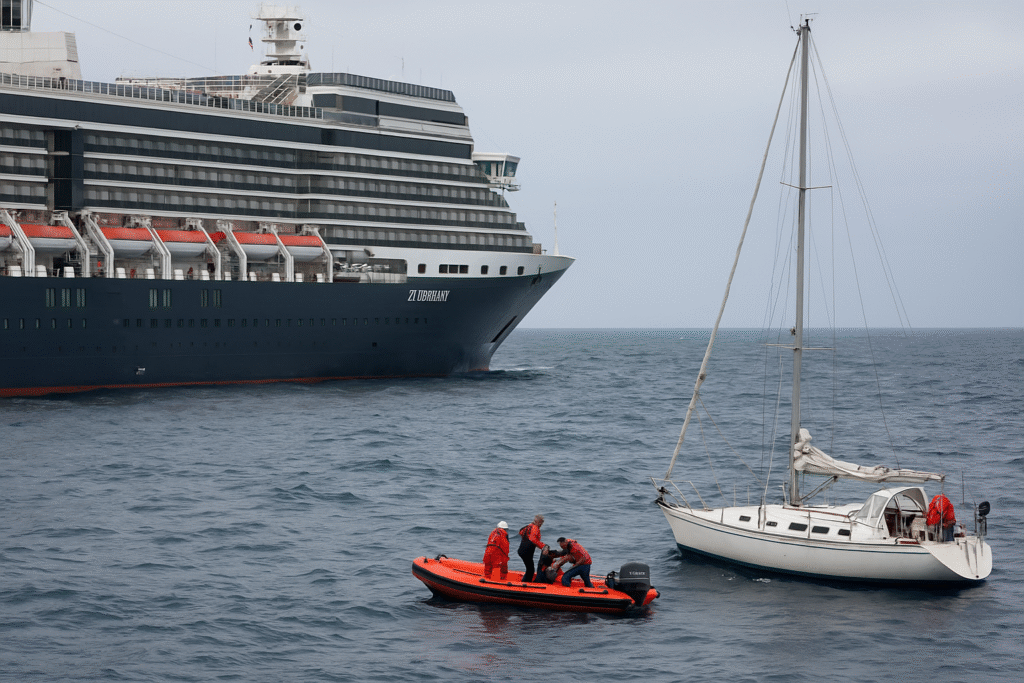
A recent incident off the coast of Maine has highlighted the unexpected yet critical role cruise ships play in maritime safety. Holland America Line’s MS Zuiderdam, en route from Boston to Montreal, was called upon to assist a distressed sailing vessel caught in dangerous Atlantic conditions. Responding swiftly to a United States Coast Guard distress signal, the cruise ship diverted its course and successfully rescued two stranded sailors, reaffirming the enduring maritime tradition of aiding those in peril at sea.
The incident underscores not just the professionalism of cruise line crews but also the long-standing collaboration between passenger vessels and maritime authorities.
A Timely Response to Danger
The distress signal was received as the Zuiderdam sailed northward along the Maine coast. Within moments, Captain Guy and his crew coordinated with the U.S. Coast Guard, adjusting course to intercept the troubled sailing vessel. Upon arrival, the sailors were found clinging to their craft, battered by waves and struggling against the fierce Atlantic winds.
The rescue was executed with precision. The crew deployed lifeboats, secured the distressed passengers, and transferred them safely onboard the Zuiderdam. Thanks to the joint efforts of the cruise staff and the Coast Guard, the rescue was completed without injury or disruption to other passengers.
This successful operation reflects the readiness of Holland America Line and the Coast Guard, both committed to ensuring safety at sea.
The Growing Role of Cruise Ships in Maritime Safety
While cruise vacations are marketed for leisure and luxury, vessels like the Zuiderdam are also equipped with advanced safety and communication systems that allow them to respond in emergencies. Holland America Line, along with other major operators, has invested in training crew members for rapid-response scenarios—including rescues, medical emergencies, and coordination with international maritime authorities.
Such preparedness is not new. Maritime law has long upheld the principle that all vessels, commercial or private, must assist others in distress. In recent years, however, cruise ships—given their size, technology, and medical facilities—have increasingly become crucial assets in rescue operations.
Not an Isolated Incident
The Zuiderdam’s actions are part of a broader pattern of cruise ships stepping up during maritime crises. In May 2025, Carnival Splendor rescued four people and three dogs from a stranded vessel in the Pacific Ocean. Earlier that same month, Carnival Paradise came to the aid of five people adrift off the Cuban coast.
Such rescues demonstrate that cruise lines are not only committed to passenger experience but also play a wider humanitarian role in global shipping lanes. Maritime authorities rely on these vessels as supplementary rescue platforms, especially in vast and less-patrolled stretches of ocean.
Passenger Confidence and Cruise Line Reputation
For travelers, the Zuiderdam’s rescue highlights an often-overlooked aspect of cruise vacations: safety. With sophisticated equipment, trained staff, and cooperative ties with the U.S. Coast Guard, passengers can feel reassured that their wellbeing is a top priority.
Cruise operators regularly conduct safety drills, emergency exercises, and medical readiness programs. These initiatives, combined with real-world rescues such as this, bolster confidence among passengers who embark on journeys across the unpredictable seas of the North Atlantic and beyond.
Economic and Humanitarian Impacts
Beyond the immediate rescue, incidents like this contribute positively to the cruise industry’s reputation. They emphasize that cruise lines are not solely profit-driven enterprises but also responsible actors in global maritime safety. Holland America Line, a company with Dutch roots and a longstanding presence in North America, has reinforced its reputation for professionalism and care.
The economic benefits also tie into tourism. Stories of heroism and safety often encourage travelers to book cruises with confidence, knowing they are in capable hands.
Maritime Safety as a Shared Responsibility
This rescue serves as a reminder of the unpredictable nature of the sea. From storms to mechanical failures, countless scenarios can endanger smaller vessels. In such cases, the combined efforts of commercial ships, maritime authorities, and international cooperation ensure that lives are saved.
For Maine and other coastal states in the U.S., where tourism and maritime trade converge, these rescues symbolize both community and global responsibility. They highlight the critical role of cruise ships, not just as floating hotels, but as vital lifelines when emergencies strike.
Conclusion
The successful rescue carried out by Holland America Line’s Zuiderdam off the coast of Maine is more than a tale of maritime heroism. It illustrates the essential role of cruise ships in ensuring safety at sea, the effectiveness of collaboration with the U.S. Coast Guard, and the industry’s commitment to humanitarian responsibilities.
For travelers boarding cruises from Boston to Montreal, or elsewhere across the North Atlantic, the Zuiderdam’s actions provide assurance: while cruises promise relaxation and adventure, they also stand ready to protect and save lives when the sea turns hostile.
For more travel news like this, keep reading Global Travel Wire