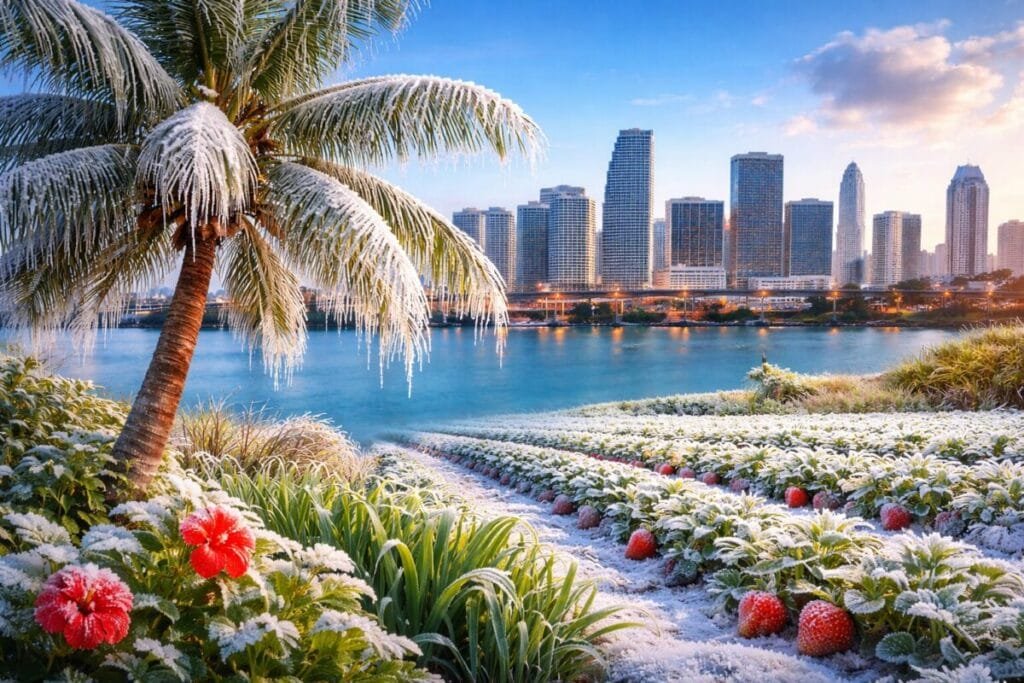
South Florida is experiencing an uncommon cold front that has shocked residents and visitors. Temperatures have dropped into the 30s across several counties. Wind chills have pushed the feel into the low 20s during overnight hours.
This weather pattern contrasts sharply with the region’s typical tropical climate. Cold conditions may persist into early February. Authorities and businesses have already activated emergency plans. The effects stretch across tourism, agriculture, and public safety sectors.
Cold Temperatures Challenge Regional Climate Norms
South Florida rarely sees prolonged cold conditions. Overnight lows now approach historic records in major cities. Miami and Fort Lauderdale are experiencing temperatures unseen in decades.
Freeze warnings and frost advisories now cover large parts of the region. Residents and visitors face conditions more common in northern states. These changes demand quick adaptation across daily life and business operations.
Tourism Industry Adjusts to Sudden Weather Shift
South Florida remains a winter escape for travelers from colder regions. Many visitors still arrive despite the cold front. However, outdoor-focused tourism has slowed significantly.
Hotels have shifted their offerings toward indoor experiences. Spas, fitness centers, and enclosed lounges now see higher demand. Heated dining spaces have replaced outdoor seating in many properties.
Beachfront activity has dropped sharply. Pool usage has declined across Miami Beach and coastal resorts. Travelers now seek museums, shopping centers, and cultural attractions.
Theme Parks and Outdoor Attractions Modify Operations
Several water parks have paused operations due to low temperatures. Cold weather creates unsafe conditions for water-based attractions. Theme parks with outdoor rides have reduced schedules.
Indoor attractions continue to draw visitors. Family-friendly venues emphasize shows, dining, and enclosed experiences. Tourism operators expect a short-term slowdown rather than long-term losses.
Hotels See Mixed Demand Patterns
Some hotels report stable occupancy from travelers avoiding colder climates elsewhere. Others report cancellations linked to weather expectations. Guests now favor central locations with easy access to indoor activities.
Hospitality managers expect demand to rebound quickly once temperatures rise. South Florida’s winter appeal remains strong despite temporary disruptions.
Agriculture Faces Significant Freeze Risk
Florida’s agricultural sector faces serious threats from freezing temperatures. Crops such as citrus, tomatoes, beans, and strawberries remain highly vulnerable. Even brief freezes can damage harvest cycles.
Farmers across southern counties have activated frost protection plans. Irrigation systems now run overnight to insulate crops. Covers and ground moisture help retain heat near plants.
A prolonged freeze could delay harvests by weeks. Such delays would affect supply chains and market pricing. Agriculture remains a key contributor to Florida’s economy.
Farmers Race Against Time
Growers have limited windows to act during sudden cold events. Many work overnight to protect fields. Damage prevention depends on timing, moisture, and wind conditions.
Previous freezes caused widespread losses across Florida agriculture. Farmers hope current mitigation efforts will limit damage. State agencies continue advising growers on protective measures.
Public Safety Concerns Rise for Vulnerable Communities
Cold weather poses risks for populations unaccustomed to low temperatures. Elderly residents and unhoused individuals face the greatest danger.
Local governments have opened emergency cold weather shelters. Outreach teams now work extended hours. Volunteers assist with transportation, food, and warm supplies.
Officials urge residents to check on neighbors and relatives. Even short exposure can cause serious health issues during cold nights.
Energy and Home Safety Remain Priorities
Energy providers have advised residents to use heating equipment carefully. Improper heater use increases fire risks. Authorities recommend moderate thermostat settings and supervised heater operation.
Homeowners are also protecting plumbing systems. Frozen pipes can cause costly damage. Running water and pool pumps helps prevent freezing.
Drivers should also check vehicles. Cold air reduces tire pressure and battery efficiency. Preparation improves road safety during unusual conditions.
Wildlife and Zoos Take Protective Action
Cold weather also affects South Florida’s wildlife. Zoos and sanctuaries have moved sensitive animals into heated enclosures. Reptiles, tropical mammals, and birds require temperature control.
Facilities have added bedding, heat lamps, and indoor shelter access. Some animals remain off exhibit during the coldest days. Zoos continue operating with adjusted programming.
Wildlife agencies also monitor native species. Sudden cold can disrupt feeding and migration patterns. Environmental teams remain on alert across protected areas.
Economic Ripple Effects Across the Region
Tourism and agriculture drive large portions of South Florida’s economy. Weather disruptions affect employment, supply chains, and service demand.
Short-term losses may occur in outdoor recreation and farming. Indoor attractions, retail, and dining may offset some impact. The region’s economic resilience depends on rapid recovery.
Businesses now plan for increased volatility in weather patterns. Climate variability continues influencing tourism and agriculture planning.
What Residents and Visitors Should Expect
Cold conditions will likely ease within days. Temperatures should gradually return to seasonal norms. Authorities will lift freeze warnings as conditions improve.
Travelers should monitor forecasts and adjust plans accordingly. Indoor activities offer safe alternatives during cold periods. Proper clothing and awareness remain essential.
Preparing for Future Weather Extremes
This cold front highlights the need for preparedness in warm climates. Infrastructure, agriculture, and tourism must adapt to unpredictable weather.
Public awareness and coordinated response reduce risks. South Florida’s experience serves as a reminder of climate variability’s growing influence.
With vigilance and preparation, the region can navigate this rare cold event safely.
For more travel news like this, keep reading Global Travel Wire