
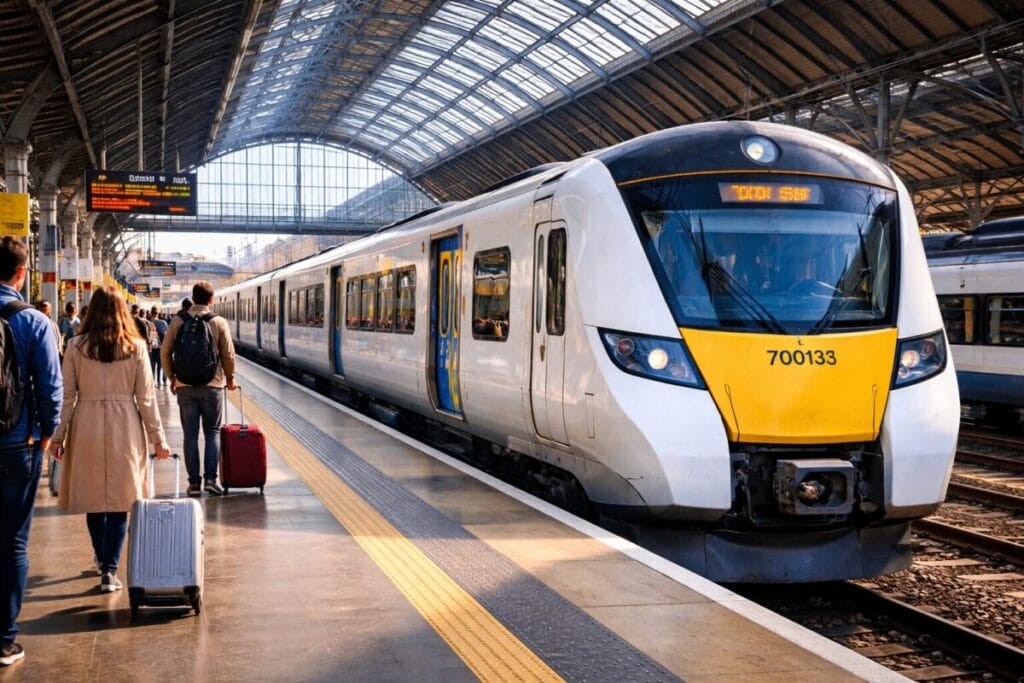
The Railway Industry Association assesses the UK Government’s performance on rail reform eighteen months after the formation of the current administration. The review highlights progress on legislation, infrastructure, and strategy, while urging faster action to modernize the network. A full annual assessment arrives in July 2026 at the two-year milestone.
The UK rail sector stands at a transitional moment. Passenger numbers rebound, sustainability targets tighten, and infrastructure demands rise across the country. Rail offers a vital mobility option for commuters, students, tourists, and business travelers. Improvements in reliability and capacity directly influence travel behavior and tourism mobility across regions.
Progress on Rail Modernization and Major Projects
RIA welcomes the introduction of the Railways Bill. This legislation sets the foundation for Great British Railways, an organization designed to integrate the national network and streamline operations. The transport sector views GBR as a tool to improve efficiency and align infrastructure planning.
The report also notes Government consistency on major rail infrastructure projects. Work continues on HS2 segments, the Transpennine Route Upgrade, and East West Rail. These projects aim to expand capacity, modernize outdated track, and open new corridors. Improved connectivity between northern cities also supports regional tourism and business development.
However, RIA calls for faster momentum. Passenger expectations evolve quickly, and rail demand rises as climate goals increase pressure on transport systems. The sector must respond with reliable timetables, low-carbon fleets, modern booking systems, and predictable investment.
Five Priority Areas for Immediate Action
RIA outlined five priority categories after the 2024 General Election. The association evaluates progress in each category and outlines next steps. These priorities directly affect passenger experience, supplier confidence, and long-term strategy.
1. Long-Term Rail Strategy
The Railways Bill includes a legal requirement for the Department for Transport to draft a long-term strategy. RIA welcomes this development. However, the lack of publication dates creates uncertainty for operators and suppliers. A long-term strategy guides decisions on fleet renewal, decarbonization, electrification, and network upgrades. Passengers also benefit from clear direction as it informs future ticketing, service quality, and railway planning.
2. Delivering Reform Through Great British Railways
Progress continues through Parliament as preparations for GBR move forward. RIA expects a consultation on the GBR license in early 2026. This consultation outlines how rail contracts will operate, how services will be organized, and how operators will collaborate to deliver better outcomes for passengers. The consultation shapes the next decade of British rail mobility.
3. Accelerating Rolling Stock and Green Upgrades
RIA praises Government plans for a rolling stock and infrastructure strategy. This strategy supports fleet modernization and sustainable upgrades such as electrification, battery trains, and hydrogen units. These technologies cut emissions, reduce noise, and support environmental targets. RIA calls for publication of the strategy before Parliament’s summer recess in 2026 to maintain market confidence.
4. Supporting the Rail Supply Chain
Suppliers raise concerns about a slowdown in rail work through 2026. RIA surveyed over one hundred senior leaders. Eighty-five percent expect a pause in rail projects. Sixty percent expect market contraction and recruitment freezes. This contraction threatens jobs and skills that support rail modernization. RIA calls for clear forward work pipelines to prevent a productivity slump. Stable pipelines also benefit passengers by delivering upgrades on time.
5. Unlocking Private Investment
RIA encourages the Government to expand private funding models. Rail infrastructure requires long timelines and large capital investments. Public-Private Partnerships offer a potential route for financing station upgrades, technology enhancements, and regional rail hubs. The ten-year Infrastructure Strategy signals interest in PPPs for projects such as Euston. RIA supports pilot initiatives such as Station Investment Zones to attract private partners.
Toward a More Sustainable UK Rail Network
Decarbonization forms a central pillar of the future rail network. The UK has committed to ambitious climate goals, and transport emissions remain a significant national challenge. Rail represents one of the most efficient modes of low-carbon mobility. Electrification, battery trains, and hydrogen trains support this advantage while reducing reliance on diesel.
Tourism also stands to benefit. Low-carbon mobility allows travelers to explore regions without expanding environmental footprints. Cities with strong rail links experience higher tourism inflows due to lower travel barriers, reduced journey times, and integrated booking systems.
Industry Leaders Call for Faster Implementation
RIA Chief Executive Darren Caplan applauds progress but urges swifter action. Caplan notes that key improvements must arrive before GBR becomes fully operational in 2027. Suppliers need clarity to invest, hire, and plan workloads. Passengers need reliable infrastructure and modern service delivery to maintain confidence in rail.
Industry analysts share similar concerns. Delays in strategy documents create uncertainty that slows technological adoption, stifles innovation, and risks passenger satisfaction. Faster publication of the rolling stock strategy and the long-term rail strategy would remove barriers to investment.
Strengthening the Network for Travelers and the Economy
The UK rail network plays a crucial role in national connectivity. Commuters rely on reliable services for employment access. Students rely on rail links for education. Tourists travel between airports, heritage cities, and coastal regions. Businesses depend on punctual travel between city centers and economic hubs. Improvements to the rail system therefore benefit the wider economy.
RIA’s assessment highlights progress and gaps in equal measure. The Government now faces the challenge of maintaining momentum while balancing environmental goals, passenger needs, and supplier stability. With coordinated action, the UK can shape a modern rail network that meets the demands of future generations.
For more travel news like this, keep reading Global Travel Wire