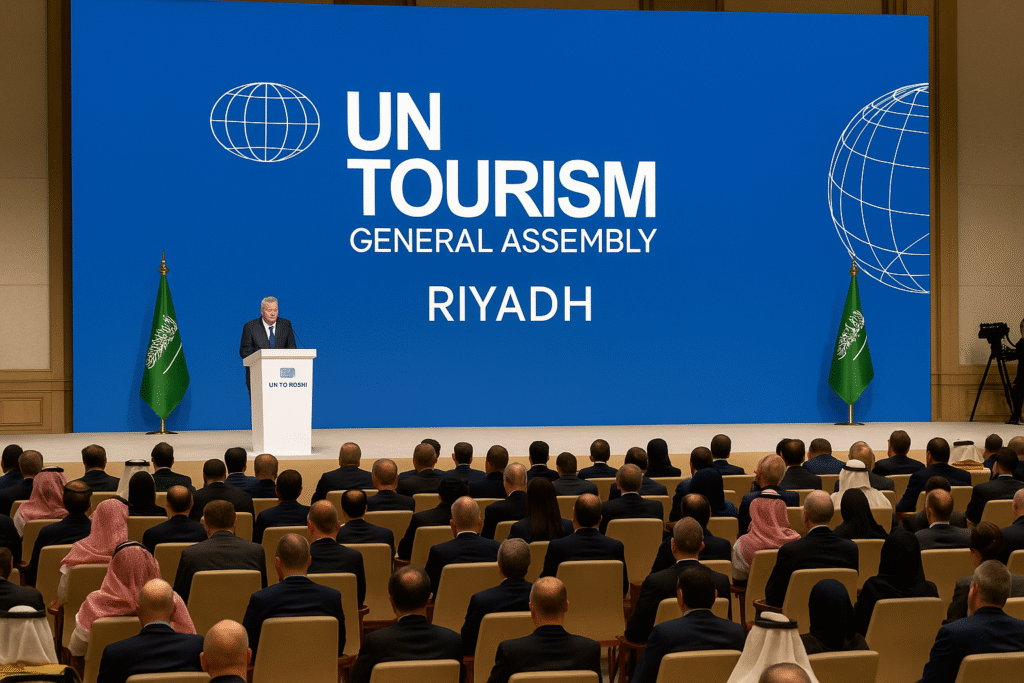
Riyadh, Saudi Arabia, recently welcomed the 26th session of the UN Tourism General Assembly, marking the largest meeting in the agency’s five-decade history. Over 150 countries, numerous ministers and global travel leaders came together to reshape the future of tourism. The choice of Riyadh underscores Saudi Arabia’s ambition to become a central node in global travel innovation.
AI Takes Centre Stage
Under the theme “AI-Powered Tourism: Redefining the Future”, the event placed artificial intelligence at the heart of the discussion. Delegates explored how AI can elevate the visitor experience, streamline operations, and open doors to inclusive growth. Experts highlighted several key areas:
- Transforming tourism services through predictive analytics and automated support.
- Ensuring underserved regions and communities benefit from tech advances.
- Encouraging local entrepreneurship by applying AI tools in small businesses.
- Strengthening global partnerships to share digital tourism strategies and best practices.
The Riyadh Declaration: A New Roadmap
At the close of the Assembly, the “Riyadh Declaration on the Future of Tourism” was adopted. This pioneering roadmap sets a 50-year plan for tourism powered by digital innovation, deep collaboration and social inclusivity. Among its core commitments:
- Increased investment in digital and physical infrastructure to support AI tools.
- Initiatives to bridge the talent gap with education and training for a tech-first tourism workforce.
- Prioritising tourism models that uplift local communities and respect culture and nature.
Saudi Arabia’s Rising Global Role
By hosting this landmark event, Saudi Arabia further cements its role as a global leader in tourism transformation. The country is now home to the regional office of UN Tourism for the Middle East, underscoring its central place in international travel policy. The appointment of a new Secretary-General— the first woman and first Gulf national in the role— signals a fresh era of inclusive leadership within the organisation.
Broader Vision for Travel and Sustainability
The Assembly also set themes for upcoming global celebrations of travel: 2026 will focus on “Digital Agenda and Artificial Intelligence”, and 2027 on “Transforming Tourism through Education”. Through these themes, member states commit to a decade of digital and human-capital investment to deliver tourism that is sustainable, accessible and growth-oriented.
Saudi Tourism Strategy: From Luxury to Inclusivity
Saudi Arabia is recalibrating its tourism strategy. While high-end resorts on the Red Sea remain a signature, the ministry emphasises a shift toward more accessible mid-market offerings. This supports the broader goal of welcoming 150 million visitors annually by 2030 with at least one-third coming from abroad. Pilgrimage tourism remains central, with plans to reach 30 million visitors to the holy cities by decade’s end.
Technology Meets Hospitality in Riyadh
Hosting the Assembly also placed Riyadh in the spotlight as a smart-city and tourism-innovation hub. Delegates used AI-powered event apps, personalised agendas and digital concierge services throughout the forum. These experiences reflect how Riyadh plans to embed technology across its hospitality and visitor-experience sectors.
Why This Matters for Global Travel
- Digital transformation: Tourism is no longer just about destinations; tech and data will reshape planning, operations and visitor interactions.
- Inclusive growth: By emphasising underserved regions, women, and local businesses, the tourism sector can become a driver of social equity.
- Sustainability: With a 50-year vision, the sector aims to protect cultural and natural assets while still growing.
- Global cooperation: The Assembly reinforced that tourism’s future requires shared standards, partnerships and innovation across borders.
What to Watch Going Forward
- How governments and travel companies adopt AI in real-world visitor services and operations.
- The development of talent pipelines and education programmes tailored to digital tourism jobs.
- Expansion of mid-market hotel and travel options in emerging destinations.
- Implementation of the Riyadh Declaration’s initiatives and measurable outcomes on inclusion, sustainability and growth.
- Saudi Arabia’s evolving role as a global tourism hub, not just as a travel destination but as a policy and technology innovator.
Conclusion
The 26th UN Tourism General Assembly in Riyadh was more than a conference—it was a declaration of intent. It launched a new chapter in travel where artificial intelligence, inclusivity and sustainability take centre stage. With its bold roadmap and global collaboration, the tourism world is poised for transformation, and Riyadh is confidently leading the way.
For more travel news like this, keep reading Global Travel Wire