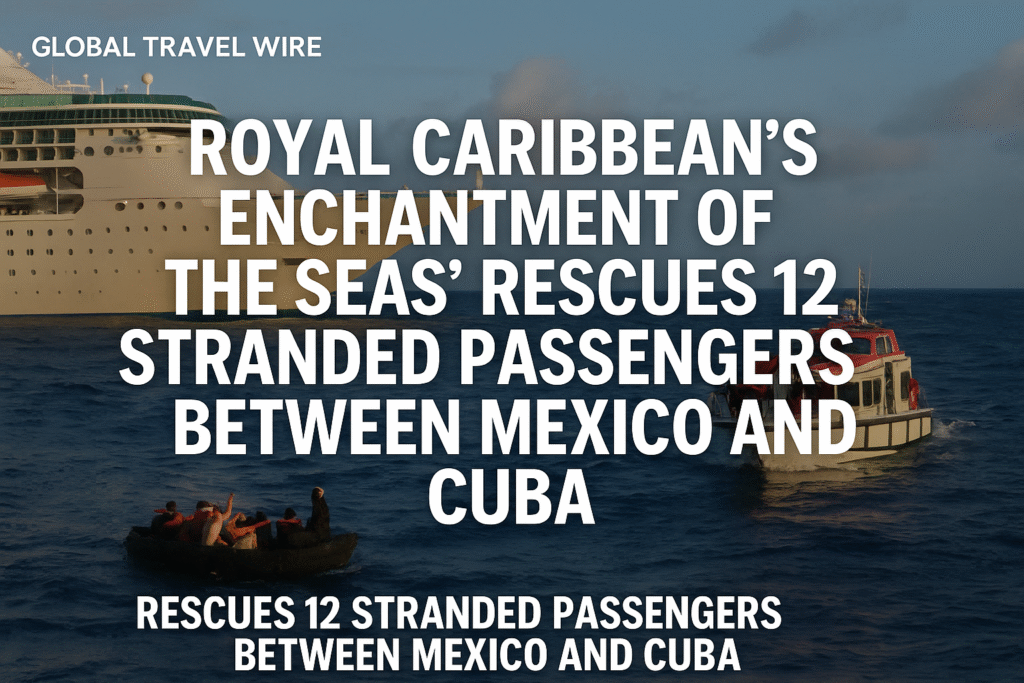
What began as a leisure voyage from Tampa, Florida to Costa Maya, Mexico, quickly transformed into a dramatic humanitarian mission on the Caribbean Sea. Royal Caribbean’s Enchantment of the Seas, one of the fleet’s enduring vessels, made headlines when it successfully rescued 12 individuals stranded on a makeshift raft between Mexico and Cuba. The operation unfolded after the ship was diverted from its original route due to severe storms near the Bahamas, ultimately putting the crew in the right place at the right time to carry out a life-saving mission.
The Unexpected Discovery at Sea
Late into the voyage, as the ship sailed calmer waters, the crew detected what initially appeared to be debris floating in the distance. On closer inspection, binoculars revealed a fragile raft occupied by several people in distress. Battling strong currents and fatigue, the group appeared on the verge of collapse.
In line with international maritime law, which requires vessels to assist those in danger at sea, the captain immediately launched a rescue protocol. Passengers and crew looked on as emergency teams prepared lifeboats and deployed searchlights to guide their way across the waves.
A Precision Rescue Operation
Passengers onboard captured tense footage of the scene. Under the glow of searchlights and the sound of churning waves, the smaller rescue craft carefully maneuvered toward the raft. The crew worked with precision to avoid capsizing the unstable vessel while ensuring everyone could be transferred safely.
One by one, the stranded individuals were brought aboard the rescue boat and transported to the safety of the Enchantment of the Seas. On arrival, they were met by medical personnel and provided with fresh water, food, and blankets. Several showed signs of exhaustion and dehydration but responded quickly to initial treatment.
A Pattern of Vigilance in the Royal Caribbean Fleet
This rescue was not the first time Royal Caribbean cruises have been called upon to save lives. Only months earlier, the Brilliance of the Seas had rescued 11 people adrift in the Gulf of Mexico. That incident, like the most recent one, highlighted the cruise line’s preparedness, adherence to safety protocols, and humanitarian response in emergencies.
Royal Caribbean’s consistent record of assistance demonstrates not only compliance with maritime law but also a strong corporate culture of compassion and responsibility. Maritime experts note that the company’s crew training emphasizes readiness for unpredictable events, from weather challenges to unexpected encounters at sea.
The Enchantment of the Seas: More Than a Leisure Vessel
Launched in 1997, the Enchantment of the Seas is renowned for its balance of classic cruising charm and modern amenities. Stretching nearly 1,000 feet with 12 passenger decks, the ship accommodates more than 2,200 guests. Its typical voyages focus on Caribbean leisure — sun-drenched beaches, onboard entertainment, and fine dining.
Yet this recent event revealed another side of the ship: its role as a guardian on the high seas. Beyond luxury and tourism, modern cruise ships like the Enchantment embody a dual identity, blending hospitality with humanitarian responsibility.
Between Mexico and Cuba: A Region of High Risk
The stretch of sea between Mexico and Cuba has long been recognized as treacherous for small or improvised vessels. Migratory movements, unpredictable currents, and sudden storms create conditions that can easily turn deadly. In recent years, rescues in these waters have become more common, underscoring the importance of vigilant maritime traffic.
For the 12 rescued individuals, the timely arrival of the Enchantment of the Seas meant the difference between life and death. Their plight reflects broader challenges of maritime migration, where fragile rafts and improvised boats frequently fail against the sheer power of the Caribbean.
A Broader Message for Global Cruising
For the travel and tourism industry, the incident highlights the critical importance of cruise ship rescue readiness. While cruise liners are symbols of global tourism and leisure, they also traverse complex maritime zones where emergencies are an ever-present risk.
Royal Caribbean’s decisive action strengthens passenger trust, showing that safety is paramount and that crews are trained not just for hospitality, but for lifesaving interventions. Travel analysts point out that such events reinforce the public’s confidence in the professionalism of large cruise operators.
The Passengers’ Perspective
For many guests onboard, the experience became a moment of profound reflection. What began as a holiday in the Caribbean turned into participation in a humanitarian mission. Several passengers later described feelings of admiration for the crew’s skill and relief that their presence had contributed, however indirectly, to saving lives.
The atmosphere on the ship shifted from leisure to respect, as travelers realized they had witnessed a powerful act of compassion on international waters.
Humanitarian Duty at the Heart of Cruising
The story of the Enchantment of the Seas rescue is a reminder that while cruise ships are often associated with vacations, they are also part of the wider maritime community bound by duty and solidarity. International conventions require ships to respond to distress, but Royal Caribbean’s swift and organized response exemplified going beyond obligation.
The company has, time and again, demonstrated that luxury travel and humanitarian responsibility are not mutually exclusive. Instead, they coexist aboard ships that carry not only passengers but also the values of safety, vigilance, and compassion.
Conclusion: A Voyage Remembered for Courage
The Enchantment of the Seas eventually resumed its journey to Costa Maya, but the rescue operation became the defining chapter of this particular voyage. For Royal Caribbean, it reinforced a legacy of preparedness and humanitarian duty that continues to set industry standards.
For the global tourism narrative, it was more than an incident at sea — it was a testament to courage, compassion, and the enduring responsibility of ships that navigate the world’s oceans.
As cruising continues to grow in popularity, stories like these remind us that beyond luxury and leisure, there exists a deeper calling: to safeguard life whenever and wherever the sea demands it.
For more travel news like this, keep reading Global Travel Wire