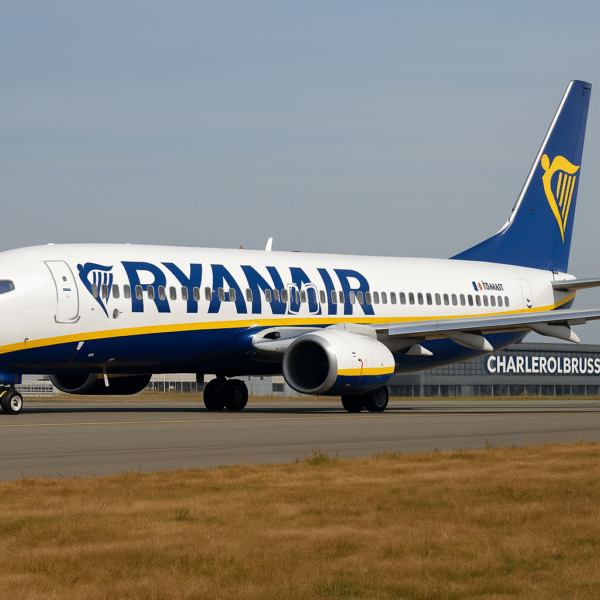
Ryanair has announced deep cuts to its Belgium network after the federal government confirmed a sharp rise in air passenger taxes. The low-cost airline plans to remove five aircraft from Brussels Charleroi Airport and cancel 20 routes. The decision will eliminate nearly one million seats from the Belgian market.
The changes are set to roll out before 2027, well ahead of the full tax increase. Ryanair says the move is necessary to protect its low-fare model. The airline warns that Belgium risks losing its competitive edge in European aviation.
What Belgium’s New Air Passenger Tax Means
Belgium plans to raise its air passenger tax from €3 to €10 per traveler by 2027. The government sees the levy as a tool to support public finances and environmental goals. Airlines see it as a threat to affordability and demand.
Low-cost carriers operate on thin margins. Even small cost increases can force route closures. Ryanair argues that the higher tax will push ticket prices up and reduce travel demand, especially on short-haul routes.
Charleroi Airport Faces the Biggest Impact
Brussels Charleroi Airport depends heavily on Ryanair traffic. The airline accounts for a large share of passengers and aircraft movements. Removing five aircraft represents a major operational setback.
Ryanair estimates the pullback equals around €500 million in lost investment. That figure includes aircraft basing, maintenance, and associated services. Fewer aircraft also mean fewer flights, weaker connectivity, and lower airport revenues.
Job Losses and Local Economy at Risk
The cuts could place thousands of direct and indirect jobs at risk. Airport staff, ground handlers, caterers, and security teams all rely on stable flight volumes. Tourism workers in nearby regions also face uncertainty.
Charleroi and surrounding areas benefit from budget tourism. Travelers drawn by affordable flights spend money in hotels, restaurants, and attractions. A reduced flight network could slow visitor growth and strain small businesses.
Route Reductions Will Shrink Travel Choices
Ryanair plans to cut 20 routes linked to Brussels Charleroi. Many of these routes serve regional European cities. These connections often lack alternative carriers.
Passengers may face fewer choices and higher fares. Some routes may disappear entirely. Travelers could shift to neighboring countries with lower aviation taxes, such as France or the Netherlands, to catch flights.
Pressure Mounts on the Belgian Government
Ryanair’s announcement has intensified pressure on policymakers. Industry leaders warn that Belgium could lose airlines, capacity, and long-term growth. The airline has urged the government to rethink the tax before more damage occurs.
With aviation still recovering from recent global shocks, airlines argue that stability matters. Sudden cost hikes can disrupt recovery plans and investment decisions.
Could Other Airlines Follow Ryanair’s Lead?
Ryanair’s decision may set a precedent. Other low-cost and regional carriers operate under similar cost pressures. If the tax remains unchanged, more airlines could reduce capacity or avoid expanding in Belgium.
Such a trend would weaken the country’s aviation ecosystem. Airports could lose scale benefits, while passengers would see fewer direct routes. Tourism boards fear a decline in city-break travel and short stays.
Belgium Compared to the Wider European Context
Several European governments have adjusted aviation taxes in recent years. Some increased charges to meet climate targets, while others rolled them back after traffic fell. Neighboring states now compete aggressively for airline capacity.
Belgium’s move comes as other countries focus on rebuilding air connectivity. Airlines may favor markets that support growth rather than impose higher costs.
Tourism Sector Braces for Ripple Effects
Tourism groups warn that reduced air access could hurt Belgium’s appeal. City tourism relies on frequent and affordable flights. Fewer seats may mean fewer weekend visitors and conference travelers.
Hotels, museums, and event venues could feel the slowdown. Regional destinations that rely on Charleroi flights face the highest risk.
Ryanair Signals More Cuts Could Follow
Ryanair has made it clear that this may not be the final step. If costs continue to rise, the airline could redeploy aircraft to more competitive markets. The carrier has a history of shifting capacity quickly.
For Belgian travelers, this could mean the loss of low fares that supported mass travel across Europe. For airports, it raises concerns about long-term planning and infrastructure use.
A Critical Moment for Belgium’s Aviation Future
Ryanair’s withdrawal marks a turning point for Belgium’s aviation sector. The air passenger tax aims to raise revenue, but the early response shows real economic risks. Jobs, routes, and tourism growth now hang in the balance.
The coming months will prove decisive. If policymakers revise the tax, Belgium may retain its role as a low-cost travel hub. If not, the country could face lasting damage to its air connectivity and tourism economy.
For more travel news like this, keep reading Global Travel Wire