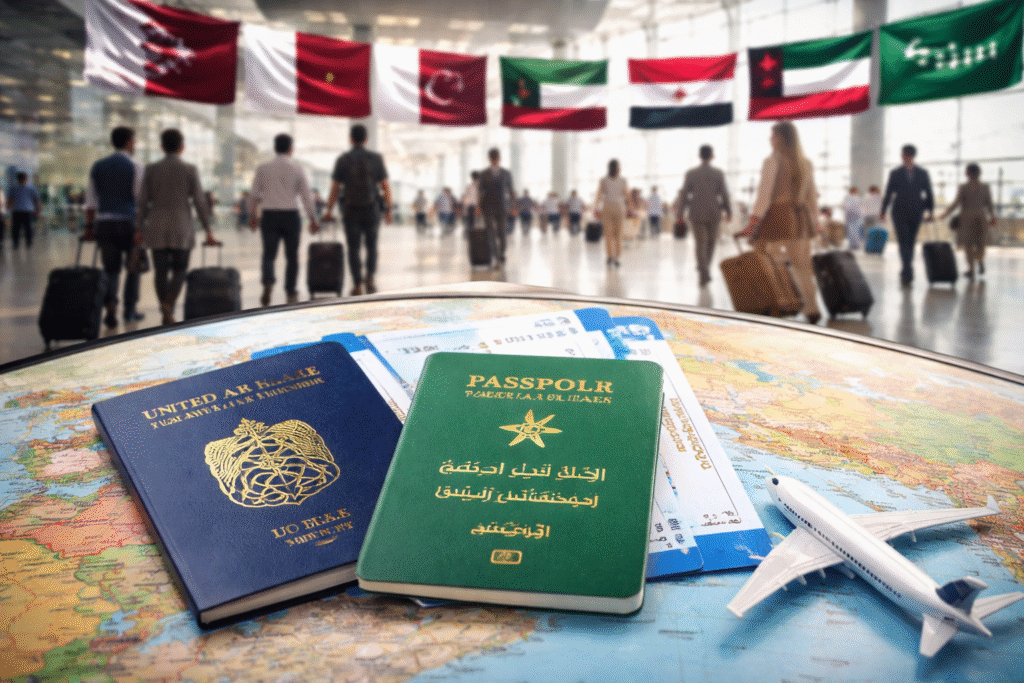
Saudi Arabia has rolled out tougher immigration and residency controls, triggering wide-ranging effects across the Middle East. The UAE now joins Qatar, Egypt, Bahrain, Jordan, Kuwait, and other regional nations in feeling the impact. These changes arrive as the kingdom prepares for increased economic activity and population movement ahead of 2026.
The new policies target visa compliance, residency validity, and corporate accountability. Together, they mark a decisive shift in how Saudi Arabia manages foreign workers, business travelers, and long-term residents. For the wider region, the move signals tighter travel conditions and stricter oversight.
Why Saudi Arabia Is Tightening Controls Now
Saudi Arabia aims to strengthen regulatory discipline and reduce irregular residency. Authorities want faster enforcement, fewer violations, and stronger data systems. Digital tools now play a central role in monitoring visas and exits.
The policy shift also aligns with broader economic reforms. Large infrastructure projects, tourism growth, and global events require controlled labor mobility. As a result, informal work arrangements and expired permits face greater scrutiny.
Digital Self-Deportation System Explained
One of the most notable changes is the launch of a digital self-deportation platform. This system allows immigration violators to complete exit procedures online. Individuals no longer need detention or physical processing at deportation centers.
The platform does not offer amnesty. Instead, it speeds up enforcement while reducing administrative strain. For expatriates, this means less time to correct documentation issues. For employers, it removes delays that once allowed informal fixes.
Ripple Effects Across the Middle East
Saudi Arabia hosts millions of expatriate workers from the Middle East, Asia, and Africa. As enforcement tightens, neighboring countries feel immediate consequences.
Impact on Key Arab Expatriate Communities
Yemen:
Yemenis form one of the largest Arab workforces in Saudi Arabia. Many work in construction, agriculture, and services. Tighter checks place informal workers at higher risk.
Egypt:
Egyptian professionals play a major role in healthcare, hospitality, and engineering. Stricter visa reviews may slow new hiring and increase checks on renewals.
Syria and Sudan:
Many Syrians and Sudanese work in low-wage sectors. Irregular residency status now carries faster consequences, increasing deportation risk.
Jordan, Lebanon, and Palestine:
Smaller expatriate communities still face challenges. Stateless Palestinians may encounter added complexity due to documentation issues.
What This Means for the UAE and GCC Neighbors
The UAE, Qatar, Bahrain, Kuwait, and Oman maintain close labor and business links with Saudi Arabia. Tighter Saudi rules affect workforce mobility across the GCC.
Companies that rotate staff between Gulf states must now plan more carefully. Any visa lapse in Saudi Arabia can disrupt regional assignments. HR teams across the UAE and GCC already report stricter checks before transfers.
Corporate Compliance Takes Center Stage
Saudi authorities now place greater responsibility on employers. Companies hiring foreign workers must ensure full compliance at all times. Penalties for violations can be severe.
Key Compliance Steps for Employers
- Conduct monthly checks on work visas and residency permits
- Block work assignments when documents expire
- Train managers to flag role or status changes
- Keep onboarding and sponsorship records inspection-ready
These steps are no longer optional. Enforcement timelines have shortened, leaving little room for error.
Stricter Corporate Governance and Ownership Rules
Immigration reform comes alongside tougher corporate governance rules. Saudi Arabia now requires clearer disclosure of ultimate beneficial ownership for all registered companies.
Businesses must update ownership data after any change. Annual confirmation is mandatory. Failure to comply can result in heavy fines.
For investors from the UAE, Qatar, Bahrain, Kuwait, and Egypt, this means closer coordination between legal, finance, and compliance teams.
Effects on Travel, Tourism, and Pilgrimage
The new immigration stance also affects travel patterns.
Business Travel and Mobility
Executives and project teams face stricter entry and exit checks. Any documentation issue can delay meetings or project timelines.
Expatriate Travel
Workers from South Asia, the Middle East, and Africa may experience longer processing times. Exit and re-entry now require strict compliance.
Religious Tourism
Saudi Arabia remains central for Hajj and Umrah. Tighter visa enforcement may affect travel flows during peak pilgrimage seasons. Tour operators must ensure all pilgrim documentation meets updated standards.
A New Reality for Middle East Travel
Saudi Arabia’s immigration and governance reforms mark a turning point for the region. The UAE and its neighbors now operate within a more controlled travel environment shaped by Saudi policy.
For travelers, compliance matters more than ever. For businesses, proactive planning is essential. For governments, coordination across borders becomes increasingly important.
As Saudi Arabia continues refining its systems, Middle East travel dynamics will keep evolving. The message is clear. Accuracy, transparency, and preparation now define successful mobility in the region.
For more travel news like this, keep reading Global Travel Wire