
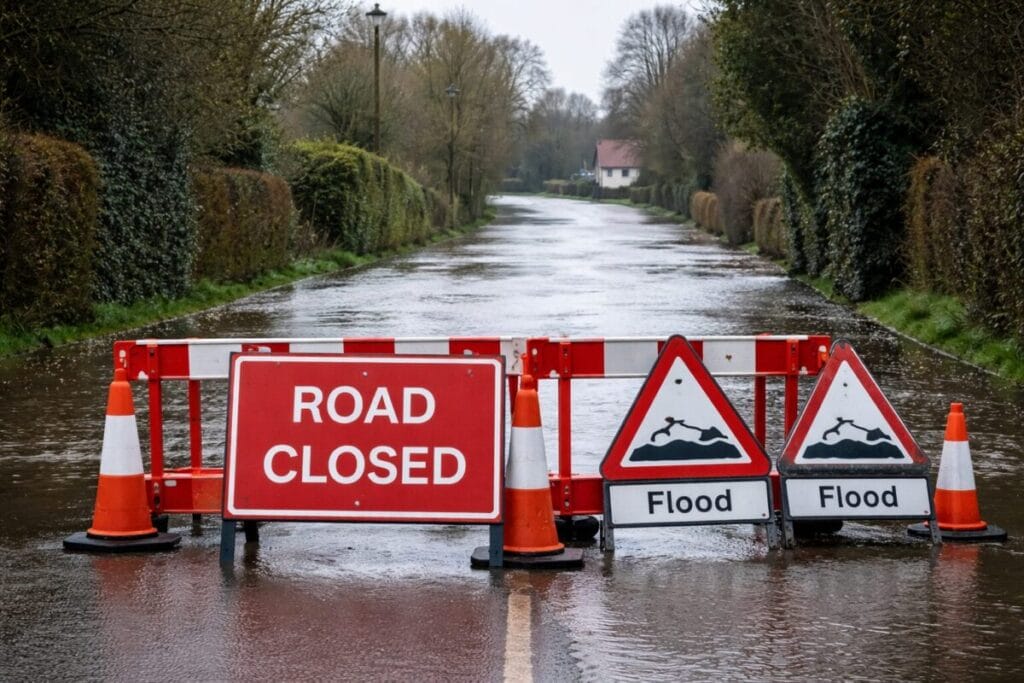
Travellers planning journeys through West Sussex face fresh disruptions after severe flooding forced the closure of key roads in Sidlesham. Prolonged heavy rainfall over the weekend caused surface water to build rapidly, making several routes unsafe for use.
Local authorities ordered the closures to protect residents, commuters, and visitors. The decision affects both local traffic and tourists heading toward the south coast, including Selsey and nearby coastal villages.
Roads Closed in Sidlesham Due to High Water Levels
Two major routes in Sidlesham remain fully closed in both directions.
Highleigh Road, which connects Rotten Row to Keynor Lane, is shut following significant water accumulation. The road surface remains submerged in several sections, making vehicle passage unsafe.
Keynor Lane is also closed between Green Lane and the B2145 Selsey Road. This closure cuts off an important access route used by residents and visitors travelling toward coastal areas.
Floodwater depth and weakened road surfaces prompted immediate action. Authorities stressed that even shallow-looking water can hide damage beneath the surface.
Impact on Local and Tourist Travel Routes
These closures affect more than just local commutes. Sidlesham acts as a key gateway for travellers heading to popular seaside destinations in southern West Sussex.
The closure of Keynor Lane disrupts access to the B2145, a vital route serving Selsey and nearby holiday parks. Drivers now face longer detours, increased congestion, and extended travel times, especially during peak hours.
Public transport services in the area may also experience knock-on delays as buses reroute around flooded sections.
County-Wide Inspections Underway
West Sussex Highways teams continue to monitor the situation across the county. Engineers began inspections early this morning to assess water levels, drainage performance, and road stability.
Several additional locations are under review. These include Yapton Lane in Walberton and the A29 at Shripney in Bersted. Both routes experienced flooding during the same weather system.
Inspectors are checking for subsidence, debris, and erosion caused by standing water. Roads will reopen only once teams confirm they meet safety standards.
More Rain Forecast Raises Further Concerns
Weather forecasts predict more rainfall later this week, increasing pressure on already saturated ground and drainage networks. Authorities warn that further closures may follow if conditions worsen.
West Sussex has a history of surface water flooding during prolonged rain, particularly in low-lying rural areas. Fields, ditches, and drainage channels fill quickly, pushing water onto nearby roads.
Travellers are advised to stay alert for sudden changes and follow local updates before setting out.
Advice for Travellers and Tourists
Drivers should avoid flooded roads entirely. Even small amounts of moving water can cause vehicles to lose control. Road damage may not be visible until floodwater clears.
Journey planning is essential during this period. Visitors heading to coastal towns or countryside attractions should allow extra time and prepare for diversions.
Local authorities recommend using main arterial routes where possible, as these receive priority inspections and drainage clearance.
Pedestrians and cyclists should also exercise caution. Flooded paths may hide uneven surfaces or strong currents.
Safety Remains the Top Priority
Officials stress that public safety guides every closure decision. While disruptions cause inconvenience, preventing accidents remains the main concern.
Floodwater weakens tarmac and can undermine road foundations. Allowing traffic too early risks long-term damage and higher repair costs.
Temporary barriers will stay in place until inspection teams complete their assessments and conditions improve.
Community Awareness and Ongoing Updates
Images from the affected areas show the scale of flooding and highlight the seriousness of the situation. These visuals help raise awareness among residents and travellers who may not yet encounter the closures.
Authorities continue to share updates through official channels as inspections progress. Reopening timelines depend on water levels, weather conditions, and road stability.
Travellers are encouraged to check local advisories regularly, especially those planning short breaks, day trips, or holiday travel in West Sussex.
Looking Ahead: Recovery and Resilience
The current flooding episode highlights the growing challenges facing transport infrastructure during extreme weather. Local councils continue to invest in drainage upgrades and flood prevention measures across the county.
For now, recovery efforts focus on restoring safe travel routes as quickly as conditions allow. Until then, patience and careful planning remain essential for anyone travelling through Sidlesham and surrounding areas.
As inspections conclude and weather patterns stabilise, further announcements will guide the gradual return to normal travel across West Sussex.
For more travel news like this, keep reading Global Travel Wire