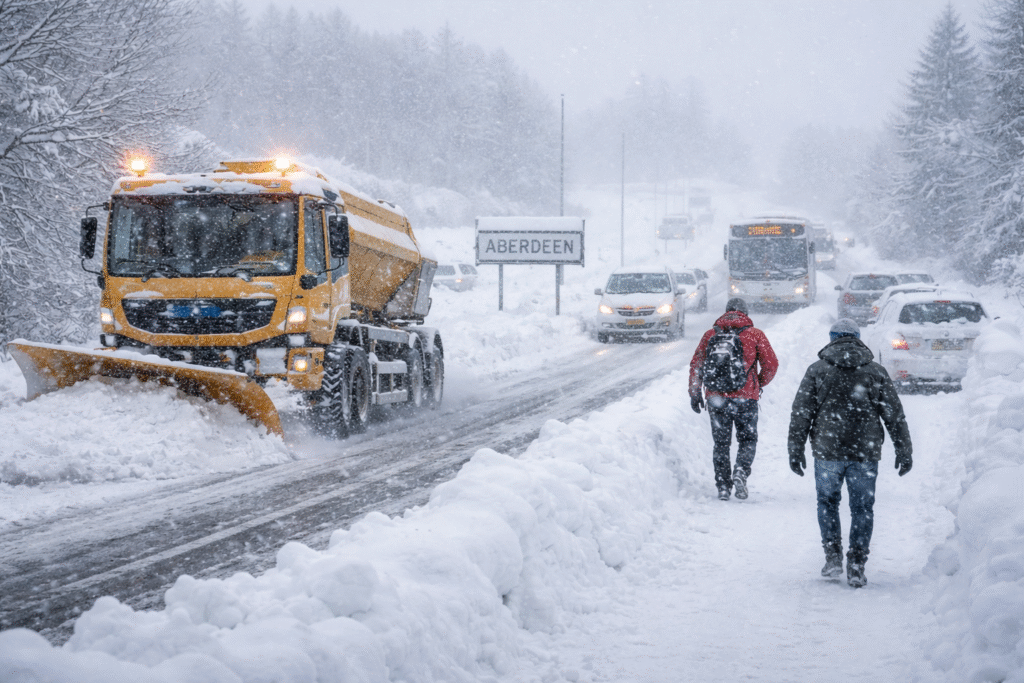
A powerful winter storm has swept across northern Scotland, causing widespread disruption to daily life and regional tourism. Heavy snowfall and freezing conditions have affected Aberdeen, Moray, Shetland, and Orkney, creating travel chaos, closing schools, and halting air and rail connections. The situation continues to evolve as authorities focus on public safety and restoring essential services.
This severe weather event has arrived during a period of active winter travel, leaving residents and visitors struggling with sudden cancellations and delays.
Schools Close as Safety Takes Priority
Education services across the affected regions have faced major disruption. Local councils closed hundreds of schools as snow and ice made roads unsafe for buses, staff, and students.
Aberdeen delayed school openings, while Moray reported dozens of full-day closures. In Shetland and Orkney, authorities suspended in-person learning altogether due to hazardous travel conditions. Many schools shifted to remote learning where possible, but connectivity challenges in rural areas limited access for some families.
Local officials continue to assess conditions daily, warning that closures may extend if snowfall persists.
Flights Grounded Across Northern Airports
Air travel has taken a major hit as runways and visibility issues disrupted flight schedules. Aberdeen Airport remains operational but has experienced multiple flight cancellations and delays on key domestic and international routes.
In the Northern Isles, conditions forced the complete closure of Sumburgh Airport in Shetland and Kirkwall Airport in Orkney. These shutdowns have stranded travelers and affected tourism-related movements, including winter holidaymakers and essential workers.
Passengers are advised to remain flexible with travel plans, as rapid weather changes continue to affect flight operations.
Rail and Road Networks Under Severe Strain
Rail travel across northern Scotland has also suffered major disruption. Snow-covered tracks and drifting conditions forced service reductions and temporary suspensions on several key routes, including links between Aberdeen, Inverness, and Dundee.
Rail operators deployed snow-clearing equipment, but deep snow and ice slowed progress. Safety checks remain a priority before services resume.
On the roads, gritting teams and snowploughs worked continuously to keep major routes open. Despite these efforts, many rural and higher-altitude roads remain difficult to navigate. Authorities urge drivers to avoid non-essential journeys and prepare for sudden closures.
Weather Outlook Remains Challenging
Forecasts indicate continued cold conditions, with further snowfall expected in parts of Aberdeenshire, Moray, the Highlands, and the Northern Isles. Some elevated areas have already recorded extreme snow depths, making access particularly challenging.
Icy surfaces and strong winds add to the risk, increasing the likelihood of drifting snow and reduced visibility. Emergency services remain on standby as conditions fluctuate.
Ferry Services Operating with Caution
Ferry services across northern Scotland have largely continued to operate, offering a vital transport link during the storm. However, access roads to ferry terminals remain difficult in some locations, especially in island communities.
Operators advise travelers to check sailing updates and allow extra time for journeys. Even where ferries run as scheduled, adverse weather may cause last-minute changes.
Impact on Tourism and Local Businesses
The snowstorm has temporarily slowed tourism activity across northern Scotland. Winter attractions, outdoor tours, and accommodation providers face cancellations as visitors delay or change plans.
However, local tourism bodies stress that safety comes first and encourage travelers to rebook rather than cancel trips entirely. Once conditions improve, the region’s winter landscapes may continue to attract visitors seeking seasonal experiences.
Safety Guidance for Residents and Visitors
Authorities across Scotland urge residents and tourists to take precautions. Travelers should carry warm clothing, emergency supplies, and charged mobile devices. Walking routes may also pose risks due to ice and poor visibility.
Local councils, transport operators, and emergency services continue to coordinate responses, focusing on clearing priority routes and supporting vulnerable communities.
What to Expect in the Coming Days
Gradual improvement is expected as the storm system weakens, but recovery will take time. Snow clearance, safety inspections, and service resumptions will happen in stages.
Travelers planning trips to Aberdeen, Moray, Shetland, or Orkney should monitor weather updates closely and remain flexible. While disruption remains significant, authorities are working around the clock to restore normal operations.
For now, northern Scotland remains in winter’s grip, reminding residents and visitors alike of the region’s powerful and unpredictable weather.
For more travel news like this, keep reading Global Travel Wire