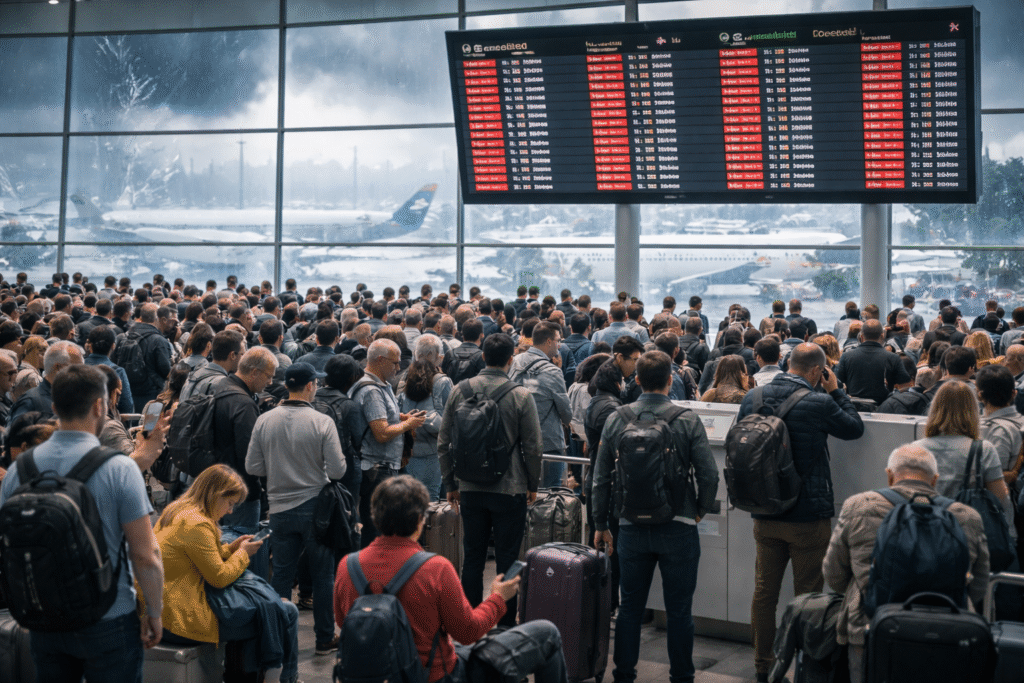
Severe weather has once again disrupted global air travel. Powerful storms, heavy snowfall, and low visibility forced KLM, Lufthansa, and Air France to cancel and delay 37 flights. The disruptions stretched across Europe, with ripple effects reaching Asia and Africa.
Passengers faced long queues, missed connections, and sudden changes in travel plans. Major hubs struggled to manage congestion as aircraft remained grounded for safety reasons.
Airlines Hit Hard by Weather Conditions
The latest disruption affected three major European carriers. Each airline canceled flights to protect passengers and crew amid unsafe flying conditions.
KLM faced the largest impact. Most cancellations centered on its main hub in Amsterdam. Lufthansa reported fewer cancellations but still suffered long-haul disruption. Air France canceled both short-haul and long-haul services, affecting domestic and international routes.
Together, these cancellations caused widespread delays across airline networks.
Amsterdam Schiphol Emerges as the Epicenter
Amsterdam Schiphol Airport saw the highest number of cancellations. Strong winds and reduced visibility slowed runway operations. Aircraft rotations collapsed as inbound flights failed to arrive on time.
Flights connecting the Netherlands to the UK, France, Germany, Scandinavia, and Southern Europe suffered the most. Passengers heading to cities such as London, Paris, Geneva, Glasgow, and Oslo faced sudden cancellations.
The airport quickly became overcrowded as stranded travelers waited for rebooking.
Paris and Frankfurt Face Mounting Pressure
Paris Charles de Gaulle and Paris Orly airports experienced significant disruption. Air France canceled several domestic flights linking Paris with Nice, Marseille, Toulouse, and Nantes. Long-haul routes to Africa and North America also faced cancellations or extended delays.
Frankfurt Airport, Lufthansa’s main hub, struggled with weather-related congestion. Although only one major cancellation occurred, delays stacked up across departures and arrivals. Missed connections left many international passengers stuck overnight.
Scandinavia and the UK See Severe Knock-On Effects
Northern Europe felt the brunt of winter weather. Snowstorms and crosswinds disrupted flights to Norway, Denmark, and Scotland. Cities such as Stavanger, Aalborg, Edinburgh, and Glasgow saw repeated cancellations.
Regional airports in the UK, including Exeter and Teesside, also faced operational challenges. Smaller airports lack the capacity to recover quickly once schedules break down.
Long-Haul Routes Are Not Immune
Weather disruption extended beyond Europe. Lufthansa canceled a long-haul flight between Johannesburg and Frankfurt after storms affected departure conditions in South Africa.
Air France also canceled long-distance services from Lagos and Los Angeles to Paris. These cancellations stranded passengers far from home and complicated rebooking due to limited seat availability.
Long-haul disruptions often take days to normalize.
Passenger Impact: Stress, Cost, and Uncertainty
For travelers, the impact was immediate and intense. Many passengers spent hours in terminals waiting for updates. Hotel prices near major airports surged as travelers searched for overnight stays.
Families missed holidays. Business travelers skipped meetings and conferences. Some passengers faced extra costs for meals, transport, and accommodation.
Although airlines offered rebooking, alternative flights filled quickly due to peak travel demand.
What Travelers Should Do During Weather Disruptions
Passengers can reduce stress by taking proactive steps. Monitoring airline notifications remains essential during unstable weather. Mobile apps and airport alerts often provide faster updates than airport screens.
Travel insurance plays a key role during weather events. Coverage may help with hotel stays, meals, and rebooking costs. Flexible tickets also provide better protection during unpredictable conditions.
When flights cancel, passengers should consider alternate routes or nearby airports to reach their destination faster.
Tourism Industry Feels the Ripple Effect
Flight disruptions quickly affect local tourism economies. Cities dependent on short city breaks and weekend travel felt immediate losses.
Amsterdam reported lower attendance at museums, canal cruises, and guided tours. Paris experienced cancellations across hotels, restaurants, and event venues. Frankfurt saw reduced business travel during a critical conference period.
Tour operators faced refund requests and last-minute itinerary changes.
How the Aviation Sector Can Recover Faster
Airlines and airports continue to refine their response to extreme weather. Better forecasting tools now allow earlier decisions, reducing last-minute chaos.
Improved passenger communication remains critical. Clear updates, faster rebooking tools, and on-ground assistance help rebuild trust. Airports are also investing in snow-clearing equipment and wind-management systems.
Collaboration between airlines, airports, and tourism boards helps soften the economic impact during recovery periods.
A Resilient Path Forward for Global Travel
Severe weather will remain a challenge as climate patterns shift. However, the aviation and tourism industries have shown strong recovery skills after repeated disruptions.
With better planning, flexible policies, and improved communication, future disruptions can cause less damage. Travelers who remain adaptable and informed will also navigate disruptions more smoothly.
Despite the chaos, demand for travel remains strong. Once skies clear, airlines and destinations will move quickly to restore confidence and momentum.
For more travel news like this, keep reading Global Travel Wire