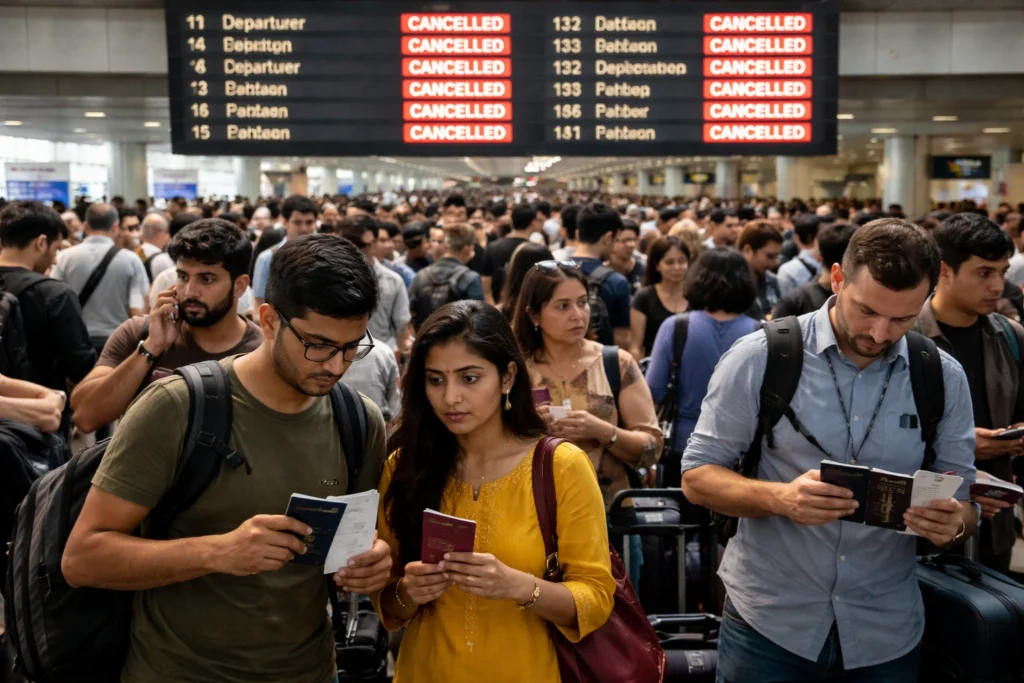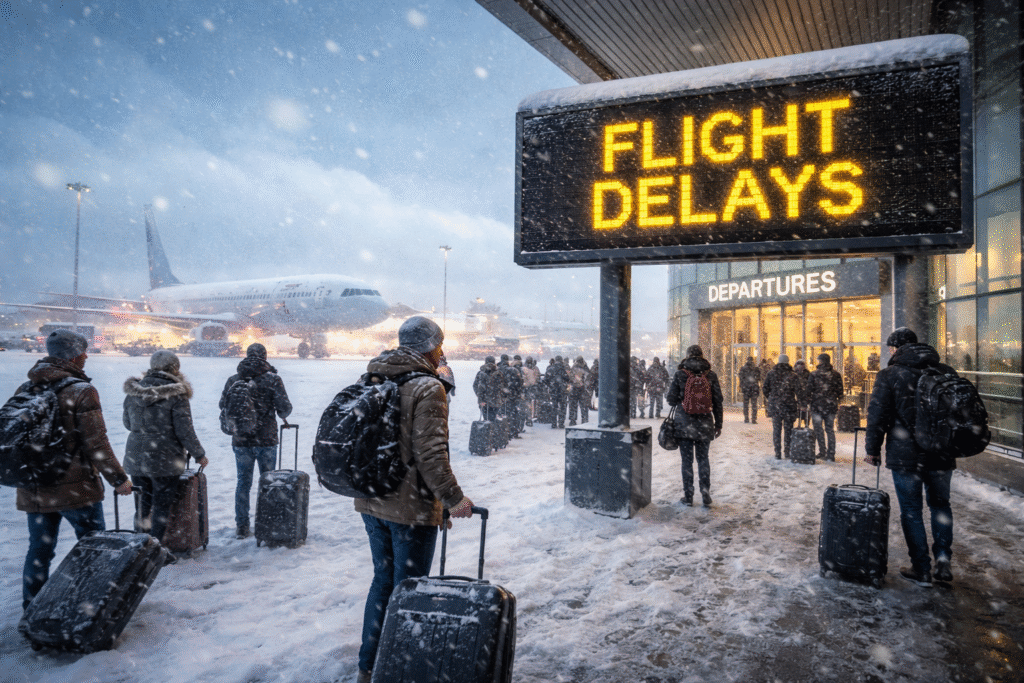
Holiday travel across the United States and Canada faces major disruption as severe winter storms sweep across multiple regions. High winds, heavy snowfall, freezing rain, and flooding risks are already affecting flights, roads, and border crossings. Authorities urge travelers to prepare for delays and remain flexible with their plans.
Airports, highways, and land border crossings are under pressure as millions of people travel during peak holiday dates. Weather-related impacts may continue through late December, especially in regions facing snowstorms, coastal rain systems, and extreme cold.
Border Crossing Delays Expected Between the U.S. and Canada
Travelers planning to cross the U.S.-Canada land border should expect longer wait times. Snow, icy roads, and reduced visibility may slow inspection processes at major crossings. Weather-related staffing challenges could also add to delays.
Drivers should monitor road conditions before departure and allow extra time for border checks. Officials recommend carrying winter emergency supplies, including blankets, food, water, and a fully charged phone.
Peak Travel Dates Increase Pressure on Airports
Airports expect heavy passenger volumes between December 20 and 23, and again from December 26 to 30. Severe weather during these dates raises the risk of flight delays and cancellations.
Airlines may adjust schedules with little notice. Travelers should stay alert and plan for longer airport waits. Early arrivals can help reduce stress during security screening and boarding.
Essential Travel Preparation Tips During Severe Weather
Smart planning can help travelers manage disruptions and stay safe. Following basic preparation steps can make a big difference during unpredictable weather.
Check Flight Status Before Leaving Home
Confirm flight details through your airline’s mobile app or official notifications. Avoid unnecessary airport trips if delays or cancellations occur.
Pack Essentials for Long Delays
Carry snacks, water, medications, chargers, and warm clothing. These items can help during extended waits at airports or on the road.
Arrive Earlier Than Usual
Extra time allows room for security delays, weather disruptions, and gate changes. Early arrival reduces the risk of missing flights.
Consider Alternate Routes
If cancellations occur, ask airlines about nearby airports or alternate connections. Flexibility can help reach destinations faster.
Monitor Weather Updates
Track weather forecasts and official advisories. Conditions may change rapidly, especially in storm-prone regions.
West Coast Faces Flooding and Heavy Rain Risks
Holiday travelers along the West Coast face additional challenges. Strong storm systems are bringing intense rainfall to California, Oregon, and Washington. Rainfall totals may reach 6 to 12 inches in some areas by December 23.
Flood warnings remain active in low-lying areas and near burn scars from recent wildfires. These conditions increase the risk of flash floods and debris flows. Travelers should avoid flooded roads and follow local safety instructions.
Mountain Snow Creates Dangerous Driving Conditions
The same storm systems are dumping heavy snow across mountain regions. The Sierra Nevada and Cascade ranges face intense snowfall, strong winds, and near-zero visibility in some passes.
Driving conditions may become unsafe or impossible at times. Road closures and chain restrictions are likely. Travelers heading to ski destinations or mountain towns should check road status frequently and carry winter driving gear.
Road Travel Safety Tips During Winter Storms
For those traveling by car, preparation is essential. Winter weather can turn minor delays into dangerous situations.
- Keep fuel tanks at least half full
- Carry snow tires or chains where required
- Pack an emergency kit with food, water, and warm clothing
- Share travel plans with someone before departure
- Avoid nighttime driving during storms when visibility drops
Stay Flexible and Travel Smart This Holiday Season
While the holiday season brings excitement, current weather patterns add uncertainty. Travelers who stay informed and adaptable can reduce stress and improve safety.
Booking flexibility, travel insurance, and open-minded itineraries can help manage last-minute changes. Patience and preparation remain key during this busy travel period.
Prepared Travelers Face Fewer Disruptions
Storm systems will continue to affect large parts of the U.S. and Canada through the holidays. Whether traveling to snowy mountain resorts, visiting family in colder regions, or flying to warmer destinations, readiness matters.
By planning ahead, monitoring updates, and prioritizing safety, travelers can navigate holiday disruptions more smoothly. Staying alert and proactive ensures a safer and more manageable journey during one of the year’s busiest travel seasons.
For more travel news like this, keep reading Global Travel Wire