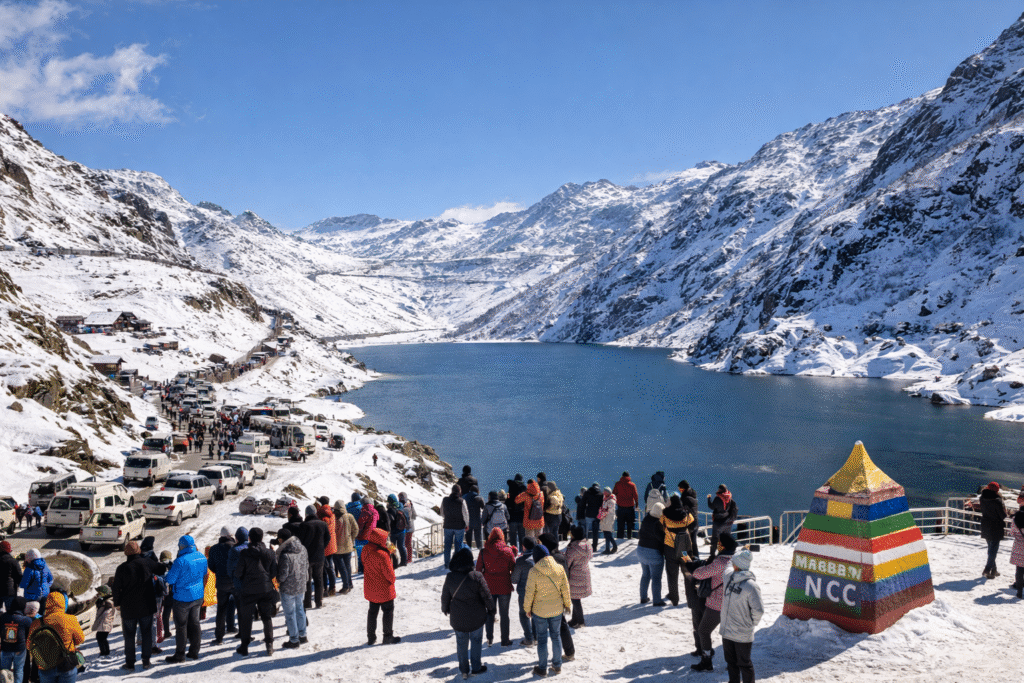
Sikkim’s winter tourism industry is witnessing an exceptional upswing, marked by an impressive influx of visitors to its iconic high-altitude destinations. In a single day, more than 6,000 tourists visited Tsomgo Lake and Nathula Pass, underscoring the Himalayan state’s rising popularity as a premier winter travel destination in India. This sharp rise in tourist numbers signals a robust season ahead and highlights Sikkim’s growing appeal among domestic and international travelers.
The surge comes amid consistent winter snowfall, picturesque landscapes, and an increasing preference among travelers for cold-weather holidays. From snow-covered mountain passes to serene alpine lakes, Sikkim’s winter charm has positioned it as a standout destination during the peak holiday period.
Rising Footfall Across Key Destinations
Tourism officials have confirmed that visitor numbers have been steadily climbing since the onset of winter. Popular regions across East and North Sikkim are experiencing heavy footfall, resulting in near-full occupancy at hotels, homestays, and lodges. The sustained demand reflects renewed confidence in travel and a strong desire among tourists to experience the region’s unique winter environment.
Among the most visited locations, Tsomgo Lake and Nathula Pass have emerged as major highlights. These destinations are especially attractive during winter due to their dramatic snow-covered scenery and accessibility from Gangtok. Zuluk, another scenic stop in East Sikkim known for its winding mountain roads and panoramic views, has also seen a notable rise in visitors.
North Sikkim Emerges as a Winter Favourite
In North Sikkim, Lachung has recorded particularly high tourist demand. The village, often considered a gateway to snow-laden valleys and alpine landscapes, has seen hotels and homestays operating at full capacity. Travelers are drawn to Lachung’s peaceful atmosphere, traditional culture, and winter vistas, making it one of the most sought-after destinations this season.
However, some northern areas such as Lachen and Gurudongmar Lake remain closed to tourists due to safety and logistical concerns following adverse weather conditions earlier in the year. As a result, visitors have redirected their travel plans toward accessible destinations, further increasing pressure on open routes and attractions.
Vehicle Movement Reflects the Tourism Rush
The scale of the winter tourism boom is also evident in the surge of vehicle movement across popular routes. On the day that recorded over 6,000 visitors, more than 1,500 tourist vehicles were registered entering areas such as Tsomgo Lake, Baba Mandir, and Nathula Pass. This significant increase highlights the strong demand for winter sightseeing experiences and the efficiency of coordinated transport management during peak periods.
Officials note that the number of visitors to Nathula alone exceeded figures from the previous winter season, reflecting year-on-year growth and strengthening Sikkim’s position as a winter tourism hotspot.
Diverse Visitor Demographics
The surge in tourism includes a wide demographic mix. Domestic tourists account for the majority, with families, solo travelers, and adventure enthusiasts making up a large portion of visitors. The presence of children and elderly travelers indicates that Sikkim is increasingly viewed as a safe and accessible winter destination.
While international visitor numbers remain comparatively modest, the steady presence of foreign tourists highlights Sikkim’s growing recognition on the global travel map. Improved infrastructure, better road connectivity, and streamlined permits have contributed to making the region more approachable for overseas travelers.
Snowfall Drives the Seasonal Appeal
One of the key factors behind the tourism surge is consistent snowfall across higher-altitude regions. Snowfall began early in December and has been more regular than in previous years, creating ideal conditions for winter sightseeing and snow-based activities. Visitors are drawn by the opportunity to experience snowfall, walk along frozen lakes, and capture scenic Himalayan views.
The crisp mountain air, tranquil environment, and dramatic winter scenery offer a stark contrast to urban life, making Sikkim a preferred escape during the holiday season.
Economic Boost for Local Communities
The rise in tourist arrivals has provided a significant boost to the local economy. Hospitality providers, transport operators, guides, and small businesses have reported increased revenues. Homestays in particular have benefited, allowing travelers to experience local culture while directly supporting community livelihoods.
Tourism officials see this growth as a positive indicator for long-term recovery and expansion, especially after periods of uncertainty in previous years.
Focus on Infrastructure and Sustainability
As visitor numbers rise, state authorities are intensifying efforts to strengthen tourism infrastructure. Measures include improving road safety, enhancing visitor facilities, managing traffic flow, and ensuring emergency preparedness in high-altitude areas.
At the same time, there is a strong emphasis on sustainable tourism. Officials are working with local stakeholders to minimize environmental impact, promote responsible travel behavior, and preserve Sikkim’s fragile ecosystems. Waste management, controlled vehicle entry, and eco-friendly practices are being prioritized to protect the region’s natural beauty.
A Strong Outlook for Winter Tourism
With winter still unfolding, tourism authorities anticipate continued growth in visitor numbers in the coming weeks. The strong start to the season suggests that Sikkim is poised to remain one of India’s most desirable winter destinations.
The record-breaking turnout at Tsomgo Lake and Nathula Pass reflects more than just seasonal interest—it signals a long-term shift in travel trends favoring nature-based, immersive experiences. As Sikkim balances growth with sustainability, the state stands ready to strengthen its position as a leading winter tourism destination in the years ahead.
For more travel news like this, keep reading Global Travel Wire