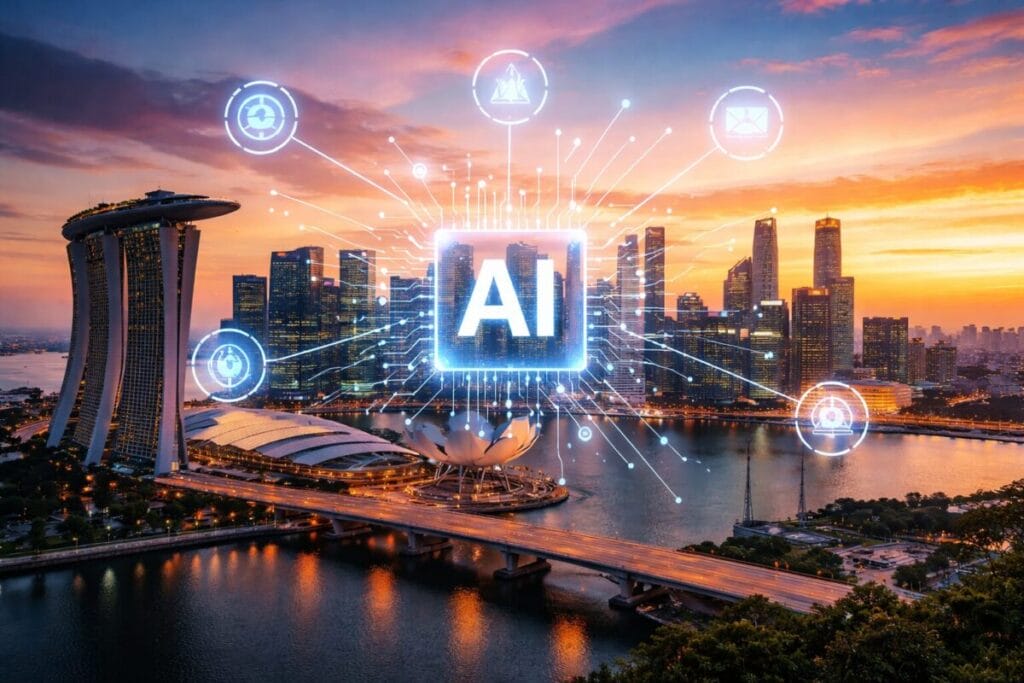
Singapore is moving decisively to secure its economic future by accelerating artificial intelligence adoption across industries. Leaders now warn that economic growth and job creation can no longer be taken for granted in a fast-changing world.
Technology disruption, global competition, climate pressures, and an ageing population are reshaping economic realities. In response, Singapore’s Economic Strategy Review has placed AI adoption, workforce transformation, and innovation at the center of future planning.
Tourism, aviation, hospitality, logistics, and urban services are also expected to benefit from this nationwide digital transformation.
The aim is clear. Singapore wants to stay competitive, create quality jobs, and remain a global business and tourism hub.
Why AI Adoption Matters Now
The Economic Strategy Review gathered insights from businesses, workers, and industry experts. More than 60 consultations shaped its findings.
The review highlights that AI can boost productivity and improve service delivery across sectors, including tourism and hospitality. Hotels, airports, attractions, and transport providers are already experimenting with automation, predictive analytics, and smart services.
The government wants AI adoption to move beyond large corporations. Small and medium enterprises must also benefit.
Key priorities include:
- Expanding AI use among small and mid-sized companies
- Encouraging practical, real-world business applications
- Attracting global AI talent and researchers
- Supporting companies to implement technology solutions quickly
Leaders stress that growth alone no longer guarantees employment. Policies must now directly support both economic expansion and job creation.
Tourism and Hospitality to Gain from AI Innovation
Tourism remains a key pillar of Singapore’s economy. Visitor arrivals have rebounded strongly after pandemic disruptions. The sector now looks toward digital innovation to sustain momentum.
AI adoption could transform tourism operations in several ways:
- Smart airport operations and faster passenger processing
- Personalized travel recommendations and visitor services
- AI-powered hotel operations and customer experience tools
- Better crowd management at attractions and events
- Smarter transport and mobility systems
Digital solutions can also help tourism businesses manage rising operational costs and labor shortages.
Singapore’s goal is to create a seamless travel experience while supporting tourism businesses with new technologies.
Protecting Core Industries While Building New Growth
The strategy also focuses on strengthening industries where Singapore already holds global advantages. At the same time, it invests in new growth sectors.
Important industry priorities include:
- Expanding semiconductor and advanced manufacturing capabilities
- Growing healthcare and biomedical industries
- Supporting specialty chemicals and precision engineering sectors
- Developing decarbonisation and sustainability technologies
- Encouraging innovation in space and quantum technologies
A strong industrial base supports tourism indirectly through better infrastructure, business travel demand, and international investment flows.
Officials believe combining manufacturing strength with innovation will keep Singapore attractive to investors and global businesses.
Lifelong Learning Becomes Essential for Workers
A major concern involves workforce readiness. As AI reshapes industries, many job roles will evolve.
Workers must update skills continuously to stay competitive.
The review recommends:
- Flexible workplace learning programs
- Training aligned with real industry needs
- Career transition support for affected workers
- Wider access to skills upgrading programs
Singapore already invests heavily in training initiatives. Future programs will focus on digital skills, technology literacy, and adaptability.
This approach helps workers transition into new roles created by technology instead of being displaced.
Helping Businesses Navigate Change
Companies adopting new technologies often face operational challenges. Smaller firms especially need guidance.
The review proposes targeted business support such as:
- Advisory support for AI and digital transformation
- Linking technology adoption with workforce training
- Helping local companies expand overseas
- Ensuring productivity gains improve job quality
Tourism businesses, restaurants, retailers, and transport operators can benefit from these measures. Many firms still struggle with manpower shortages and rising costs.
Technology adoption can help improve efficiency while maintaining service quality.
Maintaining Global Competitiveness
Singapore’s open economy depends on global connectivity. The country competes with many cities for investment, talent, and tourism.
Maintaining competitiveness requires:
- Strong international business links
- Continuous innovation investment
- Digital adoption across all business sizes
- An ecosystem where productivity growth supports employment
Technology leadership also strengthens Singapore’s reputation as a modern, efficient travel destination.
Visitors increasingly expect digital convenience, smart services, and seamless travel experiences.
What Happens Next
The government will review the Economic Strategy findings and respond with policy updates. A final report is expected by mid-2026.
Future policy directions are likely to focus on:
- Supporting economic growth amid global uncertainty
- Creating quality jobs through innovation
- Preparing workers through continuous skills upgrading
- Strengthening Singapore’s global competitiveness
Nationwide AI adoption, along with workforce transformation, will guide long-term economic planning.
Conclusion: Innovation and Inclusion Drive Singapore’s Next Chapter
Singapore’s economic future now depends on balancing innovation with inclusion. AI adoption promises productivity gains and industry transformation, but people remain central to growth.
By strengthening skills training, supporting business transformation, and embracing digital innovation, Singapore aims to create sustainable jobs and resilient industries.
Tourism, manufacturing, and technology sectors will all play vital roles in this journey.
The strategy signals Singapore’s determination to remain competitive, innovative, and welcoming in an era of rapid global change.
For more travel news like this, keep reading Global Travel Wire