
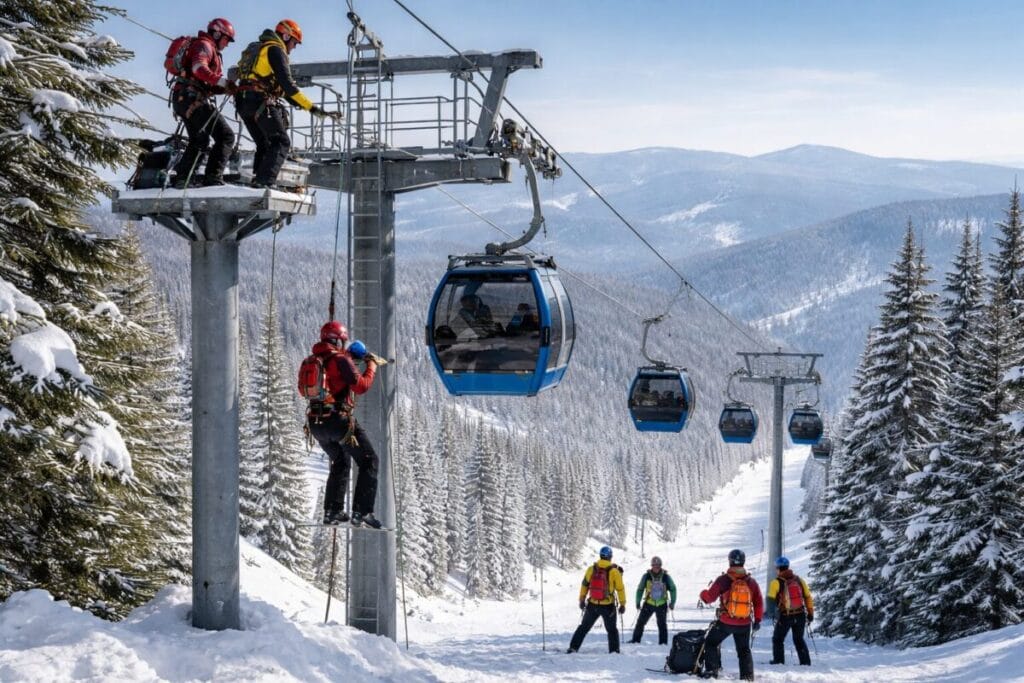
A routine winter morning at Gore Mountain in New York’s Adirondack Mountains quickly shifted into an emergency scenario when a gondola lift stopped midair, leaving nearly 70 visitors suspended above snowy terrain. The incident occurred shortly after 9 a.m. on February 4, 2026, transforming what began as a scenic ski day into a carefully coordinated rescue operation.
Gore Mountain attracts skiers from across the Northeast and beyond. Known for panoramic views, varied trails, and reliable snow conditions, the resort remains a cornerstone of New York’s winter tourism industry. The halted gondola created an unusual moment but also showcased the effectiveness of safety planning and rapid emergency response.
Mechanical Alignment Issue Triggers Safety Shutdown
The Northwoods Gondola stopped after sensors detected a mechanical alignment problem in the lift’s wheel assembly. Safety systems immediately halted the operation to prevent further risk. While passengers found themselves unexpectedly paused above the forested slopes, the shutdown followed established safety protocols.
Officials clarified that the incident did not involve a power outage or major equipment failure. Instead, the automated system worked as designed. Modern ski lifts rely on multiple layers of monitoring technology that stop operations when irregularities appear. These preventive measures aim to protect passengers even if disruptions occur.
Visitors described the situation as surprising but calm. Enclosed cabins shielded them from harsh winter conditions, allowing rescue teams time to prepare a safe evacuation.
Coordinated Rescue Effort Begins Quickly
Emergency response teams mobilized soon after the gondola stopped. Personnel from the resort, along with trained forest rangers and local emergency services, arrived at the scene and assessed the situation. Their primary goal was clear: remove passengers safely and avoid panic.
Rescuers climbed lift towers using ropes and harnesses. They accessed each gondola cabin individually. Teams instructed passengers to prepare near the doors before lowering them one at a time using specialized pulley systems.
The process required patience and precision. Cold temperatures and high winds added challenges, but coordination between agencies ensured steady progress. No injuries occurred during the operation, highlighting the effectiveness of training and teamwork.
Training and Preparedness Prove Essential
The rescue demonstrated the value of extensive pre-season training. Ski resorts in New York conduct regular drills to prepare for unlikely events such as lift evacuations. Emergency personnel practice rope access techniques, communication protocols, and passenger handling procedures.
Recent training sessions before the winter season helped responders act quickly and confidently. Each step followed established safety plans, reducing delays and maintaining calm among stranded visitors.
Resort officials emphasized that lift systems undergo rigorous inspection schedules. Safety remains a core priority, especially at state-operated facilities that welcome large numbers of tourists each winter.
Impact on Adirondack Winter Tourism
Although the incident caused temporary disruption, tourism experts believe it will not harm the broader appeal of the Adirondack region. Gore Mountain continues to draw families, adventure seekers, and international visitors thanks to its expansive terrain and well-developed infrastructure.
In fact, some observers suggest that the successful rescue may strengthen traveler confidence. Visible emergency preparedness reassures visitors that resorts maintain high safety standards.
The Adirondack Mountains serve as a major winter destination for New York State. Activities range from alpine skiing and snowboarding to cross-country trails and snowshoeing. Reliable safety procedures play an important role in sustaining visitor trust and maintaining the region’s reputation.
Gondola Returns to Operation After Inspections
After the rescue concluded, technicians conducted thorough inspections and adjustments before reopening the gondola. Officials confirmed that operations resumed only after meeting strict safety criteria.
Other lifts and trails continued running during the incident, allowing most guests to enjoy their planned activities. The quick return to normal operations showed resilience within the resort’s management systems.
For the passengers involved, the experience will likely remain a memorable part of their ski trips. Many described it as unexpected yet reassuring once rescue teams arrived and explained the process.
Lessons for Travelers Planning Ski Trips
Incidents like this remain rare, but they offer useful reminders for travelers heading to mountain destinations. Preparation enhances both safety and comfort during alpine adventures.
Travelers should check weather forecasts and resort updates before arriving. Dressing in warm layers ensures protection even if delays occur. Following staff instructions also helps emergency teams work efficiently.
Carrying essential items such as phones, identification, and emergency contact information can make unexpected situations easier to manage. Most importantly, visitors should remember that modern resorts invest heavily in safety infrastructure.
A Strong Example of Safety in Action
The gondola rescue at Gore Mountain highlights how advanced technology, trained personnel, and coordinated planning combine to protect guests. While the event added drama to an otherwise routine winter day, it ended positively thanks to swift action and strong procedures.
New York’s winter tourism industry continues to evolve with safety at its core. As travelers return to the slopes, the incident serves as proof that behind every scenic ride and thrilling descent lies careful preparation designed to keep adventure both exciting and secure.
For more travel news like this, keep reading Global Travel Wire