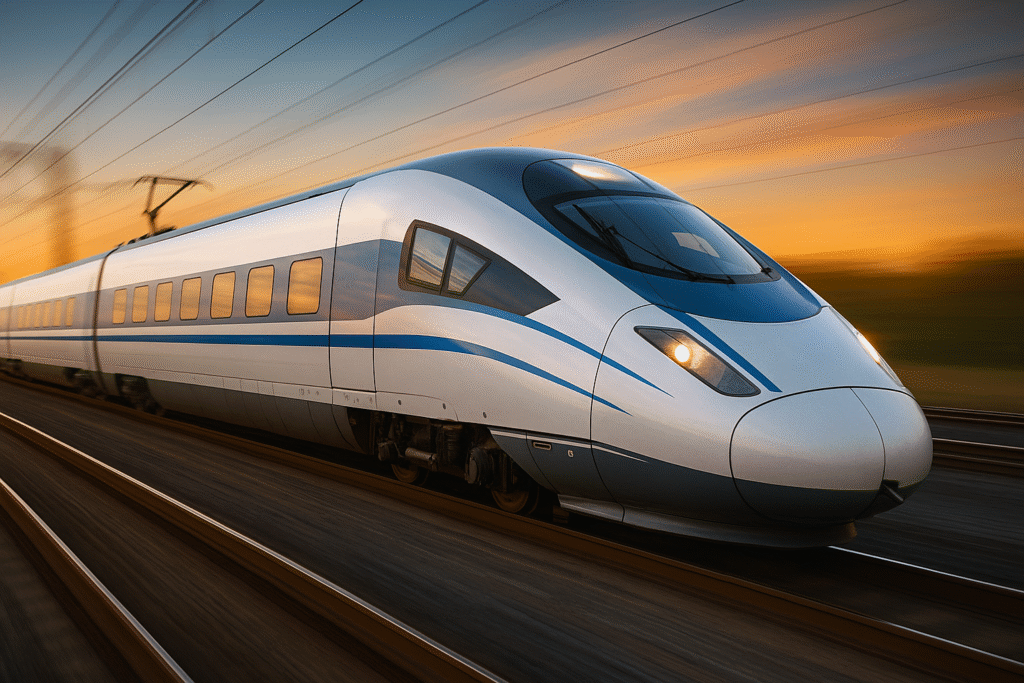
South Africa is ready to take a bold leap forward in modern transportation with the introduction of a high-speed rail link between Johannesburg and Durban. The project represents a turning point in the nation’s transport and tourism industries. The proposed train will reach speeds of up to 300 km/h, reducing the journey between these two major cities to less than two hours.
This initiative will strengthen South Africa’s economy by improving regional connectivity and providing a new way for travelers to explore the country. The Johannesburg–Durban route, already one of the busiest corridors for business and tourism, will soon offer a faster, cleaner, and more comfortable travel experience.
Faster Travel and Greater Convenience
Travelers currently spend up to six hours by road or nearly an hour by air between Johannesburg and Durban, excluding airport transfers and check-ins. The new high-speed rail will change this completely. Passengers will travel directly between the two cities in record time while enjoying comfort, scenic views, and reliable service.
This convenience will make rail travel more appealing than flying, particularly for domestic tourists and business travelers. With easier access and competitive pricing, the route will attract a wider range of passengers who value both speed and comfort. The new rail connection will also make it simpler for visitors to combine city exploration with coastal relaxation in a single trip.
A Boost for Tourism and Local Economies
Tourism forms a vital part of South Africa’s economy, and the new high-speed rail will create fresh opportunities for growth. The Johannesburg–Durban corridor connects vibrant urban centers with rich cultural and natural attractions. The line will encourage visitors to discover more destinations across KwaZulu-Natal and Gauteng.
Local businesses along the route will benefit from increased traffic and visitor spending. Smaller towns will become more accessible, leading to new investment in accommodation, restaurants, and tourism services. For international travelers, this connection provides a seamless way to experience two of South Africa’s most diverse regions without the hassle of long travel times or flight delays.
By linking coastal and inland regions efficiently, the project helps unify South Africa’s tourism network. It will encourage more visitors to explore beyond traditional destinations and experience the country’s full diversity.
Sustainable and Environmentally Friendly Travel
The new high-speed rail project aligns with South Africa’s commitment to sustainability and green infrastructure. Train travel produces significantly fewer carbon emissions compared to air and road transport. By encouraging passengers to choose rail over cars or planes, the project will help reduce overall greenhouse gas emissions.
Energy-efficient train systems, modern track technology, and eco-friendly operations will form the foundation of this initiative. South Africa’s focus on sustainable travel fits within its broader goals to promote cleaner energy and responsible tourism.
As environmental awareness grows worldwide, travelers increasingly prefer destinations that invest in sustainable solutions. The new high-speed rail will position South Africa as a forward-thinking nation that balances growth with environmental responsibility.
Strengthening Business and Regional Connectivity
The Johannesburg–Durban corridor is not only a tourism hub but also one of South Africa’s most important economic routes. The new rail service will improve logistics, trade, and commuter flow between the country’s financial and industrial centers. Faster travel will enable smoother business operations and strengthen ties between industries located in both cities.
Business travelers will find the high-speed rail an efficient alternative to flights. The ability to travel quickly while avoiding airport queues and road congestion will save valuable time and boost productivity. This will attract both local and international investors to South Africa’s growing transport infrastructure.
Modern Infrastructure for a Growing Nation
South Africa’s vision for high-speed rail demonstrates its commitment to innovation and progress. The project’s modern stations, digital ticketing systems, and advanced rail technology will bring South Africa’s transport infrastructure in line with global standards.
The integration of smart mobility services, such as online reservations and real-time travel updates, will ensure a smooth experience for passengers. The government’s investment in this large-scale project reflects a strong belief in the potential of efficient public transport to drive economic growth and improve the quality of life for citizens.
Unlocking the Potential of Regional Travel
The rail link will also open new opportunities for regional tourism. Visitors will find it easier to explore attractions beyond Johannesburg and Durban, such as the Drakensberg Mountains, the Midlands Meander, and the coastal resorts of KwaZulu-Natal.
Shorter travel times will allow travelers to create diverse itineraries that combine city, nature, and cultural experiences in a single trip. This accessibility will help South Africa compete with international destinations that already offer high-speed travel convenience.
A Vision for the Future
The Johannesburg–Durban high-speed rail represents more than a transportation upgrade—it symbolizes progress and unity. It connects communities, promotes sustainable tourism, and lays the foundation for future expansions across South Africa.
With this initiative, South Africa joins the growing list of nations embracing high-speed rail as a driver of economic and environmental transformation. The project showcases how innovation, infrastructure, and sustainability can work together to create lasting impact.
Conclusion
The high-speed rail link between Johannesburg and Durban will transform South Africa’s travel landscape. It will connect people faster, boost tourism, and support economic growth across regions. With its focus on speed, sustainability, and passenger experience, the project marks the dawn of a new travel era in South Africa.
The future of South African tourism and transport is set to move at 300 km/h—linking cities, communities, and cultures like never before.
For more travel news like this, keep reading Global Travel Wire