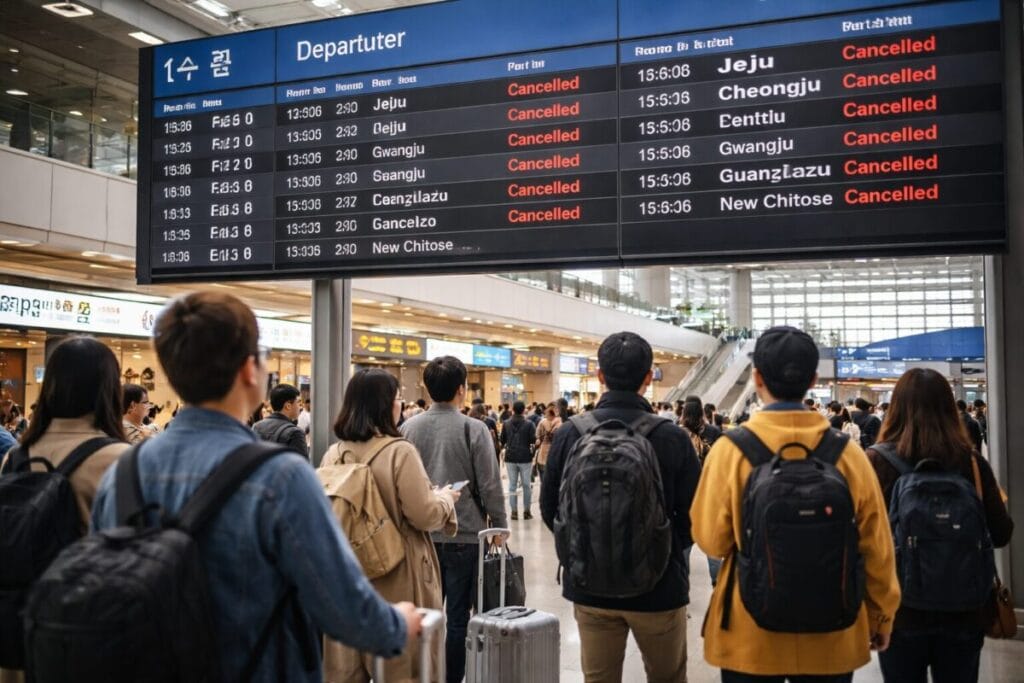
South Korea is facing fresh waves of flight disruptions as major carriers cancel routes across Jeju, Gimpo, and Incheon airports. Airlines including Korean Air, Eastar Jet, Asiana, and Delta adjusted schedules this week, affecting both domestic and long-haul international passengers. The cancellations impacted travel plans for business tourists, holidaymakers, and overseas connections to destinations such as Guangzhou, Seattle, and New Chitose.
A total of 14 flights were withdrawn, adding pressure to already busy travel corridors during peak winter tourism and holiday movement. This development underscores how quickly aviation schedules can shift due to operational, weather, or safety considerations, and why travelers must stay alert when flying through regional hubs.
Domestic Routes Hit First
Domestic sectors experienced the sharpest cuts. Jeju International Airport, one of South Korea’s busiest tourist gateways, saw cancellations on routes to Cheongju, Gwangju, and Gimpo. Jeju functions as a tourism lifeline, attracting millions of travelers each year for its volcanic landscapes, beaches, and wellness resorts. Disruptions here tend to create ripple effects across the country because Jeju lacks highway or rail alternatives, making air travel the dominant mode of access.
Gimpo Airport also cancelled services to Jeju. These short-haul flights are heavily relied on by leisure tourists, event travelers, and corporate commuters. Seat shortages led to higher demand on remaining departures and left many travelers scrambling for rebooking options.
International Flights Also Reduced
International travel through Incheon International Airport was not spared. Flights to Seattle, Guangzhou, and New Chitose were cancelled, affecting long-haul passengers headed to the United States as well as regional travelers bound for Japan and China. These routes serve business travelers, students, and winter tourists linking destinations for skiing, shopping, and cultural itineraries.
Incheon acts as South Korea’s main global aviation hub and ranks as one of Asia’s busiest airports. Even limited cancellations can strain transit schedules for international passengers given that many itineraries depend on precise connections.
Tourist Impact and Itinerary Disruptions
The cancellations led to several immediate traveler challenges. Tourists saw delays in hotel check-ins, missed excursions, lost connections, and rescheduled inter-city ground transfers. International passengers faced the added issue of limited seat availability due to longer aircraft turnaround times and crew scheduling constraints.
Some travelers heading to Jeju’s coastal resorts had to postpone arrival plans, while outbound guests required extended hotel stays while waiting for alternate departures. Those connecting through Incheon to onward flights in the U.S. or Southeast Asia experienced itinerary re-sequencing that stretched travel times to 24 hours or more.
Airline Response and Consumer Support Measures
Airlines initiated customer care protocols to support disrupted passengers. Korean Air, Eastar Jet, Asiana, and Delta notified affected travelers with rebooking, refund, and itinerary modification options. Ground staff and call centers experienced increased volume as travelers sought clarity and alternative transport solutions.
The airlines emphasized operational reliability and safety as priorities. Fleet rotation, runway logistics, weather, and maintenance scheduling can all influence flight decisions. South Korea’s aviation authorities require carriers to implement conservative safety thresholds, especially during periods of heavy winter winds, coastal fog, and cold-season pressure systems.
Government Travel Advisory Context
South Korea’s Ministry of Land, Infrastructure, and Transport monitors domestic flight activity and coordinates with airports when cancellations cluster. Authorities recommend that travelers departing during winter peaks arrive earlier at airports and maintain flexible planning windows. Tourism agencies also encourage consumers to keep accommodation plans refundable when traveling to Jeju or using Incheon as a long-haul hub.
Transportation data from regional governments shows Jeju remains one of the most flight-dependent tourism islands in Asia. With no land-based access, Jeju records millions of annual visitors who rely on frequent domestic shuttles between Gimpo and regional airports. During peak travel seasons, even a single day of cancellations can produce system backlogs.
Tips for Tourists Navigating the Disruptions
Travel experts suggest several strategies for minimizing stress during airline schedule changes:
- Track flight status frequently before heading to the airport
- Consider nearby airports for faster departure alternatives
- Build longer buffer times for long-haul international connections
- Keep accommodation bookings flexible or refundable
- Avoid tight same-day transfers to tours or events
Passengers with time-sensitive reasons for travel should rebook as soon as cancellations are announced, as seat inventory compresses quickly.
Wider Tourism Implications
These cancellations show how South Korea’s tourism sector remains vulnerable to aviation swings. Tourists depend on predictable flight schedules to reach island resorts, city attractions, and cultural destinations. When aviation traffic tightens, hotels, tour companies, and local transport providers feel the effects.
Analysts expect continued demand for South Korea’s winter tourism, especially for Jeju’s eco-tours, Seoul’s city attractions, and snow sports trips to Gangwon Province. However, air travel volatility could influence booking behaviors, encouraging earlier ticket purchases and more flexible itineraries.
Conclusion
South Korea’s recent cancellations demonstrate the importance of traveler preparedness during peak travel seasons. With 14 flights pulled across Jeju, Gimpo, and Incheon, domestic and international tourists faced delays and rebookings. Airlines have pledged to assist customers and restore schedules where possible. Travelers who monitor updates, stay flexible, and plan ahead can reduce disruption and enjoy smoother journeys across South Korea’s diverse tourism landscape.
For more travel news like this, keep reading Global Travel Wire