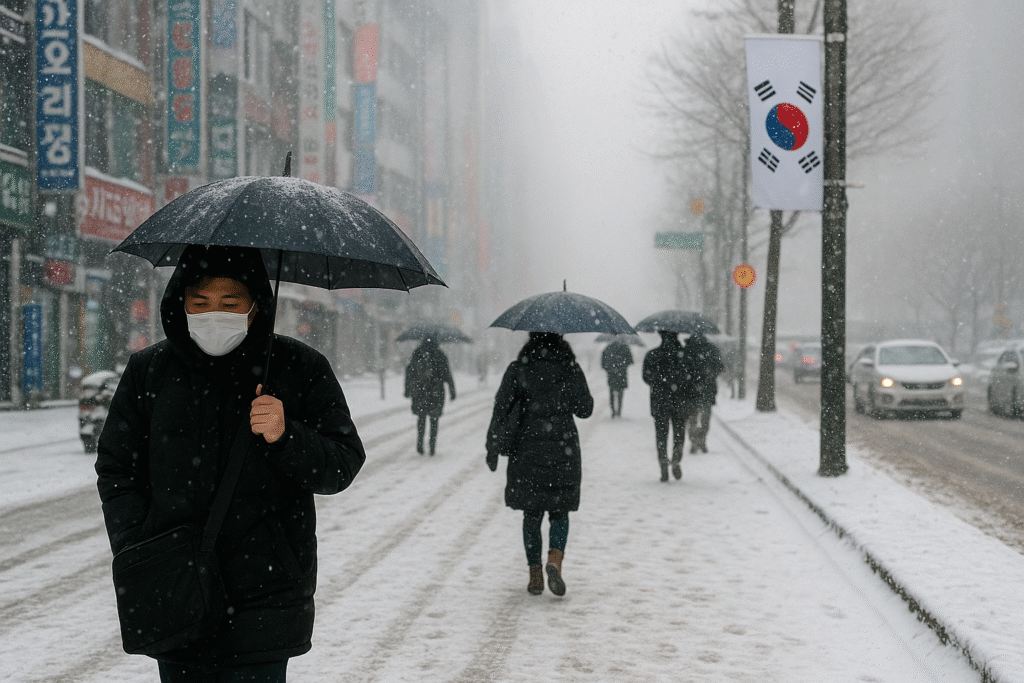
South Korea is preparing for a sharp and early arrival of winter weather as a strong Arctic air mass sweeps into the Korean Peninsula. The drop in temperature will be sudden and severe. According to national weather authorities, the first major snowstorm of the 2025 winter season is expected to reach Seoul and surrounding regions by early December. This shift sets the stage for icy roads, flight disruptions, and extreme wind chills that could affect both residents and travelers.
Early Season Freeze Hits the Capital
Seoul will see one of its coldest early-December temperature drops in recent years. Morning lows may plunge well below freezing, while wind chill values are expected to make the air feel even colder. The country’s interior and western coastal regions will also face heavy snow and biting winds as the cold front settles in.
Local forecasts suggest that the first snowfall of the season could arrive as early as December 4, with further snow bands developing across the peninsula as the Arctic air strengthens. Inland mountains, the west coast, and parts of Gyeonggi and Chungcheong provinces could see heavier accumulation.
Travel Disruptions Expected Across South Korea
Visitors heading to the country during this period should prepare for unstable travel conditions. Transport services may face delays, especially during peak snowfall. The sharp temperature drop raises the risk of icy roads, low visibility, and operational challenges across airports and major highways.
Flight and Ferry Delays
Airports may experience schedule changes as heavy snow affects visibility and runway conditions. Ferries operating to and from coastal destinations may encounter high waves and freezing winds, posing possible delays or cancellations.
Road Travel Challenges
Drivers in snow-prone regions must expect slippery highways and reduced visibility. Snow tires or chains become essential in rural or mountainous areas. Motorists should plan ahead, as winter control measures may temporarily close certain roads.
Public Transport Slowdowns
Commuters may face delays on trains and buses, especially in regions exposed to stronger winds and snowfall. Travel times on intercity routes could increase due to speed restrictions or temporary suspensions.
How Tourists Can Prepare for the Cold Wave
South Korea remains a popular winter destination, but the sudden cold wave demands extra caution. Proper preparation can help visitors stay safe while still enjoying cultural sites, shopping districts, and seasonal attractions.
Dress for Extreme Cold
Layering is key. Thermal clothing, insulated jackets, scarves, gloves, and hats help reduce exposure. Wind chill may intensify the cold, making protective clothing essential for outdoor sightseeing.
Stay Updated on Weather Alerts
Check local weather advisories throughout the day. Conditions can shift quickly, especially in coastal or mountain regions. Hotel front desks and transportation hubs often provide updates.
Keep Travel Plans Flexible
If you plan to explore markets, palaces, or hiking routes, allow extra time. Check your flight, train, or bus schedule frequently. Keeping alternative plans ready can ease stress if cancellations occur.
Choose Well-Heated Accommodation
Select hotels or guesthouses with reliable heating systems. This is especially important in older buildings or rural areas where heating may be weaker during extreme cold spells.
Safety Tips for Severe Snow and Wind
With the first winter storm expected to last several days, it is vital to prioritize safety.
Avoid Unnecessary Travel
If snowfall intensifies, limit travel to essential trips. Hazardous conditions can develop quickly, especially in mountainous or coastal areas.
Wear Proper Footwear
Icy sidewalks and roads can be dangerous. Waterproof boots with strong grip help prevent slips. Ice grippers can also provide added stability during heavy snow.
Carry Emergency Supplies
Power outages or stalled travel may occur. Keep basic items on hand, including snacks, warm clothing, a phone charger, and drinking water. These essentials are particularly useful during long transit delays.
Use Caution Near Natural Areas
Avoid hiking trails, national parks, or coastal viewpoints during snowstorms. High winds can increase the risk of accidents, while heavy snow raises the possibility of localized avalanches in steep terrain.
What This Cold Wave Means for the Winter Season
The early arrival of this Arctic air mass suggests a stronger, colder winter than usual. Snowfall may be more frequent, and freezing temperatures may persist longer. Travelers planning visits through December, January, and February should monitor forecasts closely and pack accordingly.
Despite the harsh weather, winter in Korea offers charming sights—snow-covered palaces, festive markets, and warm street food experiences. With proper planning, the season can be both safe and enjoyable.
Final Thoughts for Winter Travelers
As South Korea prepares for its first snowstorm of 2025, travelers should stay alert and adapt their plans to the changing weather. Staying informed, dressing warmly, and allowing flexibility in itineraries will help ensure a smooth and safe trip. Winter in South Korea can be beautiful, but the coming cold wave underscores the need for caution and preparation. Stay warm, stay aware, and enjoy the country’s winter charm responsibly.
For more travel news like this, keep reading Global Travel Wire