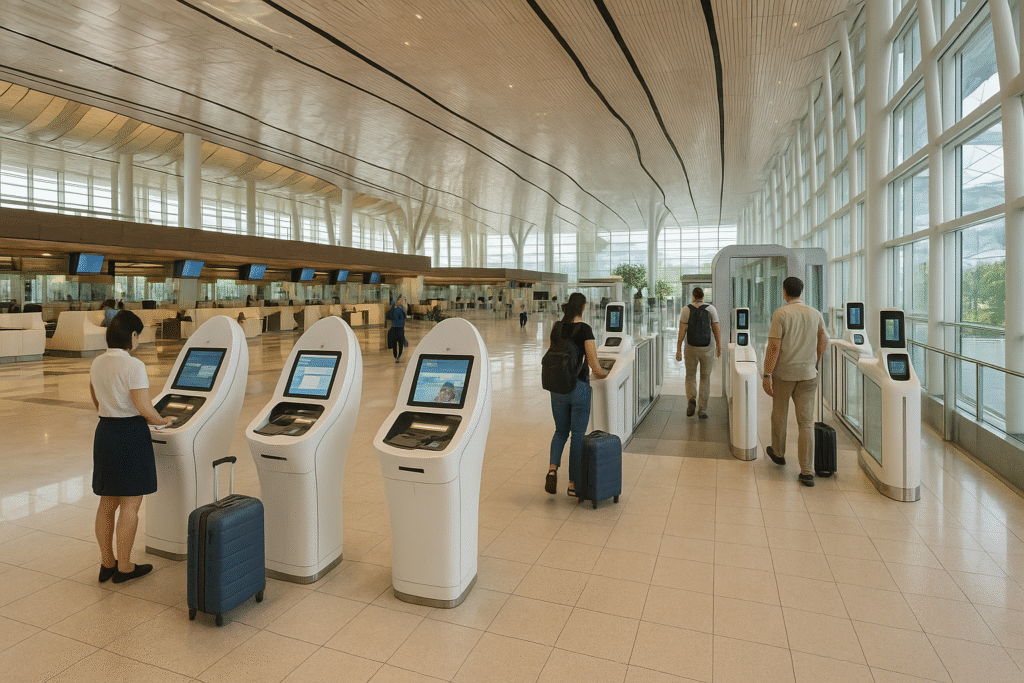
Air travel across Southeast Asia is changing fast. Governments and airport operators now prioritize speed, clarity, and choice. Travelers already feel the difference at major hubs. Smaller gateways also join the upgrade wave. The goal stays simple: shorter queues and smoother journeys.
Self-service check-in and bag drop expand
Airports now add common-use kiosks and automated bag drops. Travelers print tags, scan IDs, and drop bags in minutes. Carriers integrate these touchpoints with airline systems. Lines move faster during peak hours. Staff then support exceptions and special needs. Families and groups benefit from quicker flows.
Singapore leads with fully integrated “FAST” journeys. Kuala Lumpur deploys biometric-ready kiosks across key terminals. Bangkok extends common-use bag drops at its busiest airports. Jakarta scales self-drop positions in modern halls. New Philippine terminals add contactless counters and 24-hour kiosks. Regional airports follow with phased rollouts.
Security screening gets quicker and clearer
Checkpoint design keeps improving. Airports install CT scanners for cabin bags. Laptops and liquids can often stay inside. Officers rotate trays through automated return belts. Multiple loading points let several travelers prepare at once. These upgrades lift throughput without sacrificing safety. Queues shrink even during rush hours.
Thailand expands CT units across international gateways. Singapore embeds CT and auto-tray systems in key terminals. Malaysia refreshes checkpoint networks alongside larger IT upgrades. Travelers gain consistency across different airports. Families move with less stress and clearer instructions.
Biometric “One ID” journeys take hold
Facial recognition now links each step of the trip. Enrolled travelers check in, clear security, and board with a face scan. Immigration gates also use biometrics at many hubs. Officers still handle special cases and manual checks. The result feels seamless and secure.
Thailand connects check-in, bag drop, security, and boarding under one token. Singapore scales facial verification across more touchpoints. Vietnam accelerates digital ID for domestic flights. Malaysia and Indonesia widen e-gate programs at border points. The Philippines adds more e-gates at major gateways. Travelers experience consistent flows across the region.
Baggage handling runs faster and more reliably
Behind the scenes, upgraded systems sort bags at high speed. In-line screening reduces extra queues. Software directs each bag along the right path. Hubs add early bag storage where needed. Airlines share tracking data for smoother transfers. Mishandled rates continue to fall.
Large sorters now handle heavy peaks at major hubs. Self-drop units inject bags directly into conveyors. Airports study RFID and IoT tagging options. Operators monitor bottlenecks from centralized control rooms. Recovery from disruptions improves as data grows.
Passenger information goes fully digital
Airports invest in clearer, calmer information. Big displays replace most overhead calls. Mobile apps push real-time updates and gate changes. Indoor maps guide travelers to key services. Wayfinding kiosks support quick lookups in multiple languages. Queue times appear on screens in busy zones.
Changi, Suvarnabhumi, KLIA, and Clark refine “quiet terminal” models. Travelers rely on screens and phones rather than loud announcements. Notification timing improves boarding punctuality. Stress drops as messages arrive earlier and with better context.
Robots and AI step into daily operations
Autonomous cleaners now patrol concourses at set intervals. Patrol robots support security teams during events. Back-office AI forecasts peaks at gates and checkpoints. Duty managers adjust staffing hours before crowds arrive. Predictive maintenance reduces sudden equipment failures.
Indonesia’s operators deploy integrated AI dashboards. Singapore coordinates robot fleets through a central brain. Thailand monitors immigration lines with smart video. Malaysia pushes airport-wide data platforms under digital programs. Each initiative targets faster decision-making and fewer delays.
Sustainability anchors the technology push
Smart building systems trim energy use across terminals. Sensors tune cooling to real passenger loads. LED lighting adapts to daylight levels. Solar projects support terminal power needs. Paperless processes reduce waste across check-in and boarding. Travelers benefit from cooler halls and cleaner air.
What travelers can expect by 2026
Expect self-service at most check-in halls. Expect CT scanners at many security lanes. Expect biometric gates at security or boarding. Expect clearer screens and calmer terminals. Expect faster baggage delivery after landing. Expect better apps with reliable alerts.
Families should find smoother stroller and bag handling. Elderly travelers should see more assistance options. Solo travelers can move quickly with digital tools. Multilingual signage supports first-time visitors. Connection times improve as bottlenecks shrink.
Practical tips for a smoother trip
Enroll in airline or airport biometric programs early. Update your travel app before departure. Print bag tags when directed by kiosks. Keep passports ready, even with biometrics. Arrive a little earlier during holidays. Follow on-screen guidance at security lanes. Use airport maps for tight connections.
Outlook for tourism and growth
These upgrades support tourism rebounds across the region. Faster processing encourages more weekend trips. Cruise and tour packages link seamlessly with flights. Meetings and events gain reliable schedules. Regional hubs attract new long-haul routes. Secondary airports welcome wider international links.
Southeast Asia now sets a strong global benchmark. Airports combine guest comfort with advanced security. Technology quietly removes friction from each step. Travelers gain time to explore, shop, and relax. By 2026, smooth travel will feel normal across the region.
For more travel news like this, keep reading Global Travel Wire