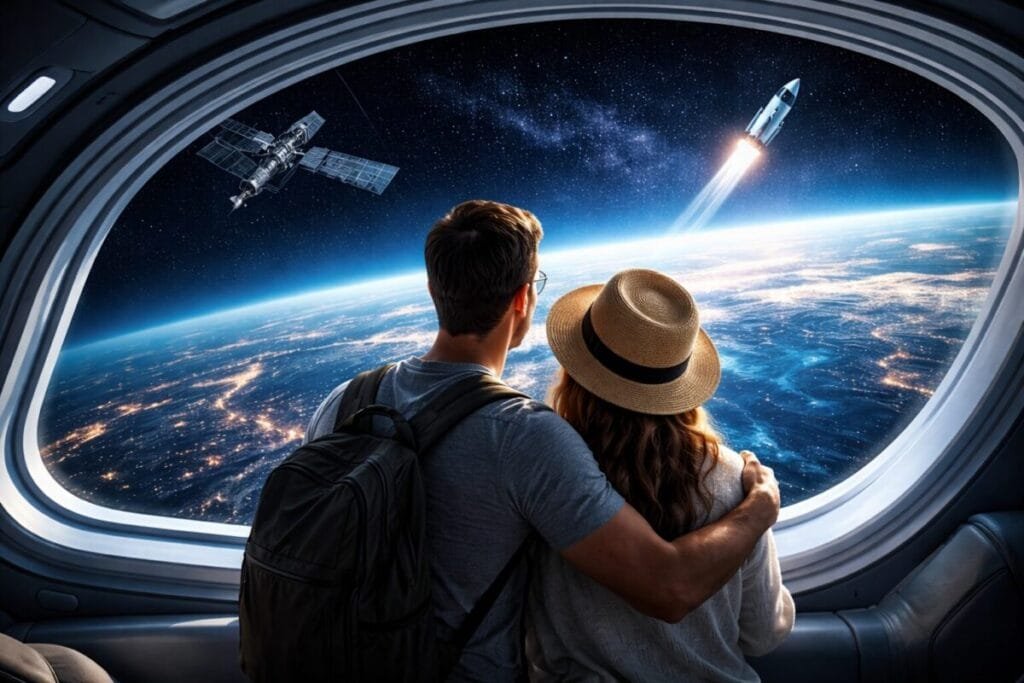
Space tourism evolves at a rapid pace. Once viewed as science fiction, it now sits on the edge of commercial reality. New spacecraft, reusable boosters, and private sector innovation accelerate the transition. Tourists soon gain opportunities to visit space for adventure, research, or leisure. The global travel industry prepares for this next frontier as demand for unique experiences increases each year.
Reusable launch systems reduce flight costs and shorten turnaround times. These breakthroughs change the economics of space travel in profound ways. More companies enter the market and develop new craft for crewed missions. Tourists no longer depend entirely on government programs or scientific expeditions. They gain access to vehicles designed for civilian travel beyond Earth.
Private Sector Drives Growth in Space Travel
Private companies shape the modern space travel sector. Firms such as SpaceX, Blue Origin, and Virgin Galactic design spacecraft for suborbital and orbital missions. They develop propulsion systems, crew cabins, life support technology, and spaceport infrastructure. Their achievements push the industry forward and increase confidence among investors and travelers.
Competition motivates companies to refine safety, comfort, and mission efficiency. Frequent test flights produce valuable data that improves performance. These efforts support a long-term goal of sustainable and repeatable space flights for paying customers. Tourists gain more choices as companies introduce multiple mission types, flight durations, and altitude levels.
Governments continue to participate in space exploration, yet private companies reshape the commercial landscape. National space agencies focus on research, science, and deep space missions. Private firms concentrate on economic viability, customer experience, and scalable tourism models. This combination accelerates the entire sector and prepares the travel market for commercial demand.
Global Space Tourism Market Expands Through Innovation
The global space travel market now functions as a broad ecosystem. It includes spacecraft manufacturers, launch vehicle designers, spaceport operators, insurance providers, and training centers. Each component supports human trips beyond Earth while supporting commercial growth. Investors identify long-term revenue potential in tourism, research, and payload services.
Spaceports play a crucial role in this ecosystem. Facilities in the United States, Europe, and Asia prepare for increased launch activity. These sites support suborbital and orbital flights, crew training, and tourist preparation. Many regions promote spaceport development to attract investment, tourism, and aerospace talent. Local governments view space tourism as a catalyst for economic growth and innovation.
Demand rises as more people show interest in space travel. Surveys indicate strong curiosity among younger travelers, adventure tourists, and high-earning professionals. Travelers seek new horizons beyond conventional destinations. The idea of viewing Earth from space appeals to thrill seekers and travelers who value transformative experiences.
Reusable Spacecraft Lower Entry Barriers for Tourists
Reusable spacecraft sit at the center of the future tourism market. These vehicles lower operational costs and increase flight frequency. SpaceX, Blue Origin, and other companies invest in reusable booster stages and crew capsules. Each successful test strengthens confidence in commercial viability.
Lower costs increase access and reduce reliance on ultra-wealthy customers. Prices for suborbital flights remain high today, yet analysts expect steady declines as technology matures. A similar trend occurred in the aviation market during the twentieth century. Flights once served elite travelers before becoming mainstream. Industry experts expect space tourism to follow a similar path.
Space hotels also generate interest within the travel sector. Private firms explore concepts for orbital accommodation modules. These facilities may serve tourists, researchers, and content creators. Travelers could sleep in orbit, observe Earth from large windows, and conduct microgravity experiments during extended stays. These ideas remain in development, yet they highlight the sector’s long-term direction.
New Travel Experiences Redefine Tourism
Space tourism delivers experiences unavailable on Earth. Tourists view the planet’s curvature, witness sunrise over the horizon, and float in microgravity. They gain a deep appreciation for Earth’s fragility and beauty. Astronauts describe the “overview effect,” a sense of unity and understanding that occurs when observing Earth from space. Many travelers now aspire to experience that perspective firsthand.
Adventure tourism continues to grow worldwide. Travelers seek extreme destinations, immersive environments, and uncommon stories. Space tourism fits this demand and expands the definition of travel itself. Spaceports may soon join airports and cruise terminals as gateways for global tourism.
Safety, Regulation, and Training Shape the Industry
Safety remains a priority as the industry prepares for commercial flights. Training centers teach passengers how to manage microgravity, cabin procedures, and emergency protocols. Regulations evolve to cover licensing, insurance, and mission standards. Cooperation between governments and private companies ensures steady progress toward safe commercial operations.
Regulatory bodies also work on international agreements. Space travel crosses borders, time zones, and legal jurisdictions. A shared framework supports long-term industry stability and promotes global participation in space tourism.
Future Outlook for Space Tourism
Space tourism holds significant potential for economic and cultural impact. Lower costs, reusable craft, and advanced training create realistic pathways for broader participation. Spaceports may appear in new regions and attract tourists from across the world. Analysts expect strong growth over the next decade as private companies scale up flight operations.
Travelers soon enjoy multiple options: suborbital hops, orbital stays, lunar flybys, or research missions. These experiences expand tourism far beyond traditional boundaries. Space travel may eventually become as common as international flights are today. The industry stands on the edge of transformation as new technology and market competition reshape the future of tourism.
For more travel news like this, keep reading Global Travel Wire