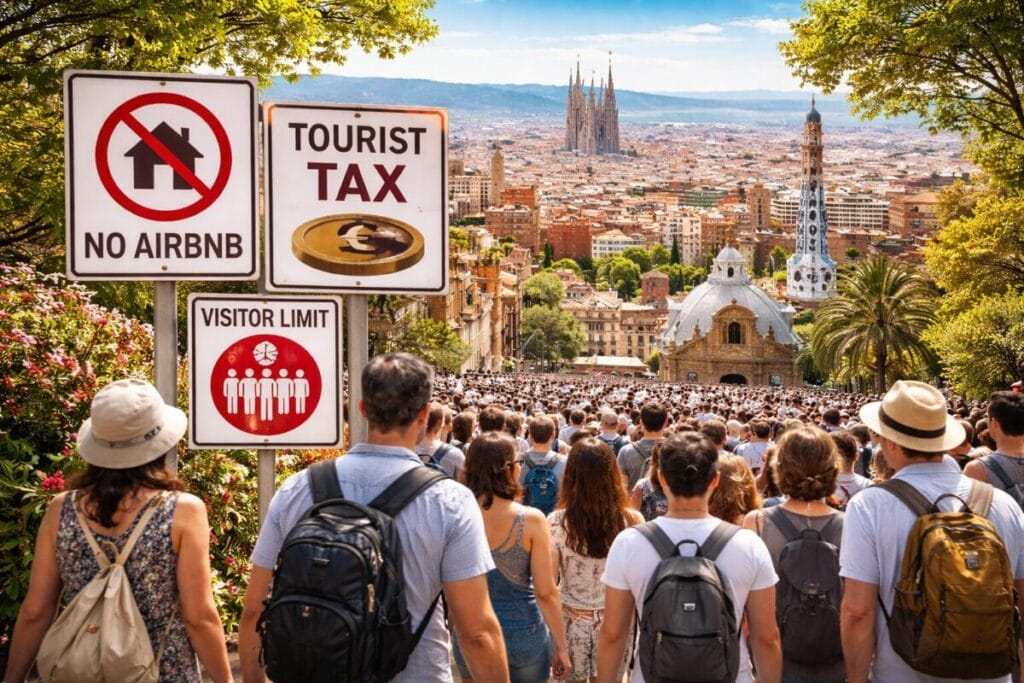
Europe is entering a new era of tourism control. Governments across the continent are rolling out strict measures to manage rising visitor numbers. Spain now joins Italy, the Netherlands, the United Kingdom, France, Portugal, Greece, Croatia and Austria in adopting firm anti-overtourism policies.
The goal is clear. Protect housing markets. Safeguard heritage sites. Improve local quality of life.
With international arrivals nearing record highs again, 2026 will mark a major turning point for European travel.
Why Europe Is Cracking Down on Mass Tourism
Before the pandemic, cities like Barcelona, Venice, Paris and Amsterdam struggled with crowd pressure. Residents faced soaring rents. Public transport overflowed. Historic landmarks suffered visible damage.
Tourism fuels jobs and growth. Yet unchecked expansion creates social strain. Many city councils now focus on balance instead of volume.
Governments want tourism that supports communities. They no longer prioritize visitor numbers alone.
Spain Moves Aggressively on Short-Term Rentals
Spain stands at the center of the anti-overtourism movement. Cities such as Barcelona, Madrid, and Valencia have tightened rules on tourist apartments.
Barcelona has limited new short-term rental licenses. Authorities conduct inspections and impose heavy fines for illegal listings. Officials aim to return housing stock to long-term residents.
Visitor caps now apply at major landmarks like Park Güell and Sagrada Família. Timed ticket systems reduce congestion.
Several Spanish regions also increased tourist taxes. Revenue supports infrastructure and urban maintenance.
Italy Introduces Entry Fees and Housing Controls
Italy faces similar challenges. Cities rich in culture attract millions each year.
Venice now applies entry fees for day-trippers entering the historic center. Authorities want to reduce short stays that strain services without boosting local spending.
In Rome, officials are reviewing tighter controls on short-term rentals near the Colosseum and central districts. The goal is to protect residential neighborhoods.
Florence uses timed reservations for key sites such as the Florence Cathedral. Crowd monitoring systems help manage daily flows.
Italy wants cultural preservation without sacrificing tourism income.
Netherlands Targets Behavior and Visitor Flow
The Netherlands focuses heavily on urban behavior control.
Amsterdam increased tourist taxes and restricted new hotel development. The city also limits canal cruise numbers and short-term rental days.
Authorities fine visitors for public nuisance, littering and alcohol-related disturbances. Campaigns encourage respectful conduct.
Officials promote alternative destinations beyond Amsterdam to spread economic benefits.
United Kingdom Expands Tourist Taxes and Caps
The United Kingdom also adapts to rising pressure.
In London, discussions continue around stronger visitor levies tied to popular attractions like the Tower of London.
Edinburgh and Cornwall face seasonal overcrowding. Local councils support visitor caps and community-based tourism planning.
The UK encourages regional travel to reduce congestion in iconic urban centers.
France Imposes Fees and Conduct Rules
France strengthens oversight in key destinations.
In Paris, authorities review access management in historic districts. Coastal areas along the French Riviera face environmental strain during peak months.
Fines target vandalism and public disorder. Some municipalities charge access fees in sensitive natural zones.
France emphasizes sustainable tourism development, especially in rural villages and protected landscapes.
Portugal, Greece and Croatia Protect Fragile Destinations
ourism to reduce coastal crowding.
In Santorini, daily visitor caps limit cruise arrivals. Mykonos enforces similar controls during peak season.
Dubrovnik restricts cruise ship docking schedules to protect its UNESCO-listed Old Town.
These countries focus on preserving fragile ecosystems and historic centers.
What Travelers Should Expect in 2026
Travel across Europe now requires planning. Spontaneous visits may become harder in peak season.
Expect:
- Timed entry tickets at major landmarks
- Higher tourist taxes
- Strict short-term rental rules
- Fines for disruptive behavior
- Cruise ship limits in port cities
Advance reservations will become standard. Authorities may check proof of accommodation tax payments.
Sustainable transport options such as trains and bicycles gain priority in urban centers.
A New Era of Sustainable European Tourism
Europe is not closing its doors. Instead, it is redefining access.
Governments aim to balance economic benefits with community stability. Policies focus on housing protection, environmental preservation and cultural integrity.
Overtourism reshaped policy thinking. Sustainable tourism now dominates national strategies.
By 2026, travelers will notice stricter oversight but better-managed destinations. Crowds may thin. Experiences may improve.
Europe signals a clear message. Responsible travel is no longer optional. It is the future.
For more travel news like this, keep reading Global Travel Wire