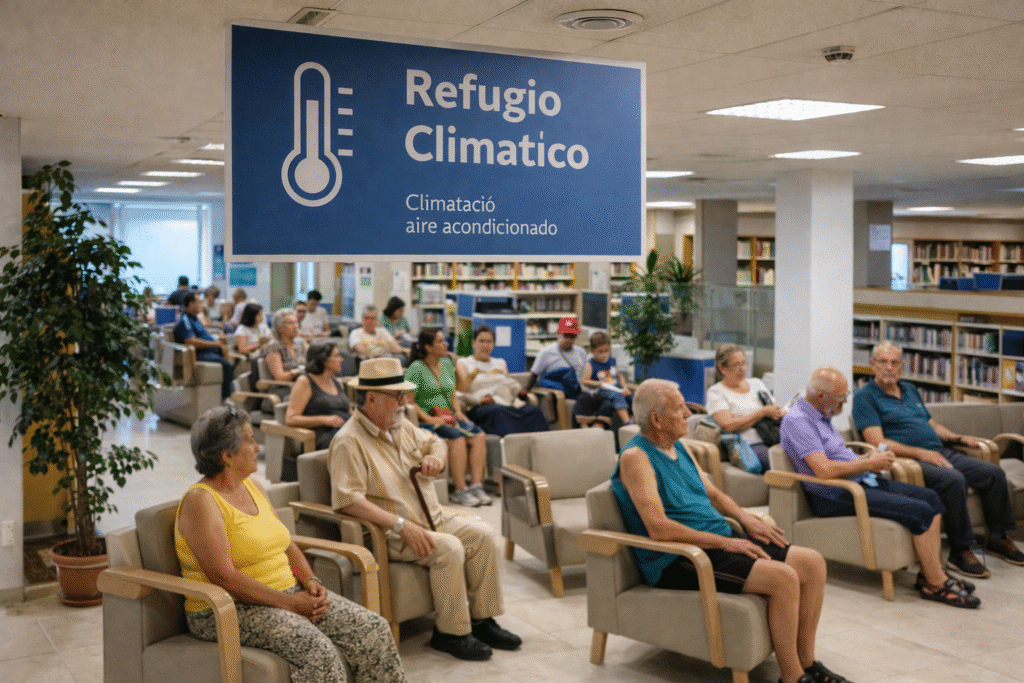
Spain has announced a major nationwide initiative to protect people from increasingly severe heatwaves by creating a network of air-conditioned climate shelters inside public buildings. The program marks a significant shift in how the country addresses climate-related risks, recognizing that extreme heat is no longer an occasional challenge but a defining feature of modern Spanish summers.
The initiative is designed to safeguard both residents and the millions of international visitors who travel to Spain each year. By transforming existing public infrastructure into accessible cooling spaces, the government aims to reduce heat-related health risks while maintaining Spain’s reputation as a safe and welcoming destination.
Public Buildings Become Lifelines During Heatwaves
Under the new plan, government offices, libraries, cultural centers, sports facilities, and other publicly owned buildings will be adapted to function as climate shelters during periods of extreme heat. These spaces will be clearly designated, fully air-conditioned, and open to anyone needing relief when temperatures reach dangerous levels.
The strategy prioritizes speed and accessibility. Rather than constructing new facilities, Spain is repurposing buildings already embedded in daily life, ensuring that cooling zones are available in both major cities and smaller communities. The goal is to have the network operational before the next peak summer season.
Each shelter is expected to provide seating, drinking water, and safe indoor conditions, offering a practical refuge for people unable to cool their homes or spend long hours outdoors.
Heatwaves Become the New Normal
The urgency behind the initiative is driven by alarming climate trends. Spain has experienced record-breaking temperatures in recent years, with prolonged heat events becoming more frequent and intense. Extended periods of extreme heat have placed enormous strain on healthcare systems and disproportionately affected vulnerable populations.
Health authorities have reported a sharp rise in heat-related illnesses and fatalities, particularly among elderly individuals, young children, outdoor workers, and those with chronic medical conditions. Urban areas have been hit especially hard due to the heat-island effect, where dense construction and asphalt retain warmth well into the night.
Officials now openly describe extreme heat as a permanent feature of Spain’s climate rather than a temporary anomaly.
Building on Regional Success
Several Spanish regions have already tested similar concepts with positive results. Cities such as Barcelona have operated local climate refuge networks using libraries, museums, and sports centers as cooling spaces during heat alerts. These regional programs demonstrated that climate shelters can significantly reduce heat stress when they are well-located and clearly communicated to the public.
The national rollout seeks to standardize these efforts, ensuring consistent quality, signage, and accessibility across all regions. By coordinating national and regional resources, Spain aims to close gaps in coverage and ensure that no community is left without support.
Targeting High-Risk Neighborhoods
A key component of the program is its focus on equity. Funding and resources are being directed toward neighborhoods most affected by extreme heat, particularly densely populated urban areas with limited green space and older housing stock.
These zones often experience higher nighttime temperatures and limited access to private air conditioning. By prioritizing climate shelters in these areas, the government hopes to reduce health disparities linked to climate exposure.
Part of a Broader Climate Resilience Strategy
The climate shelter network is one element of a larger national adaptation framework designed to strengthen Spain’s resilience to environmental change. The broader plan includes measures to reduce wildfire risk, improve coastal flood defenses, protect water resources, and enhance public awareness of climate threats.
Public consultation played a major role in shaping the strategy, reflecting widespread recognition among citizens that climate change requires immediate and coordinated action. The government has emphasized that heat protection policies are public safety measures rather than political initiatives, intended to protect everyone living in or visiting Spain.
Implications for Tourism and Visitor Safety
As one of the world’s most visited countries, Spain faces unique challenges in protecting tourists unfamiliar with local heat conditions. Summer visitors often spend extended hours outdoors, increasing their vulnerability during extreme temperature events.
The availability of clearly marked climate shelters in city centers, transport hubs, and tourist areas is expected to improve safety and confidence among travelers. Hotels, tour operators, and local authorities are likely to incorporate shelter information into visitor guidance during heat alerts.
This proactive approach strengthens Spain’s image as a destination that takes visitor well-being seriously, even as climate conditions grow more challenging.
Looking Ahead to Hotter Summers
The government has committed to having the nationwide shelter network fully functional by the summer of 2026, reflecting the accelerating pace of climate change. As ground temperatures rise and heatwaves last longer, indoor cooling spaces are becoming essential public infrastructure rather than emergency measures.
By combining passive cooling through shade with active air-conditioning, Spain is creating a layered defense against extreme heat. These shelters will serve as critical lifelines during future summers, particularly in urban environments.
A Model for Climate-Ready Tourism
Spain’s climate shelter initiative positions the country as a leader in climate adaptation within Europe. By prioritizing human health, urban resilience, and tourist safety, Spain is redefining how destinations can adapt to environmental realities without sacrificing accessibility or hospitality.
As extreme heat reshapes global travel patterns, Spain’s approach offers a blueprint for balancing tourism growth with climate responsibility—ensuring that both residents and visitors can navigate hotter summers safely and sustainably.