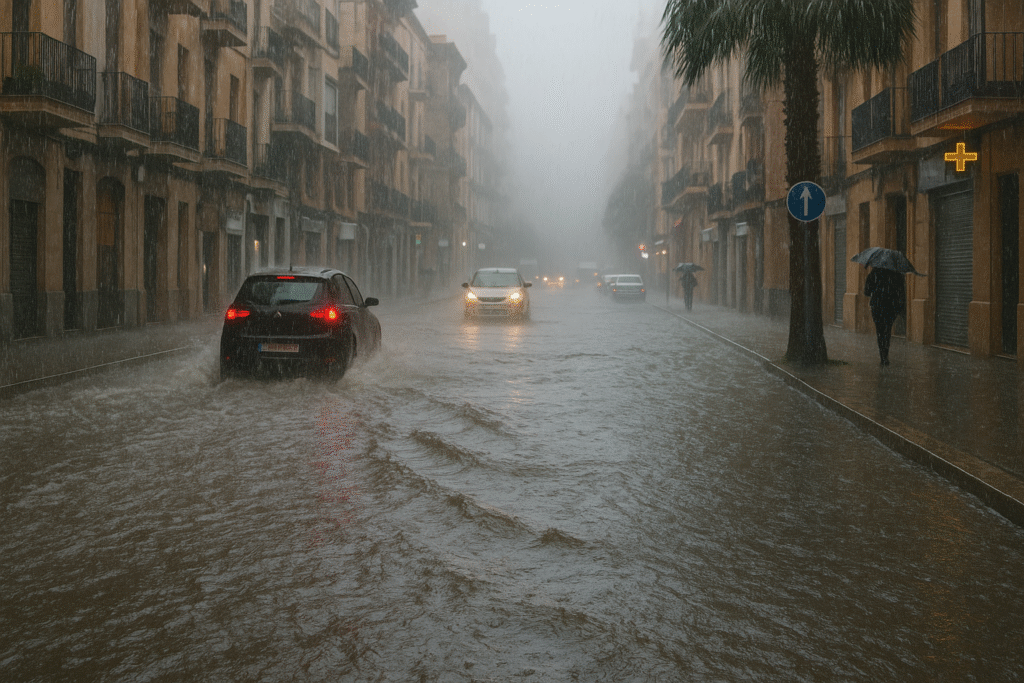
Spain’s eastern Mediterranean coast is facing a travel nightmare as the Spanish Meteorological Agency (AEMET) issues a red alert for Valencia, Castellón, and Tarragona. The region is bracing for torrential rains, gale-force winds, and flash floods, threatening transport networks, tourism, and local communities.
Why Has a Red Alert Been Issued?
The warning stems from a deep low-pressure system in the Mediterranean. Forecasts predict rainfall of up to 100 mm per hour, combined with strong winds. Authorities warn of flash flooding in both coastal and urban zones.
This severe storm continues a season of extreme weather events across the Iberian Peninsula. Rising sea temperatures and shifting atmospheric conditions are fueling unpredictable, destructive weather patterns.
How Will It Affect Travel?
Authorities caution that travel disruptions will be widespread:
- Roads: Many low-lying and coastal routes may flood. Drivers face reduced visibility, slippery roads, and dangerous conditions.
- Trains: The Mediterranean corridor—linking Valencia to Barcelona—may suffer delays or cancellations. Regional and intercity services are especially vulnerable.
- Flights: Valencia and Barcelona airports anticipate delays. Crosswinds and poor visibility may lead to last-minute cancellations. Travelers are urged to check flight status regularly.
- Sea Travel: Ferries and cruises operating along the coast could be suspended due to high waves and strong winds.
Tourists should expect long delays and possible cancellations across all transport modes.
Who Is Affected?
The red alert covers Valencia, Castellón, and Tarragona—three popular tourist regions. Known for beaches, historic districts, and cultural attractions, these destinations now face flash flooding, blocked roads, and power outages.
- Residents are being advised to stay indoors and avoid unnecessary travel.
- Tourists must prepare for extended disruptions and follow local authority guidance. Hotels, hostels, and rental homes are encouraging guests to remain inside during peak rainfall.
- Businesses in coastal and low-lying zones are reinforcing properties and preparing for potential water damage.
Where Will the Worst Conditions Hit?
- Valencia and Castellón: Coastal cities face the highest flood risks. Urban drainage systems may struggle under heavy rain.
- Tarragona: Inland areas with steep terrain risk landslides and mudslides.
- Coastal Regions: Maritime conditions will worsen, disrupting fishing, shipping, and ferry services.
Flash flooding is most likely in low-lying neighborhoods, near rivers, and along coastal highways.
Safety Advice for Travelers and Locals
Authorities have issued urgent recommendations:
- Avoid non-essential travel.
- Stay indoors during peak storm hours.
- Do not attempt to drive through flooded streets.
- Secure doors, windows, and outdoor belongings.
- Keep emergency supplies, water, food, and medications within reach.
- Follow updates from AEMET and regional emergency services.
Tourists should confirm reservations, expect disruptions, and keep essential items ready in case of evacuation.
The Impact on Tourism
These regions rely heavily on international visitors. Valencia’s historic Old Town, Castellón’s Mediterranean beaches, and Tarragona’s Roman ruins are major attractions. But with roads submerged and flights delayed, tourists face cancelled tours, disrupted itineraries, and extended stays.
Hotels and hospitality providers are working closely with authorities to shelter stranded travelers. Local tourism boards are using digital platforms to share updates in multiple languages.
Government and Emergency Response
Emergency crews across Valencia, Castellón, and Tarragona are on high alert. Police, fire services, and medical teams are preparing evacuation zones. Sandbags and pumps are being distributed to vulnerable districts.
Local governments are also coordinating with transportation authorities to reroute trains, manage airport delays, and clear blocked roads. Evacuation shelters are being readied for residents in high-risk flood zones.
Why Travel Disruptions Will Continue
The combined forces of heavy rain, wind, and flooding make travel delays inevitable. Clearing roads, draining flooded areas, and restoring normal train services will take time. Even after rainfall decreases, cleanup operations may extend disruptions.
Air travel may remain unstable as airlines adjust schedules. Maritime routes could also face prolonged delays until seas calm.
What Travelers Should Do Now
- Check Transport Updates: Use airline apps, train operator websites, and AEMET alerts.
- Stay Flexible: Prepare for changes in schedules and delays of several hours.
- Keep Essentials Handy: Passports, tickets, medications, and chargers should remain accessible.
- Follow Local Guidance: Listen for evacuation orders and stay in safe zones.
A Critical Few Days Ahead
For both locals and visitors, the next few days represent a critical period of risk. Valencia, Castellón, and Tarragona face storm conditions rarely seen at this intensity.
The red alert underscores the importance of preparation and caution. By following official guidance, residents and tourists can stay safe, even as the storm disrupts travel and daily routines.
For more travel news like this, keep reading Global Travel Wire