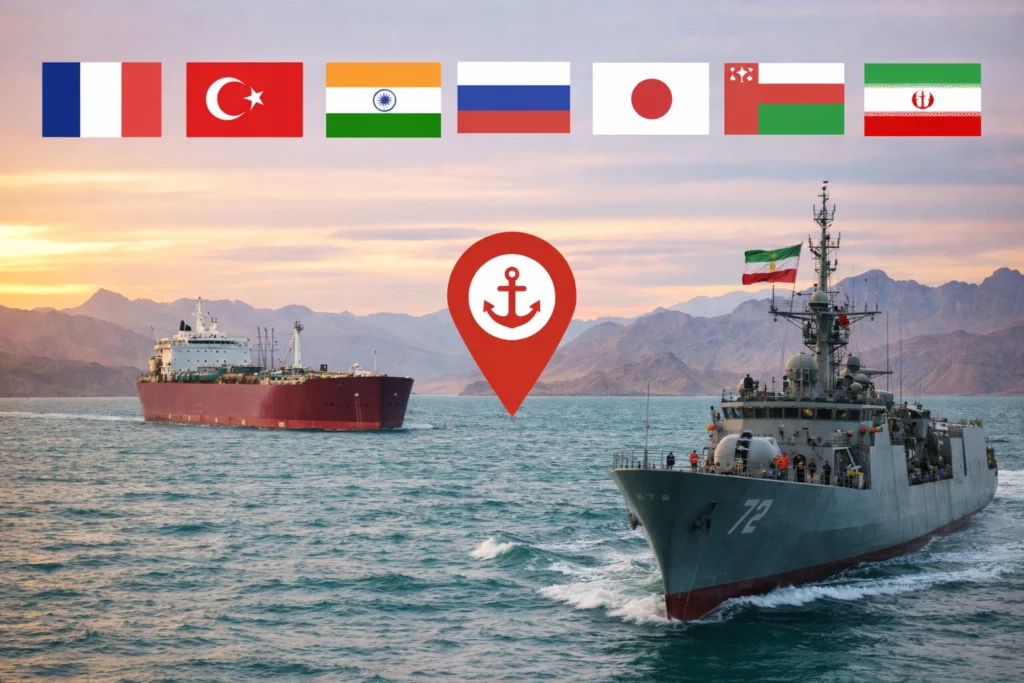
A major shift in maritime policy is reshaping global travel and trade routes through the Strait of Hormuz. Iran has introduced a no-fee transit policy for selected countries, including France, India, Japan, Turkey, Oman, Pakistan, and others.
The decision affects one of the world’s most critical waterways. The Strait of Hormuz connects the Persian Gulf to the Gulf of Oman and handles a large share of global energy shipments.
This policy change is expected to influence not only shipping and energy markets but also travel logistics, cruise routes, and regional tourism flows.
Strategic Waterway Gains New Importance
The Strait of Hormuz plays a vital role in global trade. A significant portion of the world’s oil and gas passes through this narrow route.
By offering toll-free access to selected countries, Iran has altered the cost structure for maritime transport. Shipping companies from these nations can now reduce operational expenses.
This shift may influence cruise operators and travel logistics providers. Lower transit costs could make certain routes more attractive for tourism and trade.
France and Europe Benefit from Easier Access
France is among the countries benefiting from the new policy. French shipping operators now enjoy smoother and more cost-effective transit through the strait.
This advantage supports energy supply chains and trade routes between Europe, Asia, and the Middle East. It may also strengthen France’s role in global maritime logistics.
European travel and cruise sectors could see indirect benefits. Improved shipping efficiency may stabilize supply chains and support tourism-related industries.
India and Asia Strengthen Trade Connectivity
India, a major importer of energy resources, gains significant advantages from the policy. Indian vessels can now transit without additional fees, reducing transportation costs.
This supports India’s growing trade connections with the Middle East and Europe. It also enhances the country’s position as a key maritime player in Asia.
Japan, South Korea, and other Asian economies also benefit from smoother energy transport. These developments help maintain stable supply chains and support travel-related industries.
Middle East and Regional Tourism Impact
Countries such as Oman and Turkey are positioned to benefit from increased maritime activity. Their strategic locations allow them to serve as key transit hubs.
Increased shipping traffic may support regional tourism infrastructure. Ports and coastal destinations could see higher activity from cruise lines and maritime services.
Pakistan also gains improved access to energy imports. This supports economic stability and enhances its role in regional trade networks.
Changing Dynamics for Global Shipping
The new policy creates a shift in global shipping dynamics. Countries with access to toll-free transit gain a competitive advantage in trade and logistics.
Shipping companies may adjust routes to benefit from reduced costs. This could lead to changes in global supply chains and travel-related logistics.
Ports in benefiting countries may experience increased activity. This can support local economies and tourism-related businesses.
Implications for Travel and Tourism
Although the policy focuses on maritime trade, it has broader implications for travel. Cruise routes, cargo logistics, and supply chains all influence tourism experiences.
Lower shipping costs can help stabilize prices for goods and services. This may indirectly benefit travelers by reducing travel-related expenses.
Tourism destinations connected to maritime routes may see increased visitor interest. Coastal cities and port destinations could gain more visibility.
Uncertainty and Future Outlook
While the policy offers clear benefits to selected countries, global dynamics remain complex. Changes in maritime access can influence geopolitical relationships and trade patterns.
Travel and tourism industries will continue to monitor developments. Stability in shipping routes is essential for maintaining consistent travel flows.
Governments and industry stakeholders are expected to adapt strategies based on evolving conditions. This includes adjusting travel logistics and infrastructure planning.
A Transformative Moment for Global Travel Routes
The introduction of a no-fee transit policy marks a significant moment for global maritime travel. It highlights the growing influence of regional decisions on international trade and tourism.
Countries benefiting from the policy are likely to strengthen their economic and travel sectors. At the same time, global travel networks may shift to reflect new efficiencies.
As the situation evolves, the Strait of Hormuz will remain a key focus for both trade and tourism. Its role in connecting regions ensures that any policy change will have far-reaching impacts.
For more travel news like this, keep reading Global Travel Wire