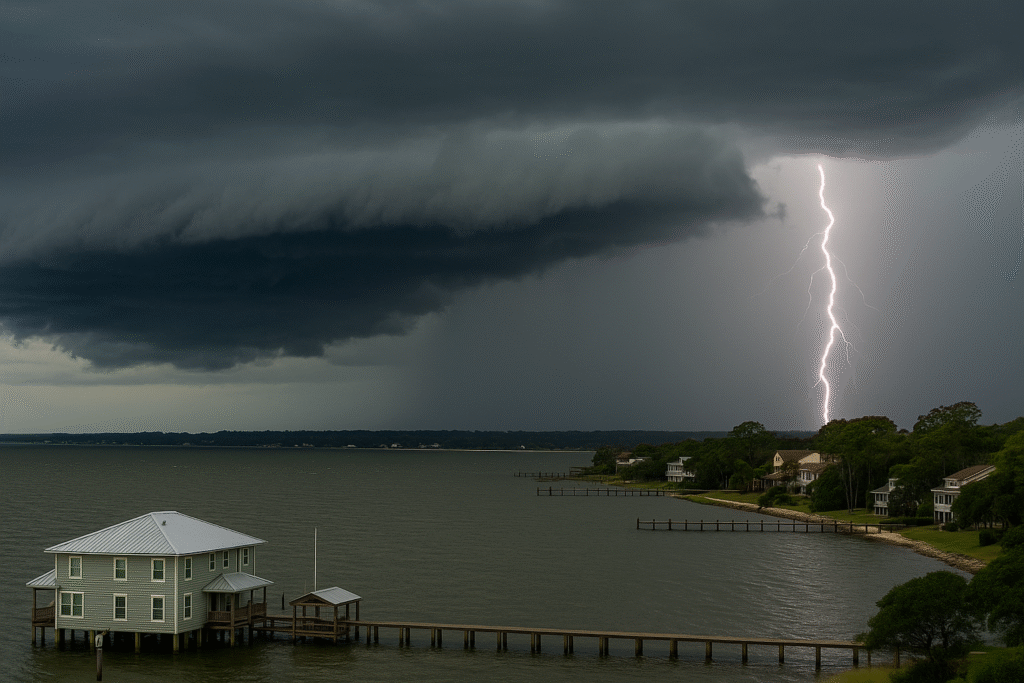
A fast-moving thunderstorm near Alabama’s central coast has triggered a strong marine warning. The storm formed near East Fowl River Bridge on the evening of November 25 and is tracking east at high speed. Tourists visiting Mobile Bay, Fairhope, Point Clear, and surrounding areas should prepare for sudden weather changes and dangerous marine conditions.
Alabama’s Gulf Coast attracts thousands of visitors each week due to its calm waters, vibrant coastal towns, and scenic nature spots. However, this weather system is expected to disrupt outdoor plans across several well-known tourist zones. Local authorities urge visitors to stay cautious until conditions stabilize.
Key Tourist Areas in the Storm Path
Several popular coastal destinations are directly under the storm’s projected path. These locations often see high visitor activity, especially during cooler fall evenings.
Gaillard Island
Known for its bird habitats and boating routes, this area may see strong winds and dangerous wave conditions. Boaters should avoid venturing close to the island until weather improves.
Dog River Bridge
A favoured route for sightseeing and fishing trips, Dog River Bridge may experience reduced visibility and slippery road conditions.
East Fowl River Bridge
This major crossing point for local and tourist traffic could face intense rainfall. Travellers are advised to slow down and avoid unnecessary trips in this zone.
Point Clear and Grand Bay
These communities attract many visitors for their coastal views and historic charm. Strong gusts and heavy rain may affect waterfront walkways and local recreational areas.
Fairhope Pier
One of the region’s central tourism hubs, Fairhope Pier may temporarily restrict access due to rough waters. Tourists planning evening strolls should stay inland.
Storm Hazards Tourists Should Expect
The storm brings several potential risks, especially for those enjoying water-based activities.
High Wind Gusts
Winds may reach up to 30 knots. These conditions can easily push small watercraft off course and create risks for inexperienced boaters.
Rough Seas and Large Waves
Marine forecasts warn of fast-building waves. These waters may cause instability for kayakers, jet-ski riders, and fishing charters.
Heavy Rainfall
Short bursts of intense rain are possible. Sudden downpours can reduce driving visibility and lead to water accumulation on coastal roads.
Low-Lying Flooding
Areas around East Fowl River, Fairhope Pier, and other waterfront zones may experience brief flash flooding. Tourists should avoid walking near storm drains or flooding-prone paths.
Safety Tips for Tourists and Boaters
The National Weather Service has shared essential safety guidelines to ensure public safety. Tourists are encouraged to follow these steps:
1. Seek Shelter Quickly
If you are on a boat, head to the nearest marina or safe harbour. On land, choose a sturdy building away from open water.
2. Monitor Weather Updates
Local emergency broadcasts and official weather statements provide frequent alerts. Keep mobile notifications active to track any changes.
3. Avoid Coastal Travel
Delay boating trips, fishing tours, or waterfront visits until the storm passes. Road conditions near beaches and bridges may worsen fast.
4. Stay Indoors During Lightning or Strong Winds
Lightning can strike open water or high points near the shore. Stay inside hotels, restaurants, or designated shelters.
5. Prepare for Flash Floods
Move away from low areas or marshlands. If you notice rising water, reach elevated ground immediately.
Impact on Local Tourism and Activities
Alabama’s coastal tourism thrives on outdoor excursions, marine tours, and scenic walks. The sudden thunderstorm may temporarily limit these experiences.
Outdoor Excursions
Boat tours, fishing trips, and sunset cruises may see cancellations. Tour operators often prioritize safety and provide refund or rescheduling options.
Waterfront Access
Public piers, boardwalks, and nature trails near the water may be closed during peak storm activity. This prevents accidents from waves or strong gusts.
Travel Delays
Bridges and coastal highways could experience slow movement due to rain and poor visibility. Tourists should plan alternative indoor activities until conditions improve.
What Tourists Should Expect Over the Next Few Hours
Forecasters expect the storm to weaken later in the evening. However, lingering hazards such as slippery roads, choppy waters, and scattered rainfall may remain. Local emergency officials may release more advisories based on storm behaviour.
Once the weather clears, popular coastal attractions will reopen, and marine conditions should return to normal. Alabama’s Gulf Coast is known for rapid weather recovery, allowing visitors to resume sightseeing, fishing, and leisure activities soon after storms pass.
Final Advice for Visitors
The thunderstorm serves as a reminder of how quickly coastal weather can change. By staying aware and following safety guidance, tourists can protect themselves while minimizing disruptions to their plans. After the storm, the region’s stunning landscapes, calm beaches, and welcoming towns will be ready to explore again.
For more travel news like this, keep reading Global Travel Wire