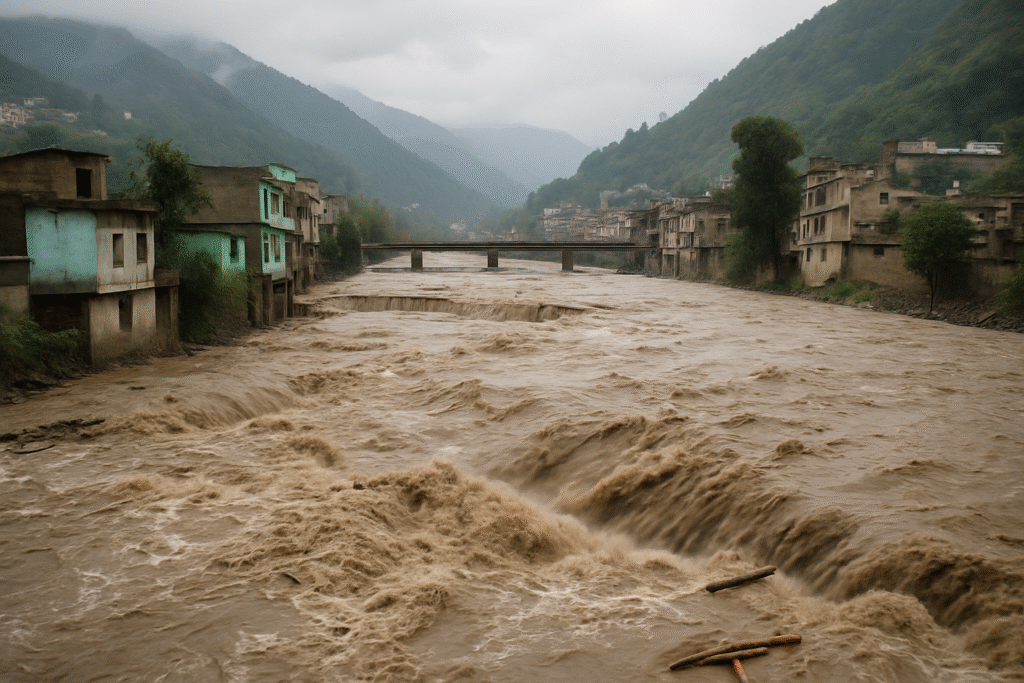
SWAT VALLEY, KHYBER PAKHTUNKHWA — July 7, 2025 — The devastating flash floods that swept through the Swat River on June 27, claiming 17 lives, have cast a sharp spotlight on Pakistan’s tourism safety protocols and the critical need for improved flood warning systems. This tragedy, which unfolded near a popular riverside hotel, has prompted authorities to reevaluate risk management strategies in one of the country’s most scenic yet disaster-prone destinations.
A Preventable Tragedy: Tourists Ignored Safety Warnings
The flash flood struck suddenly following heavy monsoon rains, raising the Swat River’s water discharge to over 77,000 cusecs. Despite warnings from hotel staff, a group of tourists from Sialkot and Mardan bypassed safety alerts and ventured to the river’s edge via an unauthorized rear route. Within minutes, the group was trapped on a shrinking patch of land, surrounded by rising waters.
Rescue teams were alerted at 9:45 a.m., but by the time they arrived at 10:05 a.m., conditions had worsened dramatically. Although four individuals were successfully rescued, 12 bodies have since been recovered, and one person remains missing. Emotional footage of the group calling for help from a makeshift island circulated widely online, triggering public outrage and demands for accountability.
Rescue Efforts and Emergency Response Challenges
The prolonged rescue operation entered its 11th day as of July 7, highlighting the logistical difficulties emergency teams face during natural disasters. The powerful current and limited access routes hampered efforts to reach the victims in time. While responders acted swiftly, the tragedy underscored systemic issues in rapid disaster response, especially in high-risk tourism zones like Swat.
Commissioner of Malakand Division, Abid Wazir, has since submitted a detailed inquiry to the Khyber Pakhtunkhwa government. His report emphasizes the urgent need for more advanced flood warning systems and stricter tourism regulations in areas prone to natural hazards.
Government Response and Safety Reform Initiatives
Authorities are now moving swiftly to implement reforms. One of the key developments includes the rollout of a state-of-the-art early flood warning system, designed in partnership with the Ghulam Ishaq Khan Institute of Engineering Sciences and Technology and the World Wildlife Fund (WWF). These automated systems will be deployed across rivers and tributaries in Swat and other vulnerable regions to deliver real-time alerts.
Wazir’s inquiry also criticized the delegation of tourism safety management to the Tehsil Municipal Administration (TMA), suggesting that such responsibilities be handed over to the Upper Swat Development Authority (USDA). Unlike the TMA, the USDA is better equipped to oversee tourism regulation, infrastructure planning, and enforcement of safety protocols.
The new strategy aims to improve disaster preparedness while promoting sustainable tourism through inter-agency collaboration, better signage, increased patrolling of hazardous areas, and stricter enforcement of riverbank restrictions during monsoon months.
Encroachment Crackdown: Clearing Illegal Constructions
The floods have also drawn attention to rampant illegal construction and land encroachment in Swat and the broader Malakand Division. A government-led anti-encroachment campaign identified over 200 unauthorized structures spread across more than 500 kanals of land. Between June 30 and July 4 alone, 61 illegal buildings were sealed across six districts.
In Swat Valley, structures near riverbanks and in high-risk zones were demolished to ensure public safety. Authorities have marked over 115 kilometers of land for monitoring and have installed fencing at 54 critical points to prevent future encroachments.
These efforts aim not only to restore ecological balance but also to preserve tourist areas from unregulated development that could exacerbate flood risks.
Sustainable Tourism: Looking Forward
The tragic incident has served as a wake-up call for Pakistan’s tourism authorities, who are now tasked with balancing the growth of the tourism economy with environmental sustainability and visitor safety. Swat, often called the “Switzerland of the East,” attracts thousands of tourists annually with its rivers, lush landscapes, and cultural heritage. Yet, this very beauty can become treacherous when not managed responsibly.
As a result, the provincial government is preparing a comprehensive tourism safety policy, which will involve local administrations, tourism departments, rescue agencies, and environmental scientists. A key component will be public awareness campaigns aimed at educating both tourists and local businesses about flood dangers and appropriate behavior during weather emergencies.
Tour guides and hotel staff will also undergo enhanced training, equipping them to respond effectively to future threats and assist in emergency evacuations. Plans are underway to deploy dedicated tourism safety patrols along high-traffic riverside zones during peak travel seasons.
A Call for Proactive Governance
The Swat River flood incident has highlighted a deeper, structural issue—a lack of cohesive tourism governance in natural disaster zones. As Pakistan continues to expand its tourism offerings, particularly in northern areas like Swat, Hunza, and Chitral, a centralized tourism safety framework becomes essential.
Experts argue for flood-resilient infrastructure, including elevated walkways, warning sirens, digital alert boards, and improved mobile signal coverage in remote areas. Such infrastructure, coupled with clear legal responsibilities for tourism safety management, could prevent future tragedies.
Conclusion: A Tragedy That Must Not Be Repeated
The heartbreaking events of June 27, 2025, at the Swat River serve as a powerful reminder of the consequences of complacency in the face of natural risk. While Pakistan’s tourism sector offers vast economic promise, it must be underpinned by solid infrastructure, strict regulation, and public education.
With the government’s renewed commitment to flood warning systems, anti-encroachment enforcement, and tourism safety reform, there is hope that this tragedy will become a turning point—ushering in a new era of safe, sustainable, and resilient tourism in Swat and beyond.
For more travel news like this, keep reading Global Travel Wire