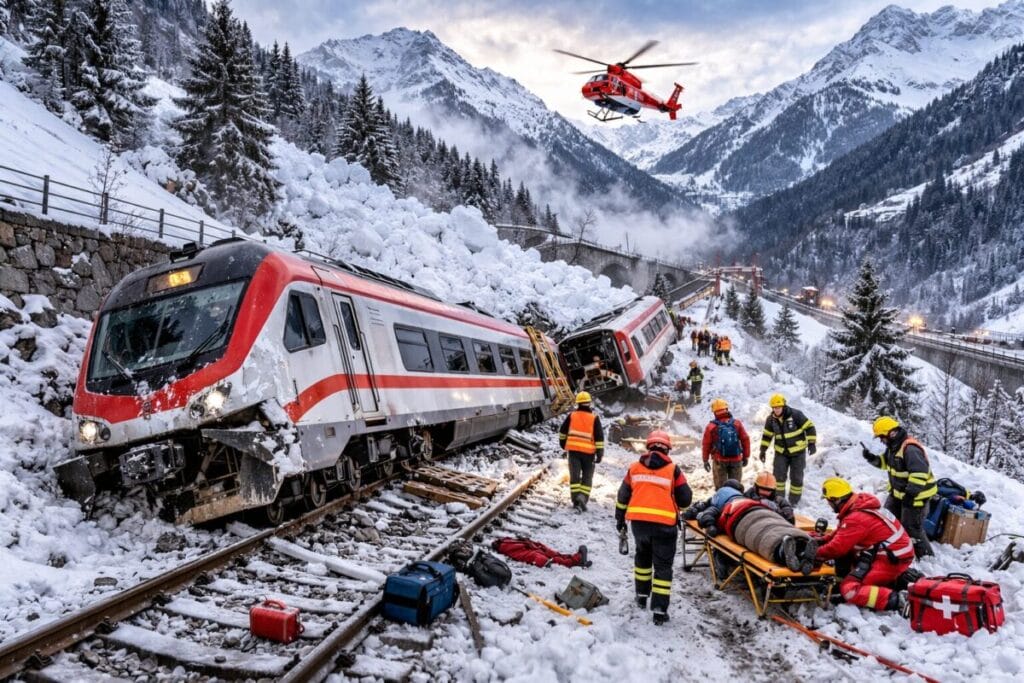
A passenger train carrying around 80 people derailed in Switzerland after an avalanche struck a rail section in the Alps. The incident happened early Sunday morning near the village of Goppenstein in the canton of Valais. Several carriages left the tracks, and multiple passengers suffered injuries.
Emergency services responded quickly despite challenging winter conditions. Rescue teams reached the site shortly after the accident and began evacuating passengers. Authorities temporarily suspended rail services in the area to assess safety risks and clear snow debris.
The derailment occurred during the peak winter tourism season. Thousands of visitors travel to the Swiss Alps every year for skiing, snowboarding, and scenic train journeys. The accident has raised fresh questions about travel safety in avalanche-prone regions.
Winter Weather Challenges for Tourism and Transport
Severe winter weather continues to impact transportation networks across mountainous regions. Heavy snowfall and strong winds increase avalanche risk, especially at higher altitudes. Rail lines that cross Alpine valleys often face exposure to sudden snow movements.
The recent accident highlights how quickly natural hazards can disrupt travel plans. Even advanced infrastructure and safety monitoring cannot fully eliminate risk in extreme conditions. Tourism operators and transport authorities must constantly adjust operations to match weather forecasts.
Winter tourism remains a major economic driver in Switzerland. Visitors rely heavily on trains to access ski resorts and remote villages. Any disruption to rail systems affects not only travelers but also local businesses and seasonal employment.
Avalanche Risk Levels and Safety Warnings
Prior to the incident, avalanche danger levels in parts of Switzerland had increased due to heavy snowfall. High risk ratings signal unstable snow layers and elevated chances of avalanches. Such warnings encourage caution among travelers and operators.
Avalanches often occur when accumulated snow becomes unstable due to wind, temperature changes, or additional snowfall. Mountain regions like Valais frequently experience these conditions during winter.
Authorities use advanced monitoring tools, weather forecasting, and early warning systems to manage risks. However, natural events remain unpredictable. This creates ongoing challenges for ensuring safety while maintaining reliable transport services.
Travelers visiting the Alps should stay informed about avalanche forecasts and follow local safety guidance. Awareness and preparation play a major role in reducing risk during winter travel.
Impact on Alpine Tourism and Visitor Confidence
The Swiss Alps attract millions of visitors each year. Scenic rail journeys and winter sports form a key part of the tourism experience. When incidents occur, they can influence traveler confidence and decision-making.
Safety concerns often lead to temporary changes in travel behavior. Tourists may reconsider travel plans or seek additional safety information before visiting snow-heavy regions. Tourism boards and operators must respond with clear communication and transparent updates.
Despite risks, Switzerland maintains a strong reputation for safety and efficient emergency response. Continuous investment in infrastructure and training helps minimize the impact of extreme weather events.
Climate patterns also influence winter tourism trends. Changing snowfall patterns and increased weather variability require tourism providers to adapt strategies. Flexibility and risk management have become essential for sustainable winter tourism.
Transportation Safety in Snow-Prone Regions
Rail networks in mountainous terrain face unique challenges. Snow accumulation, avalanches, and icy conditions can affect tracks, signals, and train operations. Engineers design protective structures such as snow barriers and avalanche galleries to reduce risk.
The recent derailment highlights the need for ongoing evaluation of safety systems. Authorities may review operational procedures, emergency response plans, and real-time monitoring technologies. Improved communication between weather agencies and transport operators can help reduce future incidents.
Technology plays a growing role in managing risks. Sensors, satellite data, and predictive models allow operators to monitor snow conditions more closely. These tools support faster decision-making when danger levels increase.
Lessons for Travelers and the Tourism Industry
The accident serves as a reminder that winter tourism carries natural risks. Travelers should remain flexible and prepared for sudden changes. Checking weather updates, following safety instructions, and allowing extra travel time can improve overall safety.
Tourism providers must also continue strengthening safety protocols. Clear risk communication, staff training, and coordinated emergency planning help protect visitors and maintain trust.
As adventure tourism grows in popularity, more travelers seek experiences in remote and natural environments. This increases exposure to unpredictable conditions. Responsible tourism practices and safety awareness will become even more important in the future.
A Wake-Up Call for Alpine Travel Safety
The Swiss Alps train derailment underscores the balance between tourism growth and environmental risk. While Switzerland offers advanced infrastructure and strong safety systems, natural forces remain powerful and unpredictable.
Authorities, tourism operators, and travelers share responsibility for maintaining safety. By combining improved technology, proactive planning, and informed travel choices, the Alpine region can continue to welcome visitors while managing the challenges of extreme winter conditions.
Winter tourism remains central to Switzerland’s identity. Events like this encourage stronger collaboration between transport networks and tourism stakeholders. The goal remains clear: ensure safe, reliable travel while preserving the unique experiences that attract visitors to the Alps every season.
For more travel news like this, keep reading Global Travel Wire