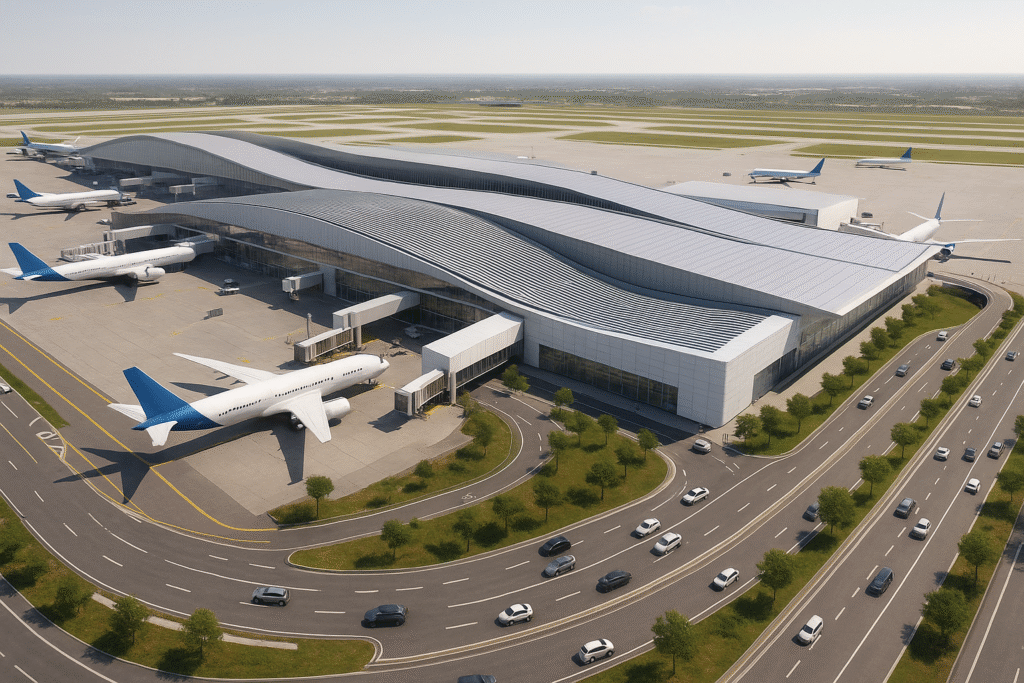
Australia’s Sydney Airport has announced an ambitious plan to completely reconfigure its operations by 2045. The airport will merge its domestic and international terminals into a single unified precinct, aiming to transform the passenger experience and dramatically improve efficiency. This strategic move is designed to eliminate the long-standing inconvenience of terminal transfers while preparing Sydney to meet the surging demand of global tourism and trade.
The project, outlined in the Master Plan 2045, is being hailed as the airport’s most significant overhaul since the Sydney Olympics in 2000. By uniting operations under one roof, the plan promises smoother connections, reduced waiting times, and enhanced passenger comfort—all while strengthening Sydney’s reputation as Australia’s primary international gateway.
Unified Terminals: A Game-Changer for Travelers
At the heart of the plan is the integration of Sydney’s T2 and T3 domestic terminals with the international T1 terminal. This will create a single, world-class precinct that allows passengers to move freely between regional, domestic, and long-haul flights without the current logistical challenges of buses, long walks, or tight connections.
The design includes 12 new international gates and two additional gates at T1, expanding capacity and reducing congestion. Travelers with complex itineraries—such as flying from a regional city to Sydney and then onward to an international destination—will enjoy faster transfers and fewer disruptions. This is particularly significant for international visitors who often face difficulties navigating between separate terminals.
Boosting Airline Efficiency and Travel Agent Operations
For airlines, the integration presents an opportunity to streamline schedules and tighten connections. Passengers with short layovers will be able to connect more easily, and airlines can better coordinate domestic and international timetables. This efficiency will also help reduce the risk of missed connections, a common frustration for travelers.
Travel agents, too, stand to benefit from the simplified infrastructure. The overhaul will enable them to offer clients smoother itineraries, competitive fares, and greater route flexibility. With fewer logistical hurdles, agents can craft more appealing travel packages and expand their product offerings.
Passenger Growth and Future Capacity
By 2045, Sydney Airport is expected to handle 72 million passengers annually—a 75% increase from current levels. Significantly, for the first time in the airport’s history, international travelers are projected to make up more than half of all passengers.
This shift highlights Sydney’s growing importance not only as a domestic hub but also as one of the busiest international airports in the Asia-Pacific region. With increased capacity and a unified terminal design, Sydney Airport will be able to support tourism growth while meeting the evolving needs of global travelers.
Economic and Tourism Impact
The project is not just about travel convenience—it is also an economic catalyst. The expansion is forecast to create over 105,000 direct jobs at the airport and support more than half a million jobs across the broader economy. Industries such as tourism, hospitality, retail, and logistics will benefit from the airport’s increased capacity and expanded reach.
For New South Wales, where tourism is a critical contributor to the economy, the overhaul will ensure that Sydney remains a major global gateway. The influx of international visitors will boost local businesses and strengthen Australia’s position as a premier travel destination.
Commitment to Sustainability and Community
While growth and capacity are central goals, Sydney Airport has also emphasized its commitment to environmental responsibility. Alongside the Master Plan 2045, the airport has released a five-year Airport Environment Strategy. This initiative focuses on reducing emissions, building climate resilience, and ensuring sustainability across all operations.
Noise management will remain a priority, with the airport pledging to collaborate with local communities to minimize aircraft noise and balance the demands of growth with community well-being.
Transforming the Travel Experience
The benefits of the overhaul extend beyond logistics and economics. For passengers, the transformation means fewer disruptions, more reliable connections, and a more comfortable journey. For airlines and travel agents, it means greater operational efficiency and flexibility. And for the wider economy, it signals job creation, tourism growth, and increased global visibility.
Inbound tourism will expand as international travelers find Sydney easier to navigate, while outbound Australians will enjoy simpler, faster access to global destinations. The project also supports business travel, ensuring corporate passengers can make tighter connections with minimal stress.
Looking Ahead
Sydney Airport’s Master Plan 2045 represents a bold and forward-thinking vision for the future of air travel in Australia. By integrating domestic and international operations, the airport is eliminating long-standing inefficiencies and preparing itself to serve as a seamless global hub.
With a focus on sustainability, economic growth, and passenger convenience, the plan ensures that Sydney Airport will remain at the forefront of international aviation for decades to come. For travelers, airlines, and the tourism industry alike, this transformation is poised to revolutionize the way Australia connects with the world.
For more travel news like this, keep reading Global Travel Wire