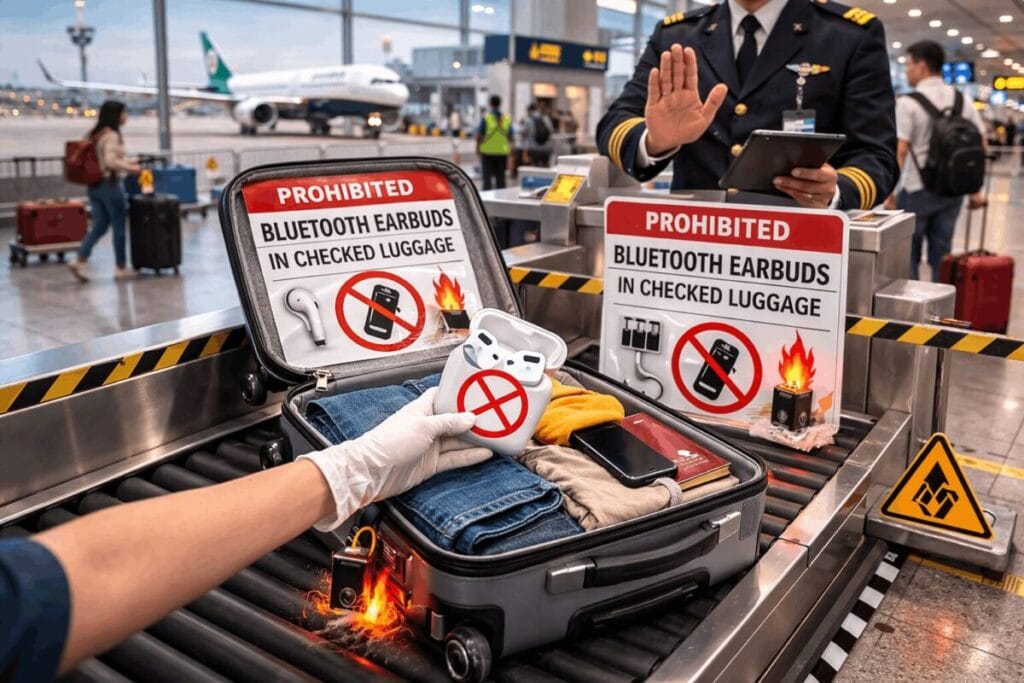
Air travel safety regulations continue to evolve as airlines respond to emerging risks linked to lithium battery-powered devices. Taiwanese carriers EVA Air, UNI Air, and Tigerair have introduced strict new policies banning Bluetooth earbuds from checked luggage. The move aims to reduce fire hazards and strengthen onboard safety measures.
The new rule targets popular wireless earbuds that contain lithium-ion batteries. Devices such as Apple AirPods and similar products must now be carried in hand luggage instead of checked baggage. Airline authorities believe this change will help crew members detect problems early and respond quickly if overheating occurs.
Why Airlines Are Concerned About Lithium Batteries
Lithium batteries power many everyday devices, including smartphones, earbuds, power banks, and laptops. These batteries can store significant energy in small spaces. While generally safe, they may pose risks if damaged, poorly manufactured, or exposed to extreme conditions.
Overheating incidents linked to lithium batteries have increased aviation concerns worldwide. In rare cases, batteries can enter thermal runaway, causing intense heat or fire. Fires inside aircraft cargo holds present unique challenges because passengers and crew cannot easily access the area.
Bluetooth earbuds often charge automatically when stored inside their cases. This charging process increases the possibility of overheating if a malfunction occurs. As a result, airlines see these small devices as potential fire hazards when packed inside checked luggage.
Shift Toward Proactive Aviation Safety Measures
The new restriction reflects a broader industry trend toward stricter safety standards. Over the past few years, many airlines introduced bans on power banks in checked baggage due to similar concerns about lithium battery safety.
Several international carriers have already implemented policies requiring passengers to keep battery-powered devices in carry-on bags. The rationale is simple. Cabin crews can quickly respond to smoke or heat events inside the aircraft cabin. Immediate action reduces risks to passengers and equipment.
Taiwanese airlines now extend this approach to wireless earbuds. Safety experts believe early preventive measures help avoid incidents rather than reacting after problems occur.
Previous Incidents Prompt Industry-Wide Policy Changes
Airline safety decisions often follow lessons learned from past incidents. Reports of overheating power banks and electronic devices on flights have pushed airlines to review existing policies. In one notable case, a malfunctioning power bank caused a fire that forced an aircraft out of operation. Although no passengers suffered injuries, the event highlighted the need for stronger safety rules.
Such incidents prompted airlines worldwide to reassess how lithium battery devices should travel. Regulators and aviation authorities continue to update guidelines as technology evolves and passenger electronics become more advanced.
How the New Rule Affects Travelers
Passengers flying with EVA Air, UNI Air, or Tigerair must now adjust how they pack their electronics. Bluetooth earbuds cannot go inside checked baggage. Instead, travelers must carry them in cabin luggage.
Airlines recommend following these safety tips:
- Store wireless earbuds in protective cases.
- Turn devices off when not in use.
- Avoid charging devices during storage unless necessary.
- Keep batteries away from metal objects to prevent short circuits.
Travelers should also check airline-specific guidelines before departure. Policies may vary depending on aircraft type, route, or local aviation regulations.
Global Aviation Authorities Support Similar Guidelines
Aviation safety bodies across multiple regions encourage passengers to keep lithium battery devices in carry-on bags. Cabin monitoring allows faster response if overheating or smoke occurs.
Experts highlight that lithium battery risks remain relatively low but require careful handling. The rapid growth of wireless technology has increased the number of electronic devices onboard, prompting regulators to adapt safety standards.
Some airlines have already restricted power banks entirely or introduced limits on battery capacity. The addition of Bluetooth earbuds to restricted items reflects ongoing risk assessments rather than isolated decisions.
Impact on Travel Experience and Passenger Awareness
The new policy may require minor adjustments for frequent travelers. Many passengers already carry essential electronics in cabin bags, making the transition easier. However, airlines stress that awareness remains key to maintaining safety.
Travelers should expect more announcements about lithium battery safety during check-in and boarding. Clear communication helps passengers understand why certain items cannot travel in checked luggage.
Airlines believe informed passengers contribute to safer journeys. As more devices rely on rechargeable batteries, safety awareness becomes part of modern travel preparation.
Future of Lithium Battery Regulations in Aviation
The aviation industry continues to monitor technological developments and safety data. Experts anticipate additional guidelines as wireless devices evolve and battery technology changes.
Airlines may expand restrictions to other small electronics if new risks emerge. At the same time, manufacturers continue working to improve battery design and safety features.
For now, the ban on Bluetooth earbuds in checked luggage marks another step toward proactive aviation safety. By addressing potential hazards early, airlines aim to protect passengers, crew, and aircraft while maintaining confidence in global air travel.
For more travel news like this, keep reading Global Travel Wire