Southeast Asia’s bustling travel markets are facing serious disruptions in 2024-25. Border regions around Thailand, Cambodia, Myanmar and Laos are caught in conflict, affecting tourism and traveller safety. Whether through closure of crossings, armed clashes or rampant smuggling, the border zones are no longer the smooth gateways they once were.
Thailand-Cambodia Border: Sharpening Conflict
The Thailand-Cambodia frontier has become one of the most precarious travel zones. A dispute in the Emerald Triangle region erupted into armed conflict in May 2025. Heavy artillery, rockets and cross-border exchanges displaced thousands of civilians. The area around the temple of Prasat Ta Muen Thom and other heritage sites became a no-go zone.
Land border crossings were shut or heavily restricted in seven Thai provinces. Tourists were stranded, trade stalled and local economies took major hits. The presence of landmines and unexploded ordnance added a hidden danger for the unwary traveller.
Government travel advisories warned against all but essential travel within 50 km of the border. Some tourist highlights like the Preah Vihear site and neighbouring attractions were closed or inaccessible. These disruptions are reshaping the tourism map for the region.
Myanmar-Thailand Border: Persistent Risk and Uncertainty
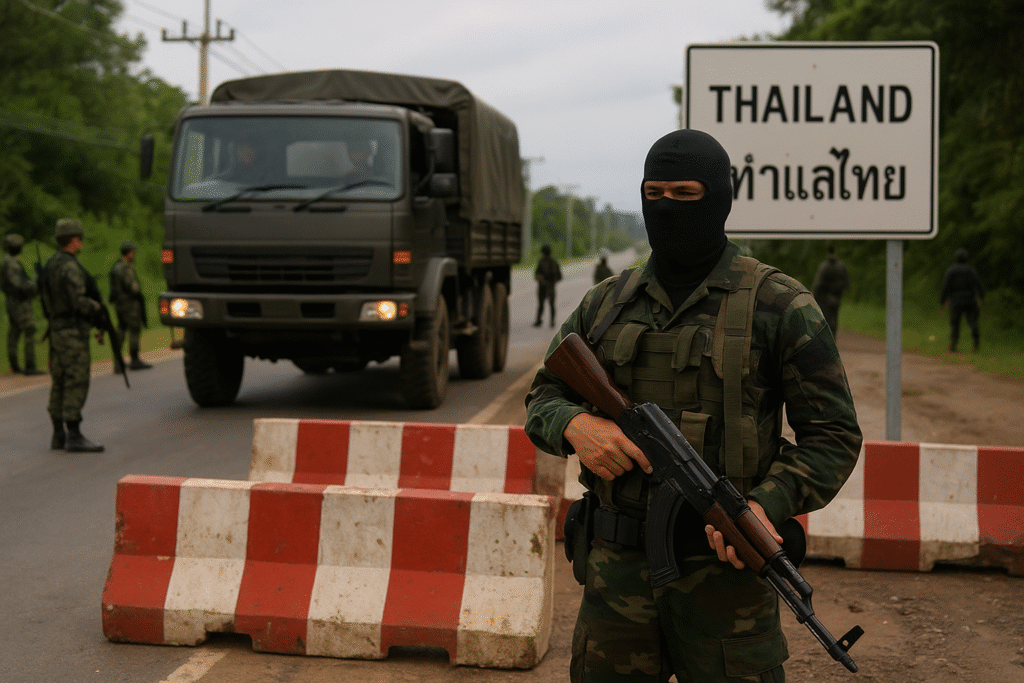
The border between Thailand and Myanmar remains volatile. Following Myanmar’s internal crisis, cross-border zones such as Mae Sot and Myawaddy are under strain. Highway checkpoints, vehicles and commercial crossings face sudden closures.
Refugee flows, heavy military presence and human-trafficking hotspots amplify the danger for visitors. Tour operators and government advisories consistently caution travellers about unpredictable developments and limited emergency support. Insurance may not cover incidents in these zones.
For tourists hoping to cross legally or explore border markets, the message is clear: double-check status, avoid being stranded, and steer clear of side-roads fraught with risk.
Laos-Thailand Border: The Smuggling Shadow
Less reported but still significant is the Laos-Thailand border region. The peaceful scenery hides growing smuggling networks of timber, drugs and wildlife trafficking. For instance, the scenic viewpoint of Phu Chi Fa in Chiang Rai closed temporarily in mid-2025 after a border clash linked to the illegal trade.
While mass conflict has not broken out, travellers may find access to once-popular natural spots restricted or subject to increased security checks. The challenge is that turmoil here often comes from hidden criminal activity rather than full-scale warfare.
How Travellers Are Affected
Across all these borders the impact on tourism is severe:
- Popular crossings and heritage sites close with little warning, stranding travellers and affecting tour plans.
- Safety hazards like landmines, unexploded ordnance and active combat zones increase the risk of being in the wrong place at the wrong time.
- Many travel insurance policies exclude claims from high-risk locations or border zones under travel advisories.
- The fear factor alone means travellers are avoiding even normally safe regions, costing local tourism businesses and economies that rely on tour-groups and day-visitors.
Travel Tips: Stay Safe and Informed
If you plan to visit Southeast Asia in 2024-25, keep these pointers in mind:
- Check updated travel advisories regularly. Monitor your country’s foreign office and local authorities for latest border status and safety warnings.
- Be flexible with routes. Avoid high-risk border crossings and consider alternate air or rail options.
- Postpone non-essential travel into conflict zones. If an area is flagged as “do not travel” or “only essential”, rethink your plans or divert to safer destinations.
- Secure travel insurance that covers high-risk zones. Read the fine print carefully to ensure you are covered in conflict-affected regions.
- Stay connected and register your presence. Let your embassy know you’re travelling, save emergency contacts, and check in regularly.
Conclusion
Tourism in Southeast Asia is in a moment of upheaval. The border crises affecting Thailand, Cambodia, Myanmar and Laos in 2024-25 are reshaping how and where people travel. For the average tourist, this means extra caution, altered itineraries and the possibility of changing plans at short notice. Travel remains possible — but only with full awareness of the risks and alternative options in mind. Prioritise your safety, stay informed, and pick destinations that are stable and supported.
For more travel news like this, keep reading Global Travel Wire