Thailand experienced one of its most serious rail disasters in early February 2026 when a construction crane collapsed onto a moving passenger train in Nakhon Ratchasima. The resulting derailment caused catastrophic damage and led to the deaths of at least twenty-two people. Authorities also reported more than sixty injured passengers as emergency responders continued rescuing survivors and stabilizing the scene. The tragedy shocked the nation and raised new concerns about safety during major infrastructure projects.
How The Crash Occurred
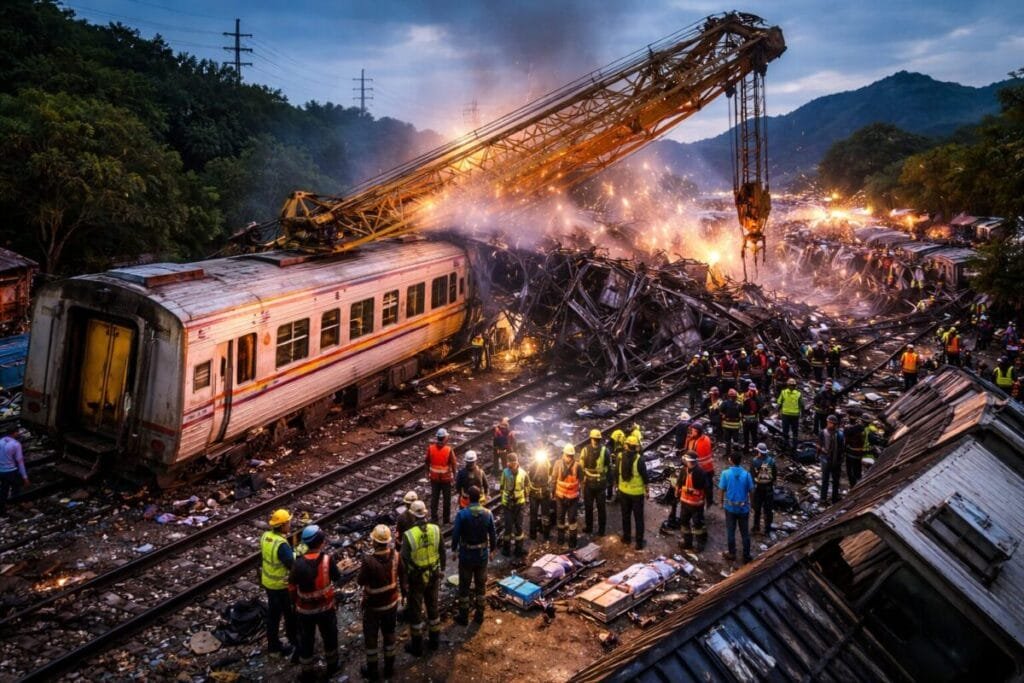
The train departed Bangkok with nearly two hundred passengers and traveled toward Ubon Ratchathani. As it entered a section of rail construction through Nakhon Ratchasima, a crane fell onto the moving train. The impact crushed several rear carriages and ignited fires. Thick smoke filled the area as rescue teams rushed to remove survivors and contain the flames. The collapse produced widespread debris across the tracks and caused part of the rail structure to buckle.
Witnesses described chaotic scenes as firefighters and medical teams worked through the night. First responders moved injured passengers to nearby hospitals, while others worked to cut through twisted carriages. Families of passengers traveled to Nakhon Ratchasima to check reports and look for loved ones. Government officials visited the crash site and pledged full investigative support.
Rail Project Now Faces Major Delays
The affected rail line forms part of Thailand’s high-speed project linking Bangkok to Ubon Ratchathani. The line also connects to a larger vision for regional mobility that includes coordination with China’s Belt and Road transport strategy. Officials planned for the route to reduce travel times and expand economic access to northeastern Thailand. The project would also create a future link to Laos and China through separate lines under development.
The collapse and derailment now create significant construction delays as investigators clear the crash site and assess structural damage. Several rail sections must undergo safety reviews, and work crews will need to remove heavy machinery before construction can resume. Analysts expect the project timeline to shift, which could affect future transportation planning and regional travel patterns.
Impact On Travelers And Tourism
The crash disrupted both passenger and freight transport across northeastern Thailand. Operators suspended several services as authorities investigated the incident and cleared damaged rail segments. Travelers heading to Ubon Ratchathani and surrounding provinces faced cancellations and lengthy delays.
Tourists moving between Bangkok and northeastern destinations now must rely on buses or domestic flights. Car rentals also experienced a surge in demand as travelers sought alternate ground options. Pre-arranged tour groups adjusted itineraries to avoid affected transport corridors, while some postponed travel to allow more time for repair efforts.
The region holds cultural and natural tourism value. Northeastern Thailand features national parks, archaeological sites, and cultural festivals that draw domestic and international travelers. The rail project promised faster access to these destinations and could have expanded future tourism flows. The derailment put those expectations on hold and increased uncertainty around completion dates.
Safety Concerns And Infrastructure Questions
The crash raised national questions about construction safety near active rail corridors. Thailand continues to expand its infrastructure network through highways, airports, rail lines, and deep-sea ports. Large-scale development projects now play a major role in tourism strategy as the government works to spread visitor spending beyond Bangkok, Chiang Mai, and coastal resort areas. The tragedy highlighted the importance of strict safety protocols in high-traffic corridors as work progresses.
Regulators may introduce updated construction standards following the investigation. Engineering risk assessments, scheduling adjustments, and operational buffers could also become more common as Thailand works to balance development and safety.
Economic Ripple Effects
Business travel faced disruptions as companies canceled or rerouted staff trips to northeastern provinces. Freight operators also experienced delays as truck fleets replaced interrupted rail shipments. The region depends on efficient logistics networks to move agricultural goods and industrial materials. Delays could influence production schedules and supply chain timing.
Tourism represents another key sector affected by the derailment. Thailand continues to promote long-distance domestic travel through improved transportation links. High-speed rail remains central to that vision because it reduces journey times and increases regional accessibility. This tragedy creates temporary setbacks during a period of optimistic tourism development following pandemic recovery and border reopening.
Travel Advisory Information For Passengers
Travelers planning trips to northeastern Thailand should monitor schedule changes and transportation advisories. Passengers with tickets on the Bangkok-Ubon line must secure refunds or rebook through alternative carriers. Tourists with flexible travel windows may benefit from adjusting schedules to avoid peak congestion during recovery efforts.
Travel agencies already advise clients to allow additional transit time. Airlines offer multiple daily flights to northeastern hubs, providing reliable alternatives for business or leisure itineraries. Bus operators also expanded their fleets to accommodate displaced passengers.
A Nation Mourns As Recovery Continues
Thailand continues to grieve the lives lost during the derailment. Communities near the crash site provided support to victims and their families, while religious temples offered assistance and prayer services. The incident prompted heartfelt responses across the country as citizens watched news broadcasts and waited for investigation updates.
The tragedy forced Thailand to balance mourning with recovery and planning. The nation must continue examining how to improve transportation safety while advancing development goals that support tourism, mobility, and economic inclusion.
For more travel news like this, keep reading Global Travel Wire