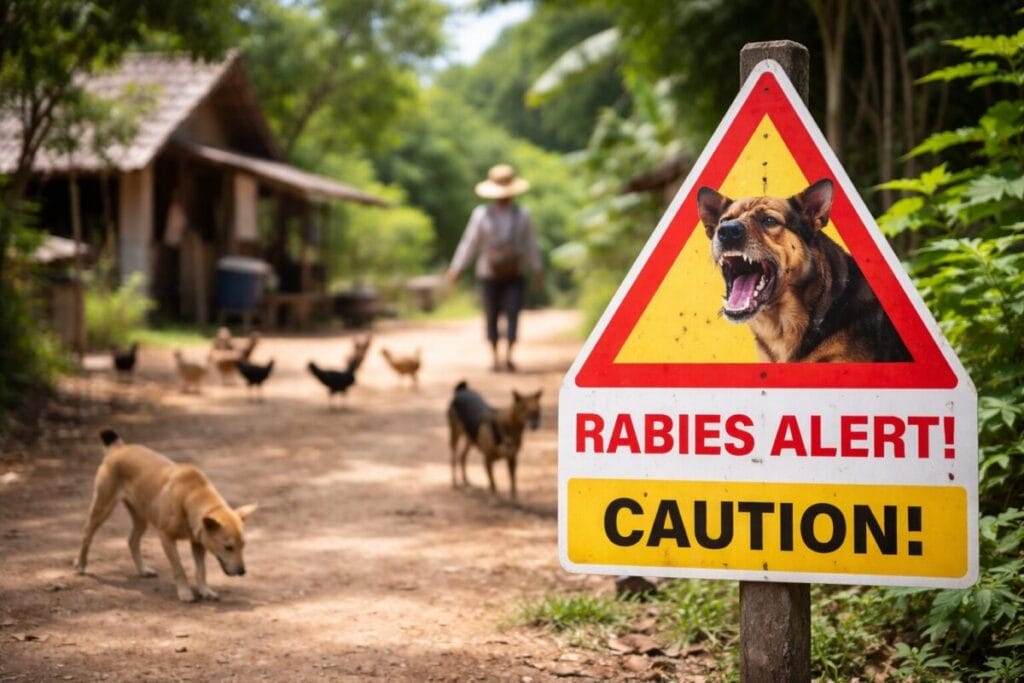
Thailand has issued a nationwide health and travel warning following confirmed rabies cases across several regions. Authorities urge residents and travelers to avoid consuming animals that die from unknown causes. Officials say such practices can increase the risk of infection and lead to serious health consequences.
The alert comes after health agencies confirmed rabies cases in multiple areas. The eastern, northeastern, and southern parts of the country have reported the highest concern levels. Officials emphasize that rabies remains fatal once symptoms appear, making prevention the most important defense.
Tourism authorities stress that visitors should stay informed and follow local health guidance. The advisory aims to protect both public health and Thailand’s travel sector.
Confirmed Cases Raise Public Health Concerns
Government data shows infections detected in dozens of animals nationwide, with dogs representing the majority of cases. A human fatality linked to rabies has also been reported this year, increasing urgency around preventive measures.
Public health teams continue monitoring animal populations and increasing surveillance in affected regions. Local authorities have stepped up awareness campaigns to ensure communities understand the risks.
Rabies spreads through saliva, usually via bites or scratches from infected animals. Officials warn that untreated exposure can quickly become life-threatening.
Safety Advisory for Tourists and Residents
Authorities strongly advise against consuming meat from animals that die unexpectedly. Handling or slaughtering such animals can expose individuals to the virus.
Travelers exploring rural areas or wildlife zones should remain cautious. Experts recommend avoiding direct contact with unfamiliar animals, even if they appear calm.
Key safety recommendations include:
- Do not eat meat from animals that died under unclear circumstances.
- Report unusual livestock deaths immediately.
- Stay alert to animal behavior changes.
These precautions form part of broader efforts to reduce transmission risks.
Monitor Pets and Livestock Carefully
Pet owners and farmers play a vital role in preventing rabies outbreaks. Early detection helps stop the spread and protects nearby communities.
Officials advise watching for common warning signs in animals:
- Aggressive or unusual behavior
- Excessive drooling or difficulty swallowing
- Weakness or lack of coordination
- Sudden lethargy
Anyone who notices these symptoms should notify local animal health authorities immediately. Quick reporting allows faster investigation and response.
Immediate Action After Animal Bites or Scratches
Health experts stress that fast action after a bite or scratch can save lives. Even minor injuries require attention.
Recommended steps include:
- Wash wounds with soap and water for at least 15 minutes.
- Apply disinfectant to reduce infection risk.
- Seek medical care immediately for post-exposure vaccination.
Waiting for symptoms is dangerous. Early treatment prevents the virus from spreading within the body.
Tourists should know where nearby clinics or hospitals are located, especially when traveling in remote areas.
The “5 Don’ts” for Safe Interaction with Dogs
To reduce encounters with potentially infected animals, authorities promote simple behavioral guidelines. These rules help prevent bites and avoid risky situations.
Follow these “5 Don’ts”:
- Avoid approaching stray or unfamiliar dogs.
- Do not separate fighting dogs with your hands.
- Never disturb dogs while they eat.
- Avoid teasing or provoking animals.
- Watch your steps to avoid accidental contact.
These measures apply to both locals and visitors and are especially important in areas with free-roaming animals.
Vaccination Campaigns Strengthen Prevention Efforts
Annual vaccination for pets remains the strongest protection against rabies. Authorities encourage dog and cat owners to maintain updated vaccination schedules.
Government agencies continue expanding vaccination programs and public awareness campaigns. Monitoring livestock health also remains a priority, particularly in rural communities where animal contact occurs frequently.
Travelers bringing pets into Thailand should ensure vaccination records are complete and compliant with local regulations.
Tourism Industry Encourages Responsible Travel
Tourism officials emphasize that the travel alert is precautionary. Thailand remains open to visitors, but responsible behavior is essential.
Hotels, tour operators, and local guides are increasing safety communication with guests. Information centers in popular destinations now provide guidance on avoiding animal risks.
Tourists visiting temples, markets, or beaches may encounter stray animals. Experts advise observing animals from a distance rather than interacting directly.
Emergency Support and Public Assistance
Government agencies have set up dedicated hotlines to assist residents and visitors. These services provide instructions on reporting suspected cases and accessing medical support.
Health officials encourage anyone who experiences animal exposure to seek help immediately. Rapid response improves treatment outcomes and reduces community risk.
Staying Alert Helps Protect Communities
Rabies remains preventable through awareness and proactive action. Following official recommendations reduces infection risk and supports national health efforts.
Key protective steps include:
- Avoid consuming animals that die unexpectedly.
- Observe pets and livestock for unusual behavior.
- Seek medical care after any animal bite or scratch.
- Maintain regular pet vaccinations.
Thailand’s nationwide travel warning serves as a reminder that simple precautions can prevent serious health consequences. By staying informed and practicing responsible behavior around animals, travelers and residents can help keep communities safe while continuing to enjoy the country’s diverse tourism experiences.
For more travel news like this, keep reading Global Travel Wire