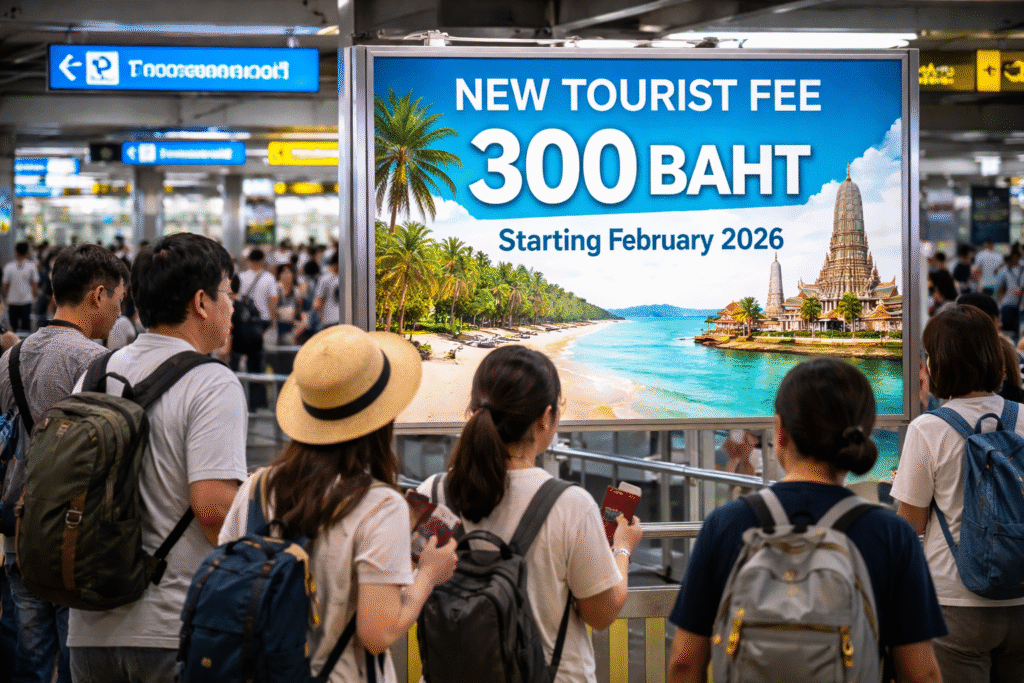
Thailand will introduce a 300 baht tourist entry fee for foreign visitors starting in February 2026. The new measure will apply to all travelers entering the country by air, land, or sea. The government plans to use the funds to upgrade tourism infrastructure, build safety programs, and support public facilities in major destinations.
The change arrives as Thailand continues to reform its tourism model after a surge in arrivals. International visitor numbers have rebounded strongly in recent years, fueled mostly by Asian markets. Japan, China, South Korea, Vietnam, and the Philippines remain among the largest contributors to inbound traffic. Travelers from these nations, along with many others across Asia, will feel the direct impact of the new fee.
Purpose of the Fee
The Thai government announced that a portion of the fee will help cover emergency healthcare, accident support, and tourist insurance from the moment visitors enter the country. The remaining amount will fund upgrades to roads, transport hubs, attraction sites, and digital tourism platforms.
Officials argue that the long-term benefits outweigh the short-term inconvenience. They emphasize that better facilities will help preserve the country’s reputation as one of Asia’s most attractive destinations. The move also aligns Thailand with other global tourism economies that have rolled out similar entry taxes to manage the cost of hosting large numbers of foreign visitors.
New Concerns for Travelers
Despite the intended benefits, the fee also introduces new travel challenges. The system for collecting and verifying payments may extend processing times at airports, seaports, and border checkpoints. Many travelers are expected to face longer queues, extra paperwork, and new verification procedures.
The impact may be greater during holidays and peak tourism seasons, when Asian visitors often travel in large volumes. Airlines and border officers must coordinate the collection process, which increases the potential for congestion during busy periods.
Effects Across Asian Markets
The announcement is particularly relevant to travelers across Asia due to the region’s strong travel links with Thailand. Here is how travelers from major Asian countries may be affected:
- Japan: Increased wait times at immigration and new documents for entry verification.
- China: More processing steps for visa holders and longer lines at busy airports.
- South Korea: Extra paperwork at border points and potential processing delays.
- Vietnam: Added documentation for arrivals by air and land.
- Philippines: Longer airport queues and higher overall travel expenses.
- India: Extra time required for visa and passport checks at entry points.
- Singapore & Malaysia: Longer customs and border waits, especially for land travel.
- Laos, Cambodia, Myanmar: Increased costs for frequent cross-border trips.
Travelers from developing nations may feel the financial impact more strongly, especially when combined with airfare, visa fees, and rising accommodation costs across Southeast Asia.
Impact on Thailand’s Tourism Sector
Thailand relies heavily on tourism, and Asian travelers account for a major share of total arrivals. The fee alone is not high, but when combined with paperwork and queueing issues, it may discourage short-stay and budget travelers.
Neighboring countries that frequently cross borders for shopping, medical care, or short leisure visits may adjust their habits. Meanwhile, long-haul tourists are less likely to be deterred by the fee but could still experience entry delays.
Tourism analysts note that smoother systems will be essential to prevent congestion. Thailand aims to digitize parts of the travel process, including e-forms and pre-arrival declarations, to reduce paperwork at physical checkpoints.
What Travelers Should Know Before 2026
Visitors planning future trips to Thailand should prepare for the following updates:
1. The Fee Will Apply to All Foreign Nationals
Regardless of travel method, all non-Thai citizens must pay the 300 baht fee upon entry.
2. Extra Forms May Be Required
Authorities may introduce new arrival forms or digital declarations to verify fee payment.
3. Visa Holders Still Need to Pay
Holding a visa does not exempt travelers from paying the fee, and no formal exemption list has been finalized.
4. Exemptions May Be Clarified Later
Officials may exempt diplomats, transit passengers, or children, but no final categories have been announced.
Thailand’s Tourism Future
Thailand aims to upgrade tourism services, reduce strain on public facilities, and offer better safety support for the millions of visitors who enter each year. If the rollout is smooth and well-communicated, the country could maintain its competitive position as a top Asian travel hub.
However, travelers will need to prepare for changing border systems, higher trip costs, and potential delays. The true effect of the fee will become clear once implementation begins in 2026, shaping new travel patterns across Asia.
For more travel news like this, keep reading Global Travel Wire