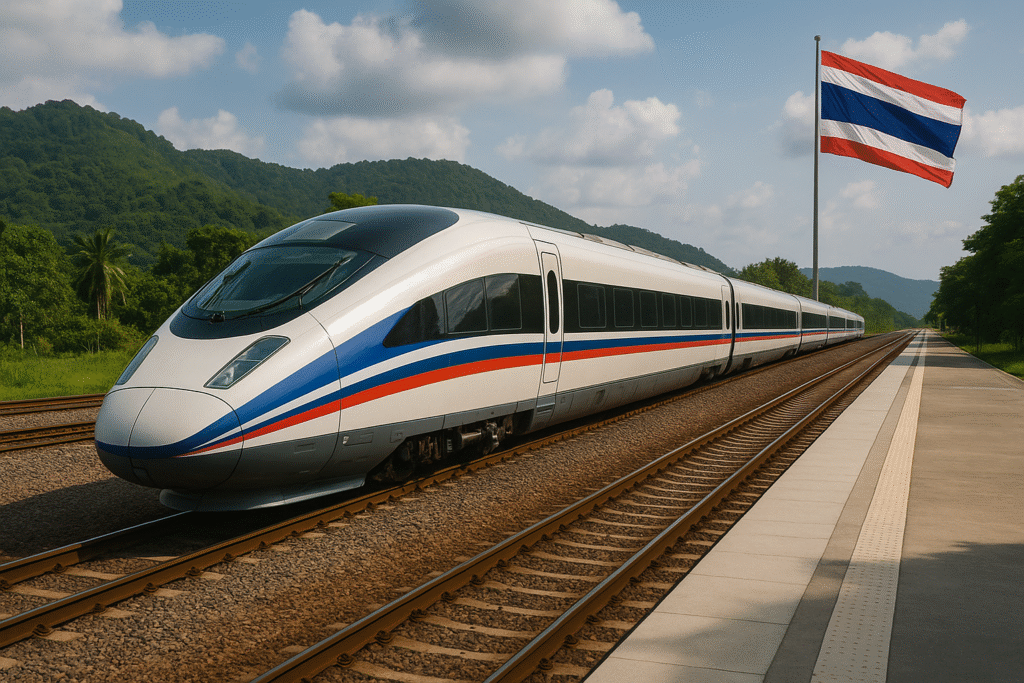
Thailand is gearing up for a significant advancement in its transport and tourism infrastructure with the proposed extension of the Eastern high-speed rail project. The plan proposes stretching the rail line beyond U‑Tapao Airport eastwards into Trat Province via Rayong and Chanthaburi, creating a vital link between Thailand’s major gateway airports and some of the country’s most treasured natural destinations. This move is expected to turbocharge tourism, ease regional access, support eco-travel, and stimulate economic growth in the country’s Eastern Economic Corridor (EEC).
Enhancing Accessibility and Regional Appeal
The original rail project had sought to connect Thailand’s three major airports—Don Mueang International Airport, Suvarnabhumi Airport and U-Tapao. But with passenger volumes at U-Tapao lower than anticipated, authorities now believe that extending the line to Trat and through Rayong and Chanthaburi will significantly raise ridership and make the extension financially more viable. The expanded route will provide tourists with streamlined access to famed destinations such as Koh Samet, Koh Chang and the Mu Koh Chang National Park—significant drawcards for nature-loving visitors and eco-tourists alike.
By linking these tourism hubs with the high-speed rail network, Thailand will reduce travel time, simplify logistics for visitors and make the entire region more accessible from Bangkok and beyond. This has strong implications for domestic and international tourism growth, enabling more seamless travel across previously remote or less accessible areas.
Eco-Tourism and Sustainability at the Forefront
A core component of this extension is its alignment with eco-tourism and sustainability goals. As travellers increasingly seek responsible, nature-based holiday experiences, the rail line offers an efficient, low-emissions alternative to road travel. Visitors travelling by high-speed rail rather than private car or bus help reduce traffic congestion, cut fossil-fuel use and protect the region’s natural assets. Destinations in Rayong, Chanthaburi and Trat are renowned for their marine parks, coastal forests and biodiversity. Enhanced rail access supports visitation that is better managed, less intrusive and aligned with green tourism principles.
As part of the broader vision, the extension supports Thailand’s ambition to integrate sustainable transport infrastructure with tourism development—creating a win-win scenario for travellers and local communities. By linking the rail line to eco-friendly destinations, Thailand is poised to position itself as a leader in combining high-speed connectivity with nature-based experiences.
Economic Impact and Regional Growth
Beyond tourism, the rail extension has deep economic implications. It will reinforce the role of the Eastern Economic Corridor (EEC) as an engine of growth, facilitate more efficient movement of goods and people, and stimulate investment in hospitality, services, infrastructure and real estate in the eastern provinces. The rail link will spread the economic benefits of tourism more widely—beyond traditional hotspots—bringing growth to Rayong, Chanthaburi and Trat. Local businesses such as resorts, tour operators, transport services and eco- lodges stand to benefit from better access, higher visitor volumes and improved connectivity.
Financial Feasibility and Phased Implementation
While the benefits are clear, the financial picture remains complex. Estimates place the total cost of the Rayong-Chanthaburi-Trat extension at approximately 101.7 billion baht, covering land acquisition, civil works, systems and rolling stock. Early economic modeling suggests an internal rate of return of around 5.4 % and a negative net present value, indicating that the full extension may not yet be independently viable without additional support.
To manage risks and bolster viability, authorities have proposed a phased approach. The first phase envisages extending the line from U-Tapao to Rayong at a lower cost of around 20.5 billion baht. This phase is designed to generate sufficient ridership growth, promote tourism momentum and allow the government to evaluate performance before committing to the full extension. This incremental strategy aims to link immediate tourism gains with long-term infrastructure investment.
Tourism Strategy and Destination Linkages
Tourism planners are particularly excited by the transformational potential of the extension. With improved rail access, even lesser-known destinations in the east will become accessible day-trips or short-stay options from Bangkok or the airports. This diversification of options benefits both travellers seeking new experiences and communities looking to share the tourism load. The expected increase in visitor traffic will help localities develop amenities, infrastructure, and sustainable tourism services. Tailor-made experiences—such as eco-snorkelling, sustainable resort stays, mangrove expeditions and local cultural immersions—can be more easily integrated into travel itineraries when transport is efficient and reliable.
Future Travel Trends and Infrastructure Integration
The rail extension represents more than a transport upgrade—it signals a shift in how Thailand plans, markets and manages its tourism assets. Coupled with expanded flight services, airport developments in Krabi and Phang Nga, and promotion of eco-tourism, the rail network becomes a backbone of a modern, integrated tourism system. As global tourism evolves, destinations that combine speed, comfort, accessibility and sustainability will attract discerning travellers. Thailand’s strategy of linking high-speed rail with natural and cultural attractions positions the country to capitalise on emerging travel trends—such as multi-destination trips, off-beat experiences and green travellers who value ease of transport as much as destination appeal.
Challenges and Considerations
While momentum is strong, there are challenges. Ensuring the final extension achieves financial viability will require ridership growth, fare strategies, and operational efficiency. Aligning station location, destination accessibility and local infrastructure is vital. Moreover, managing environmental impacts, preserving ecosystems and maintaining local community benefits are critical for true sustainable tourism. Careful planning will be needed to ensure that increased visitor numbers do not undermine the natural assets that make the East region special.
Conclusion
Thailand’s proposed high-speed rail extension from U-Tapao to Trat via Rayong and Chanthaburi heralds a new era for the country’s tourism and transport landscape. By enhancing connectivity, promoting eco-tourism, activating regional growth and integrating sustainable infrastructure, the rail line promises to offer travellers a faster, greener and more diverse experience. For local economies, the project opens doors to new business opportunities and visitor segments. Although financial hurdles remain, a smart phased approach offers a pragmatic path forward. As Thailand reimagines tourism for the future, this rail extension stands out as a pivotal piece—linking airports to islands, speed to nature and innovation to heritage.
For more travel news like this, keep reading Global Travel Wire