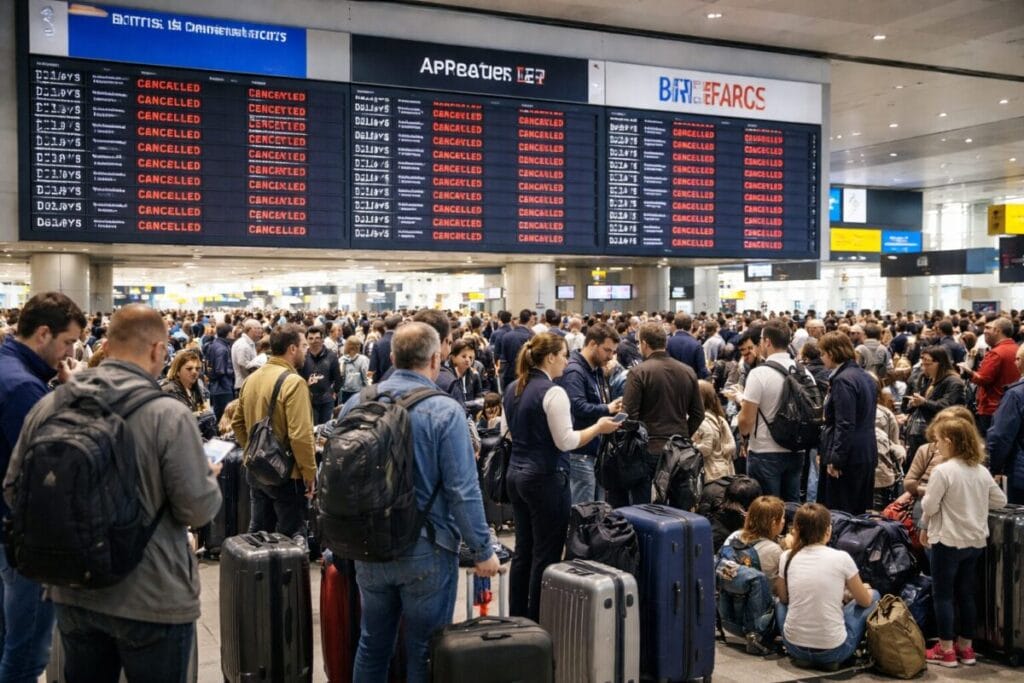
Travelers across Europe faced major disruption after British Airways and Air France delayed more than 180 flights and cancelled several others. The situation created widespread travel chaos at key airports in the United Kingdom and France. Passengers in London, Paris, Edinburgh, Nice, and several other cities experienced long waits, missed connections, and sudden itinerary changes.
The disruptions exposed how quickly operational issues and severe weather can impact even well-established airlines. Thousands of travelers were forced to adjust plans as airports struggled to manage the sudden surge in delayed departures and arrivals.
Severe Weather and Operational Challenges Trigger Crisis
Airlines reported a mix of weather-related and operational factors behind the disruptions. Thunderstorms and strong winds affected flight schedules across parts of Europe. Poor weather conditions slowed runway operations and complicated flight routing.
Ground handling teams faced pressure as aircraft arrived late or waited longer for departure clearance. This caused delays to build throughout the day. As flights missed assigned time slots, schedules became increasingly difficult to manage.
Operational challenges added further strain. Crew shortages and aircraft maintenance issues limited airline flexibility. When even a few aircraft were grounded, it triggered a domino effect across multiple routes.
High travel demand also contributed to the problem. Busy travel periods reduce the margin for recovery when disruptions occur, making it harder for airlines to restore schedules quickly.
Major Airports Under Pressure
Europe’s busiest aviation hubs felt the biggest impact. London Heathrow saw heavy congestion as long-haul departures and incoming international flights faced delays. Passengers reported long queues at service desks while searching for alternative travel options.
Paris Charles de Gaulle became another focal point of disruption. Many international travelers waited hours for updates or rebooking assistance. Domestic and transatlantic services experienced significant schedule changes.
Edinburgh Airport faced delays linked to both weather conditions and airline operational challenges. Nice Côte d’Azur Airport also experienced knock-on effects, with domestic French routes and connecting flights affected.
Airports worked to manage passenger flow, but crowded terminals and extended waiting times created frustration among travelers.
Key Routes Impacted Across Europe and Transatlantic Network
British Airways reported delays and cancellations affecting both European and long-haul routes. Several flights between London Heathrow and major North American destinations such as New York, Philadelphia, and Newark experienced schedule disruptions. Incoming flights from the United States and European cities like Düsseldorf also faced delays.
Air France reported disruptions across domestic French routes and international services. Flights between Paris and cities such as Nice and Toulouse saw delays. Transatlantic routes linking Paris with New York, Boston, and Newark were also affected.
The wide geographic spread of these routes amplified the ripple effect. Passengers missed onward connections, causing additional rebooking challenges across airline networks.
Passenger Experience: Long Waits and Travel Uncertainty
Travelers described confusion and limited information during the disruption period. Many relied on airport displays or airline mobile apps for updates. Some passengers secured rebooked flights quickly, while others waited longer due to high demand for alternative seats.
Hotel bookings and ground transport arrangements added to the stress. Travelers without flexible plans had to find last-minute accommodation near airports. Families, business travelers, and international tourists were among those most affected.
Airlines offered rebooking options and compensation where applicable, but the scale of disruption meant that not all passengers received immediate assistance.
Aviation Industry Challenges Highlighted
The incident shows how vulnerable aviation systems remain despite advanced scheduling and operational planning. Weather events remain one of the biggest unpredictable factors in aviation. Combined with staffing limitations or technical issues, disruptions can escalate quickly.
Airlines typically build buffer time into schedules, but heavy demand periods reduce flexibility. Even small delays can multiply when aircraft rotations and crew assignments become misaligned.
Industry experts note that improved communication with passengers remains a key area for improvement. Real-time updates and proactive customer support can help reduce stress during unexpected disruptions.
Tips for Travelers Facing Flight Disruptions
While passengers cannot control weather or airline operations, preparation can reduce inconvenience.
Check Flight Status Frequently
Monitor airline apps or airport updates before leaving for the airport. Early awareness allows travelers to adjust plans sooner.
Consider Flexible Booking Options
Flexible tickets or alternative routes can help avoid major delays during disruptions.
Carry Essentials in Hand Luggage
Keep medication, chargers, and travel documents easily accessible. Snacks and basic necessities help during long waits.
Understand Passenger Rights
Airlines often provide compensation or assistance depending on the cause of delays. Knowing your rights can simplify the claims process.
Outlook for European Travel
The recent disruptions underline the unpredictable nature of modern air travel. As passenger demand continues to grow, airlines must strengthen contingency planning and communication strategies. Airports may also need to improve crowd management during peak disruption periods.
For travelers, staying informed and prepared remains essential. Although airlines aim to restore schedules quickly, unexpected challenges will always be part of the aviation landscape.
For more travel news like this, keep reading Global Travel Wire