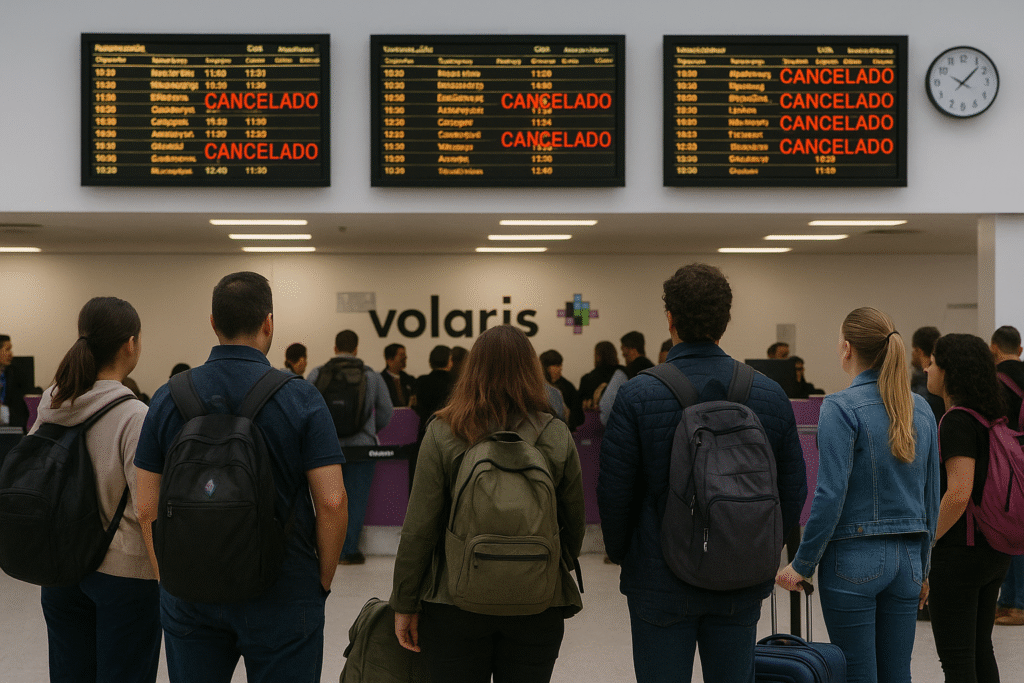
Travel plans in Mexico took a hit as the budget carrier Volaris axed nine flights at General Abelardo L. Rodríguez International Airport (TIJ) in Tijuana. That represents a sizable share of the carrier’s scheduled departures that day, leaving many passengers stranded or scrambling for alternatives.
The impact spread across local and international travellers alike. TIJ serves both domestic routes and links into the U.S. border region, making it a critical hub for connections. With so many cancellations, the ripple effect touched inbound and outbound passengers, disrupting onward journeys and adding to frustration.
What’s Going On and Why It Matters
Although the exact causes behind the cancellations have not been officially explained, such large-scale disruption often stems from one of several issues: mechanical faults, staffing shortfalls, adverse weather or air-traffic complications. In any case, the sudden pull-back of nine flights by a major low-cost carrier shows how vulnerable air travel remains to operational shocks.
For travellers, the stakes are high: rebooking needs, missed connections, extra nights in airports or hotels and non-refundable costs all pile up. If you were expecting to depart or arrive at TIJ via Volaris, this event should prompt you to check your flight status right away.
Affected Routes and Location Context
TIJ, just minutes from the U.S. border at San Diego, is a key gateway for travellers moving between Mexico and the States. It’s operated by numerous airlines, but Volaris is a dominant player domestically. When Volaris shifts capacity or cancels flights here, the knock-on effects are magnified.
The nine cancelled flights represent roughly 6 % of Volaris’s planned schedule from TIJ on the day in question. This is significant for a hub of its size and for an airline whose network relies heavily on predictability and volume.
What Travellers Should Do
If you’re stuck or expect to be impacted, follow these steps:
1. Stay informed.
Monitor your email, phone and the airline app for updates. Check Volaris’s website or live-flight boards to track current status.
2. Contact the airline.
If your flight was cancelled, approach the Volaris desk at the airport or call their customer-service line. Ask for alternative bookings or refund options. Don’t wait in long queues if you’re able to call ahead.
3. Know your rights.
In Mexico, airlines have obligations towards cancelled flights. You may be entitled to rebooking, refund or even compensation depending on the cause and your ticket conditions. Ask for clarity on what Volaris is offering in your case.
4. Consider alternate options.
If Volaris cannot accommodate you soon, explore flights on other carriers, alternate airports or even ground transport if you’re travelling regionally. Planning a backup route can save you time and stress.
5. Stay flexible.
Give yourself extra buffer time for connections and plan for contingencies—hotel costs, alternate transport and changes in itinerary. Being proactive helps when air-travel disruption strikes.
Wider Impact on Mexican Air Travel
This disruption comes amid a backdrop of steady growth in Mexico’s air-travel sector. The national regulator recently reported a 3.7 % increase in passenger numbers during the first five months of the year. This shows the industry is growing, yet remains vulnerable to pockets of delay and cancellation.
For an airline like Volaris, reliance on high-volume, low-cost operations means that even a small operational hiccup can cascade into larger impacts. Passengers choosing low-cost carriers should be especially mindful of such risks.
Final Takeaways
- Nine Volaris flights cancelled at TIJ signal a major disruption.
- If you’re a traveller using Tijuana airport or Volaris, act now: check your status, contact the airline and review alternate routes.
- Understand your rights and plan for alternatives.
- The wider industry is growing, but not immune to operational shocks—travel flexibility remains key.
Keep an eye on your flight, stay in touch with the airline and adjust your plans as needed. Travel in Mexico is reopening and booming, but as this incident shows, unpredictability remains part of the game.
For more travel news like this, keep reading Global Travel Wire