
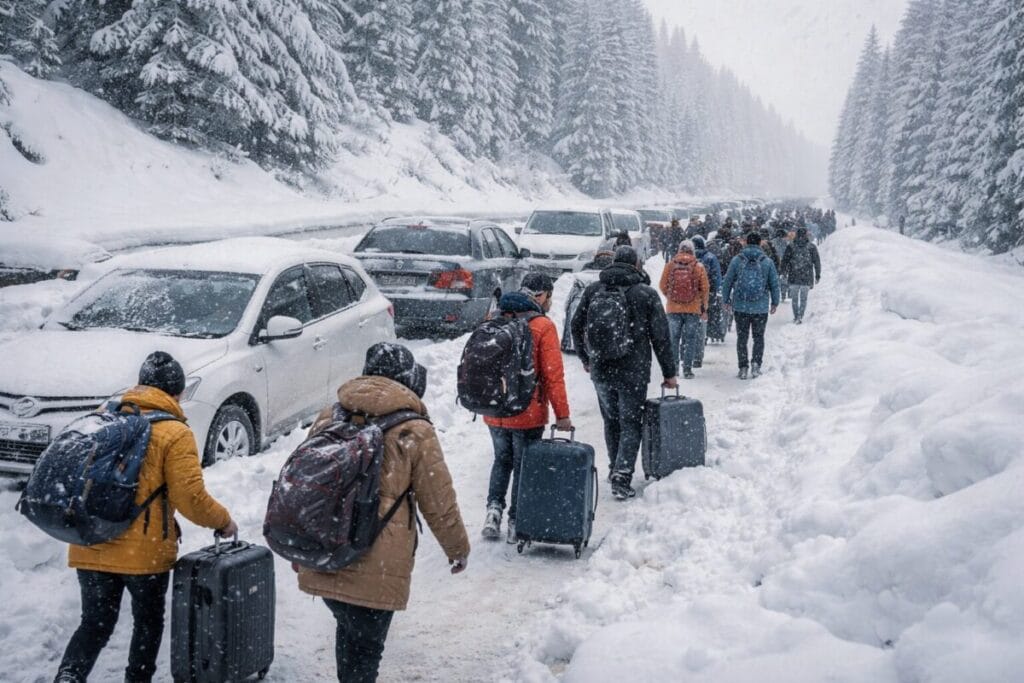
The first major winter storm of 2026 in Himachal Pradesh was expected to bring scenic views and skiing adventures. Instead, it turned into a survival challenge for visitors stuck on frozen highways. The Republic Day long weekend drew huge crowds, and resorts were nearly full before the storm even started. When continuous snowfall blanketed the mountains, thousands of vehicles found themselves trapped across the Kullu valley.
Local authorities confirmed that the tourist turnout far exceeded normal weekend levels. Families arrived from across northern India to witness fresh snow, unaware that mountain weather conditions can shift rapidly in January.
Highways Freeze as Vehicles Stop Moving
Heavy snow piled up for nearly two days. Temperatures fell well below freezing, and black ice formed on the National Highway link to Manali. This made driving nearly impossible. Soon, a long chain of cars stretched for miles as drivers tried to crawl forward on the icy surface. By the weekend, the highway had turned into a static line of stuck travelers.
Some travelers remained in the same spot for over 24 hours. Snow collected on windshields and rooftops as vehicles ran low on fuel. Many drivers switched off their engines to conserve petrol and diesel, choosing to keep warm with blankets instead of car heaters.
Tourists Abandon Vehicles and Walk
With no certainty about when machinery would reach the roads, hundreds of tourists made a difficult decision. They left their cars behind and began walking toward Manali town. Many covered distances of up to 20 kilometers through knee-deep snow. They carried luggage, guided children, and looked for any accommodation that still had a room available.
Several visitors described the walk as the toughest part of their trip. Tourists were seen holding hands to balance on icy stretches. Elderly travelers depended on others for support as wind gusts shook roadside trees. What was once a sightseeing vacation now resembled a winter endurance trek.
Hunger and Exhaustion in Freezing Temperatures
The food situation worsened as the storm continued. Small shops along the highway closed early due to power cuts and frozen pipelines. Families ate snacks such as chips and biscuits to stay energized. Without hot beverages or proper meals, the bitter cold felt harsher.
Fuel reserves became a concern. Many cars could not run heaters through the night. Some travelers wrapped themselves in jackets while others waited for rescue or road updates. A few locals offered help by distributing warm tea and blankets near the bus stand areas.
Hotels Overflow as Demand Soars
Manali’s hotel capacity collapsed under soaring demand. With occupancy reaching nearly 100 percent, tourists who reached town on foot struggled to secure rooms. Many slept in lobby areas or waited for cancellations. Smaller homestays tried to accommodate as many as possible, but the numbers were overwhelming.
Local residents opened their homes for stranded travelers. This gesture reduced pressure on resorts and gave shelter to families with children, who were vulnerable to frostbite and altitude sickness.
Infrastructure Under Winter Stress
The snowfall also slammed Himachal’s essential services. Roads, power grids, and water supply systems faced intense strain. Hundreds of transformers failed due to heavy snow and falling tree branches. Several regions spent hours without electricity or heating. Two major highways stayed blocked as machinery cleared deep snow layers inch by inch.
Local orchardists welcomed the snowfall because it benefits apple crops, but tourism operators worried about canceled bookings and urgent safety concerns. The mixed response highlighted the paradox of winter tourism in the mountains: snow brings business, but too much snow halts it.
Warnings vs. Tourist Behavior
Weather agencies issued alerts in advance, warning of heavy snowfall and road risks. Despite these warnings, visitors continued to enter the region, encouraged by social media posts showcasing fresh snow in earlier days of the month. Many tourists underestimated how quickly conditions can deteriorate when black ice forms on steep mountain roads.
Mountain experts noted that winter tourism in India has grown rapidly in recent years, but traveler awareness about high-altitude safety has not kept pace. Authorities stressed the need for better planning and visitor control during peak weekends to avoid similar crises.
Government Response and Road Recovery
State officials deployed snow cutters, excavators, and road workers to reopen the blocked stretches. Clearing high mountain roads often requires several hours, especially when snow accumulates at a rate faster than machines can remove it. Local teams worked through the night to make corridors for stranded vehicles. Restoration efforts continued as weather conditions improved.
A Lesson for Modern Travelers
The Manali travel disruption has become a learning moment. Winter mountains can be stunning, but they require preparation and flexibility. Travelers must check weather alerts, carry warm gear, and avoid unnecessary driving during storms. In the quest for the perfect winter holiday, safety must remain the top priority.
For more travel news like this, keep reading Global Travel Wire