In the far west of Azerbaijan, away from dramatic mountains and coastal skylines, the countryside of Tovuz unfolds with quiet confidence. This is not a destination defined by monuments or spectacle, but by lived landscapes—vineyards rolling across soft hills, villages rooted in agricultural rhythms, and a pace of life shaped by seasons rather than schedules.
Often overlooked in mainstream travel narratives, the Tovuz countryside offers something increasingly rare: an unfiltered view of how geography, labor, and community intersect in everyday life. For travelers seeking meaning over momentum, this western region presents an authentic and grounded experience.
Geography That Encourages Connection
Tovuz lies along Azerbaijan’s western frontier, where borders have historically fostered exchange rather than isolation. The terrain here is gentle and open, defined by low hills, fertile plains, and wide agricultural fields. Unlike regions shaped by natural barriers, Tovuz feels outward-looking, its settlements naturally integrated into the surrounding land.
This geography supports cultivation and movement, encouraging interaction between villages and fields. Roads do not lead to attractions; they link farms, water sources, and neighboring communities. The result is a countryside that feels connected rather than contained.
Vineyards as Identity, Not Ornament
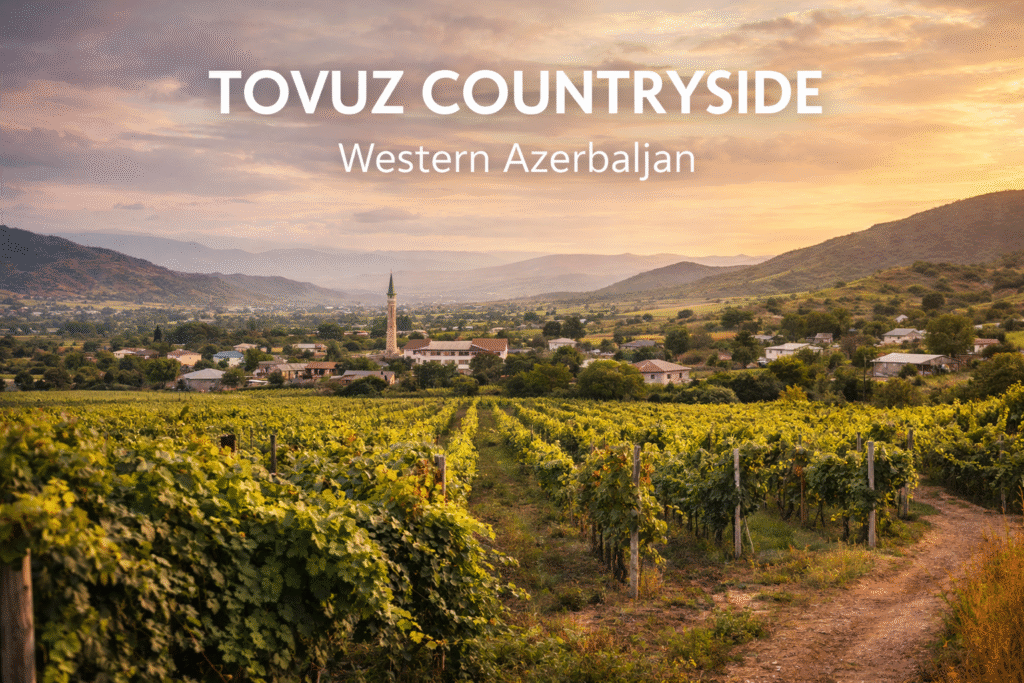
Viticulture is central to Tovuz’s identity. Vineyards stretch across the countryside in deliberate rows, shaping both the visual rhythm and economic foundation of the region. Grapes are cultivated not for display, but as part of a long-standing agricultural tradition that continues to evolve with modern techniques.
Alongside vineyards, fields of grain, vegetables, and fruit orchards reinforce Tovuz’s role as a productive heartland. Agriculture here is not romanticized—it is practiced, efficient, and essential. For visitors, this provides a rare opportunity to observe rural life as it functions daily, rather than as it is staged.
Villages That Belong to the Land
Villages in the Tovuz countryside do not stand apart from nature; they sit within it. Homes, barns, and storage buildings are positioned for access and utility, reflecting generations of adaptation to climate and terrain. Architecture is modest and purposeful, designed to serve daily needs rather than aesthetic trends.
There is a strong sense of continuity in these settlements. While modern materials and tools have been adopted, the underlying logic of village life remains unchanged—practical, cooperative, and closely tied to the land.
Daily Life Shaped by the Seasons
In Tovuz, time is measured by cycles of work rather than calendars. Spring brings preparation and planting as fields turn green with renewed activity. Summer emphasizes growth and labor, with long days spent tending crops. Autumn centers on harvest, marking the busiest and most communal season. Winter quiets the land, compressing activity and drawing life inward.
Visitors encounter life in progress rather than performance. Tractors move steadily across fields, conversations drift from gardens, and maintenance tasks continue without interruption. This honesty is what defines the experience—nothing is arranged for visitors, yet everything is visible.
Sound, Space, and Purposeful Movement
The countryside carries its own acoustic character. The hum of agricultural machinery, wind moving through crops, and distant voices form a constant backdrop. Silence exists, but it is active rather than empty, filled with motion and intention.
Movement through Tovuz is purposeful and unhurried. People travel to fields, neighbors, and markets with clear intent, without the rush often associated with urban life. For travelers, this rhythm encourages observation rather than consumption.
Walking Without an Itinerary
Walking through the Tovuz countryside highlights its interconnectedness. Paths link villages, farmland, and water sources without signage or spectacle. Exploration here does not rely on destinations but on attention—watching how fields change, how villages function, and how people adapt to shifting seasons.
This style of travel aligns naturally with the principles of slow tourism, where understanding replaces urgency and familiarity replaces novelty.
Cultural Continuity Through Adaptation
Traditions in Tovuz persist quietly. Agricultural knowledge is passed down through practice rather than ceremony. Community networks evolve organically, adapting to economic and environmental changes without losing coherence.
This flexibility is a source of resilience. Rather than preserving traditions for display, the region allows them to transform naturally, ensuring relevance and sustainability.
Tovuz’s Place in Azerbaijan’s Broader Story
As part of Azerbaijan’s western agricultural zone, Tovuz plays a vital role in balancing the nation’s cultural and economic narrative. It connects the country to broader Caucasus networks and demonstrates how rural regions sustain national identity far from capital cities and iconic landscapes.
The countryside here adds depth to Azerbaijan’s tourism profile, offering insight into everyday life that complements more celebrated destinations.
Where Landscape Is Lived, Not Framed
The Tovuz countryside does not ask for attention—it invites understanding. Through vineyards, villages, and steady rural rhythms, it shows how much of Azerbaijan’s character is shaped away from famous routes and landmarks.
For travelers willing to slow down and observe, Tovuz offers clarity rather than spectacle. It reveals that the most enduring journeys often happen where nothing is trying to impress, and where life continues quietly, rooted in land, labor, and continuity.
For more travel news like this, keep reading Global Travel Wire