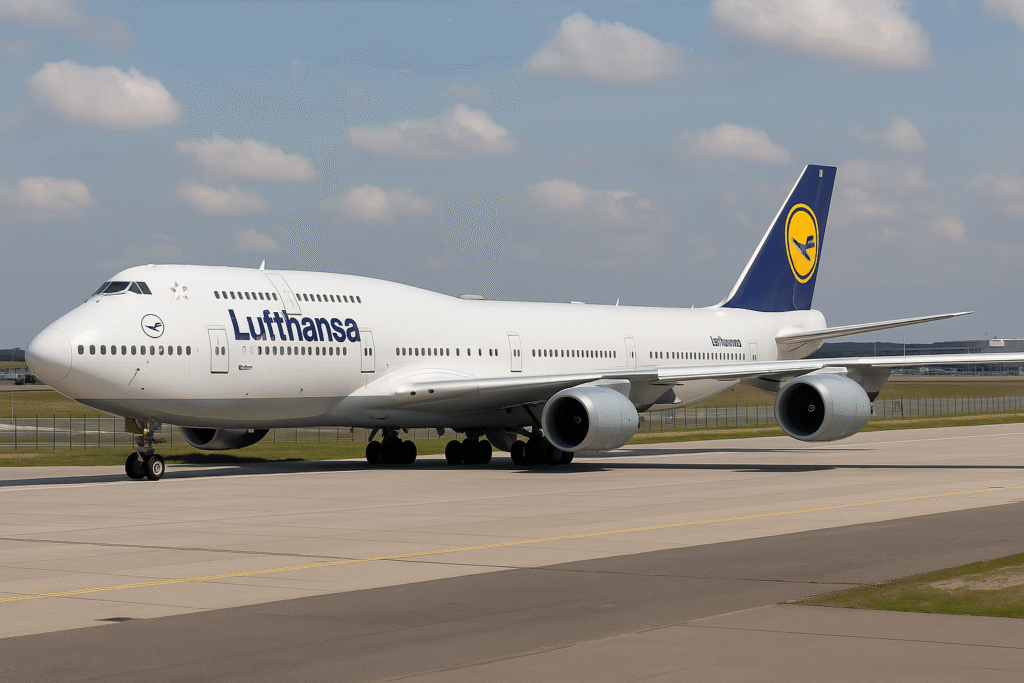
A routine transatlantic voyage turned into a dramatic safety incident when a 28-year-old passenger allegedly attacked two teenage co-passengers with a metal fork aboard a flight en route from Chicago to Frankfurt. The aircraft, operated by a major European carrier, was forced to divert to Boston, where U.S. law-enforcement officers took the accused into custody. The event highlights how rapidly in-flight disturbances can escalate and the unique challenges of international travel disruptions.
Incident details and flight diversion
The flight, departing from Chicago O’Hare Airport and bound for Germany, became the scene of violent behaviour shortly after the meal service. Investigators say the individual stood over a sleeping 17-year-old male in a middle-seat, and then struck him in the clavicle area with a metal fork. He then allegedly lunged toward another 17-year-old seated nearby and stabbed him in the back of the head, causing a laceration. Crew and passengers intervened, but the situation intensified when the suspect made a finger-gun gesture, mimed pulling a trigger, slapped a female passenger and attempted to strike a crew member. The severity of the attack triggered an emergency diversion; the aircraft landed in Boston instead of its intended destination.
Upon landing, authorities arrested the accused and took the aircraft’s passengers to temporary accommodation or onward flights. The disruption affected the expected arrival schedule and triggered re-bookings and added stress for those aboard the long-haul route.
Suspect background and legal implications
The accused, an Indian national, had entered the U.S. on a student visa for a biblical studies programme but is reported to currently lack lawful status. U.S. federal prosecutors charged him under a statute applying to aircraft in the “special aircraft jurisdiction” of the United States with assault with a dangerous weapon and intent to do bodily harm. If convicted, he faces up to ten years in prison, supervised release and a substantial fine.
Because the incident occurred while the aircraft was in U.S. jurisdiction, U.S. federal law applies—even though the destination was Germany and the carrier was European. This case draws attention to cross-border jurisdictional issues when disturbances unfold at 35,000 ft.
Travel safety and industry ramifications
While unusual, in-flight assaults pose a significant risk to airline operations, passenger safety and destination perceptions. For travellers undertaking long-haul routes across the Atlantic, the incident serves as a reminder of the potential for errant behaviour and the importance of robust safety and crew-intervention protocols. Airlines must continue to refine their training regimes and contingency processes for diversions, cabin disruptions and emergency landings.
Passengers, too, should be cognisant of several factors. These include : remaining alert during long flights, adhering to cabin crew instructions, and understanding that the destination may change in the event of a threat. Moreover, travellers should ensure their personal documentation, health and travel-status conditions are in order—since aggravating factors can introduce delays or legal complications.
Impacts on airline and traveller experience
From the airline’s perspective, a diversion implies additional fuel consumption, crew time and scheduling ripple-effects. Passengers may face missed connections, delayed arrival, accommodation issues and increased stress. While regulations such as EU 261/2004 grant rights to compensation in Europe for cancellations or long delays, such cases involving security threats and diversions may fall under “extraordinary circumstances” and thus alter compensation eligibility.
For passengers flying between the U.S. and Europe, particularly on popular routes, the incident re-raises questions about cabin security, passenger screening, conflict-management and airline responsiveness. Even though the vast majority of flights proceed without incident, the dramatic nature of a mid-air stabbing places a spotlight on whether current systems sufficiently manage behavioural risk.
What travellers and airlines can take away from this event
For travellers: • Choose airlines known for strong operational and safety records. • Arrive at terminals well in advance, carry valid documentation, remain aware of crew announcements and stay calm in extended flights. • Understand that disruptions may force diversions, unexpected layovers and assignment of alternate routing.
For airlines and aviation stakeholders: • Continually review crew-training programmes to deal with violent or erratic passenger behaviour, including diversion protocols. • Build stronger contingency plans for long-haul flights, especially on routes crossing multiple jurisdictions. • Improve passenger-communication practices during disruptions to maintain trust and transparency.
Conclusion
The mid-air assault aboard a long-haul flight from Chicago to Germany—and the resulting diversion to Boston—underscores how quickly travel plans can unravel, even in the skies. While the aviation industry remains one of the safest forms of transport, incidents like this serve as stark reminders of the complex interplay among passenger behaviour, in-flight security and international jurisdiction. For travellers, airlines and regulators alike, the takeaway is clear: vigilance, preparedness and cooperation are as vital inside the cabin as they are on the runway.
For more travel news like this, keep reading Global Travel Wire