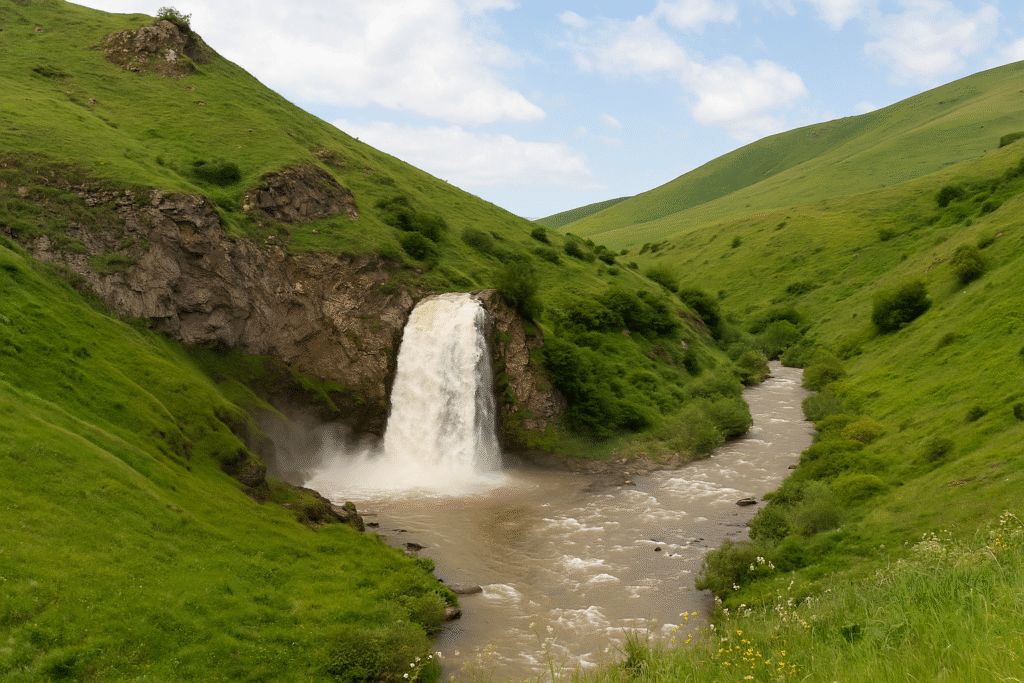
A dramatic surge of white water tumbling through one of the country’s quietest mountain regions, Trchkan Waterfall is rapidly becoming one of Armenia’s most talked-about natural attractions. Tucked between the Lori and Shirak provinces and flowing along the winding Chichkhan River, this powerful cascade has long been cherished by locals. Now, with global interest in untouched landscapes and responsible travel on the rise, Trchkan is stepping into the spotlight as a must-see destination for nature lovers, hikers, and visitors seeking a serene escape into the wild northern highlands.
A Remote Landscape Sculpted by Time
Often described as “Armenia’s Niagara,” Trchkan Waterfall is the result of centuries of erosion as the Chichkhan River carved its path through rocky terrain. The name “Trchkan,” meaning “jumping” in Armenian, reflects the dynamic plunge of water dropping over 20 meters into a natural stone basin. Its raw energy, combined with the tranquility of the surrounding meadows and hills, creates a striking balance that defines the region.
The waterfall also carries cultural significance. In the early 2010s, environmental advocates successfully protected the area from development threats, preserving it as a natural monument. This effort strengthened Armenia’s commitment to safeguarding its ecological heritage and sparked renewed appreciation for the country’s wilderness sites.
A Scenic Setting Between Villages and Highlands
Trchkan sits in an isolated zone bordered by the rural villages of Shirakamut and Areg. The route into the region gives travelers a vivid look at Armenia’s countryside—rolling pastures, grazing livestock, and sweeping views across hills and ridges that appear almost untouched by time. Wildflowers bloom in spring, birds nest along the riverbanks, and the highland air remains crisp and clean, making the experience refreshing for both seasoned explorers and casual visitors.
Its remoteness has helped keep the environment pristine. With little commercial development, visitors can expect a peaceful encounter with nature, free from crowds and noise.
Growing Importance in International Tourism
As global tourism shifts toward sustainable and nature-focused experiences, Trchkan Waterfall is emerging as a key highlight in Armenia’s eco-tourism offerings. Travelers increasingly seek destinations that preserve natural ecosystems, value biodiversity, and provide authentic encounters with local culture—qualities that define Trchkan and its surrounding region.
What makes Trchkan particularly appealing to international visitors?
- An Untouched Waterfall in the South Caucasus
Many waterfalls across the world are surrounded by heavy infrastructure. Trchkan’s undeveloped environment makes it extremely rare and appealing for eco-travelers. - Exceptional Photography Opportunities
From its cascading water to the interplay of light across the highlands, Trchkan offers dramatic visuals year-round. - Environmental Significance
Its conservation story resonates with travelers who support sustainable destinations. - Adventure Potential
As northern Armenia becomes more popular for hiking and rural exploration, Trchkan stands out as a natural anchor point for adventure routes.
How Travelers Can Reach Trchkan
Despite its secluded feel, Trchkan is surprisingly accessible from several major Armenian cities:
- From Yerevan: About 130 km, roughly a 3-hour drive through Spitak toward Shirakamut. The final stretch involves unpaved rural roads.
- From Gyumri: Just 45–50 km, around an hour away, making it a popular local excursion.
- From Vanadzor: Around 40–50 minutes of travel time, making it the quickest access point.
Travelers usually arrive by private car or taxi, though more tour operators now include Trchkan in nature-focused itineraries. Adventurous visitors often hike the last section from nearby villages, enjoying scenic riverbeds and open fields along the way.
Who Visits Trchkan Waterfall?
Trchkan appeals to a wide variety of travelers:
- Eco-tourists who want to experience Armenia’s untouched landscapes.
- Hikers and outdoor enthusiasts exploring the northern highlands.
- Photographers captivated by the waterfall’s changing seasonal moods.
- Families seeking peaceful day trips away from urban environments.
- Solo travelers who appreciate quiet natural retreats.
- Cultural travelers interested in the traditions of nearby rural communities.
Though accessible, visiting does require comfort with natural terrain and occasional rocky paths. Families should supervise children near the water’s edge.
Best Times of Year to Experience Trchkan
Each season transforms the waterfall:
- Spring (April–June): The waterfall is at its most powerful, fed by snowmelt. Meadows are filled with wildflowers—a spectacular time for photography and nature walks.
- Summer (July–August): Ideal for picnics and hiking, with mild weather and steady waterflow.
- Autumn (September–October): The region glows with colorful foliage, offering breathtaking views and crisp mountain air.
- Winter (November–March): Portions of the waterfall freeze into glittering ice sculptures. Only recommended for experienced travelers due to cold weather and challenging road access.
A Preserved Gem in Armenia’s Northern Highlands
Trchkan Waterfall stands as a testament to Armenia’s natural beauty and growing dedication to environmental preservation. Its combination of powerful waters, rugged highland scenery, and unspoiled surroundings makes it one of the country’s most rewarding destinations for travelers seeking authentic outdoor experiences. Whether arriving from Gyumri, Vanadzor, or Yerevan, visitors will find a peaceful sanctuary and unforgettable highlight within Armenia’s evolving eco-tourism landscape.
For more travel news like this, keep reading Global Travel Wire