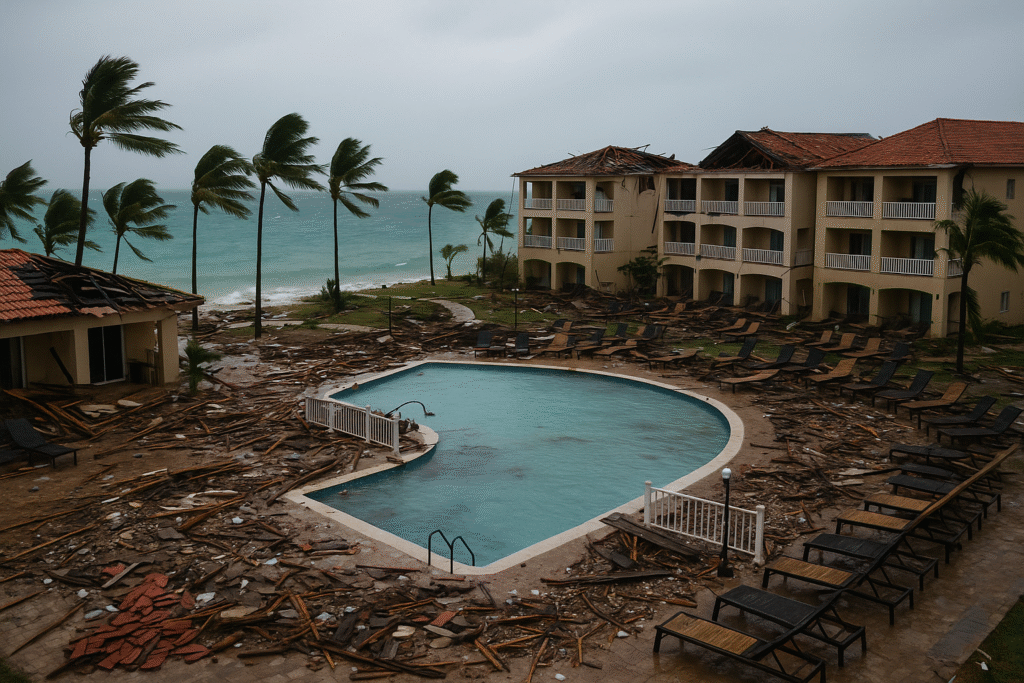
The tourism world is facing a major crisis. In 2025 many popular destinations were hit by intense storms, cyclones and hurricanes. The ripple effects are hitting travel, investment and local economies hard.
Now, two more nations join the ranks of those grappling with disaster: Jamaica and the Philippines. Both rely heavily on tourism income and both have seen major disruption.
Jamaica: Tourism Sector Reels from Category 5 Hurricane
In late October, a Category 5 hurricane struck Jamaica with enormous force. It tore through coastal resorts, flooded tourist areas and interrupted transport links. The islands’ tourism infrastructure—hotels, airports and roads—suffered widespread damage.
Tourism contributes around 30 % of Jamaica’s GDP and directly supports tens of thousands of jobs. With many resorts closed or severely affected, thousands of workers face income loss and a long road ahead to recovery.
Officials are racing to restore key regions ahead of the high season. Larger hotel chains may reopen relatively quickly, but smaller businesses in outlying coastal areas remain vulnerable. The economic hit may persist for months as tourists reconsider destinations.
Philippines: Typhoon Threat Intensifies Travel Uncertainty
The Philippines, located in the Western Pacific typhoon corridor, experienced heavy storms in late 2025. Regions such as Palawan, Visayas and Mindoro were hardest hit. Evacuations, infrastructure damage and prolonged power cuts disrupted local tourism operations.
The travel industry in the Philippines now faces dual pressures: the infrastructure loss caused by storms and a shift in tourist mindset towards safer, more reliable destinations. In response, authorities are training displaced workers for new livelihoods and inviting foreign investment to help rebuild tourism assets.
Broader Picture: Caribbean, Southeast Asia and Indian Ocean Impact
Tourism-heavy regions across the globe are under stress. The Caribbean island chain, Southeast Asia’s beach resorts and Indian Ocean nature getaways have all witnessed severe storm impacts this year.
Coastal resorts saw flooding and erosion. Airports and resorts shut temporarily. Flights were delayed or cancelled. Cruise itineraries were altered. Arrival numbers fell. Businesses dependent on visitor footfall face deep uncertainty.
Shifting Travel Trends Amid Crisis
The storm wave sweeping across travel destinations is reshaping tourist behaviour:
- Risk perception rises. More travellers are weighing safety and weather risk before booking.
- Insurance matters. Travel insurance and flexible cancellation policies have surged in demand.
- Sustainable + resilient tourism wins preference. Travellers are increasingly drawn to destinations that are rebuilding with climate resilience in mind and engaging local communities in recovery.
- Flight and hotel policies change. Travel providers are adapting—with more flexible booking terms and contingency plans for extreme weather events.
Recovery Mode: Building Back Better
Recovery is not just about repairs—it’s about transformation. For tourism sectors hit by storms, the agenda includes:
- Rebuilding hotels, resorts and transport infrastructure with climate-resilient design.
- Diversifying the tourism offer to include inland and cultural destinations less exposed to storms.
- Engaging local communities so that recovery benefits are inclusive and sustainable.
- Marketing campaigns that restore traveller confidence by highlighting safety steps, and the authentic experiences that await.
Why This Crisis Matters Globally
When popular tourism destinations falter, the effects spread. Many economies lean heavily on tourism growth for employment, foreign exchange and investment. When storms hit, ripple effects include: business closures, job losses, slower GDP growth and diverted investment.
The 2025 global storm season has turned into a wake-up call. Climate change, warmer seas and stronger storms mean more frequent disruption for travel destinations. Investing in resilience is no longer optional—it’s essential.
Final Word
The tourism industry has entered a new era of challenge. From Jamaica’s battered resorts to the Philippines’ disrupted islands, the effects of extreme weather are clear. Recovery will take time, and rebuilding will require vision. For travellers, operators and governments alike, the message is plain: adapt, invest and rebuild with resilience at the heart. Tourism may rebound—but only if it embraces the storm-reshaped reality of the world we live in.
For more travel news like this, keep reading Global Travel Wire