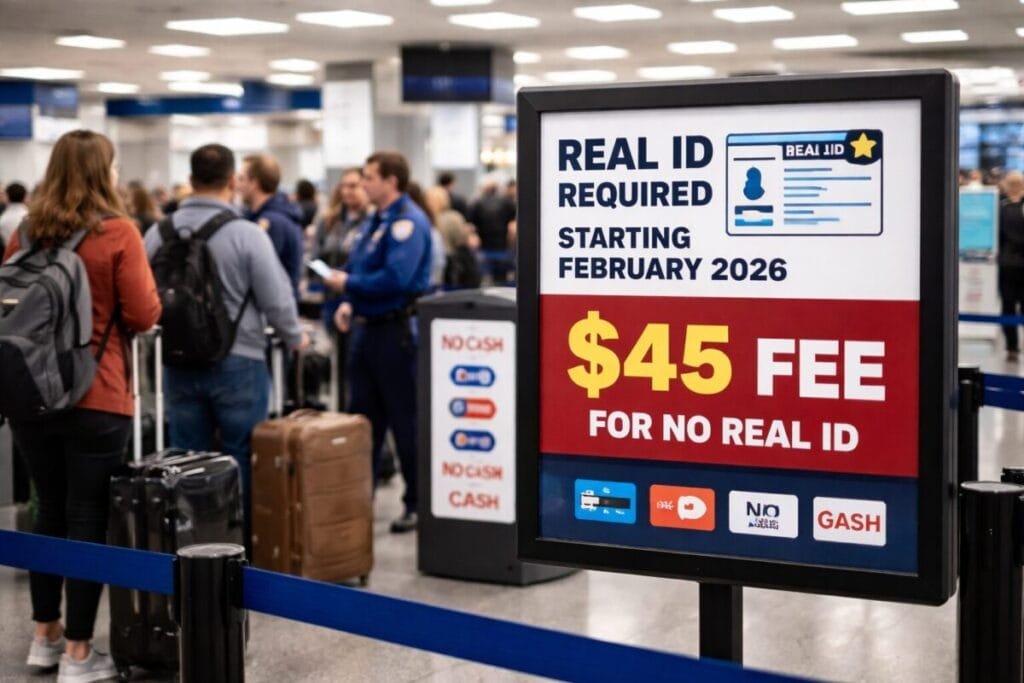
Air passengers in the United States will soon face an extra expense if they arrive at the airport without a REAL ID or another approved form of identification. Beginning February 2026, the Transportation Security Administration will require these travelers to pay a $45 identity verification fee before clearing security. This change marks a major shift in U.S. airport screening procedures and reinforces a long-planned federal identification standard for domestic air travel.
Background On REAL ID Enforcement
The REAL ID Act sets stricter security standards for state-issued driver’s licenses and identification cards. The policy traces back to post-9/11 security reforms, but full enforcement has been delayed several times to allow states and citizens more time to comply. Most states now issue compliant IDs, recognizable by a star symbol on the upper portion of the card. The Department of Homeland Security estimates that the majority of Americans already have an acceptable ID, but millions remain non-compliant and risk fees and delays once the rules take effect.
How The $45 Fee Works
The new $45 charge covers the cost of TSA’s Confirm.ID system. This system allows officers to manually verify a traveler’s identity through government databases when they arrive without valid identification. Once paid, the authorization remains valid for ten days, which allows most round-trip travelers to complete their journey without paying twice. However, those traveling longer than ten days may need to pay the fee again on their return trip if they still lack compliant ID.
The fee will apply at security checkpoints nationwide. Airport officials warn that identity verification without proper ID will take longer, and some screening lanes may experience congestion, especially during peak travel seasons and holiday periods.
Digital Payments Only At Security Lanes
One of the most significant operational changes involves payment methods. TSA will no longer accept cash for the identity verification fee. Travelers must instead use digital forms of payment such as debit cards, credit cards, bank transfers, or approved mobile payment platforms.
This move is part of a broader shift across U.S. airports toward contactless services and faster processing. While digital systems may speed up certain functions, the policy could frustrate travelers who still rely heavily on cash. Officials recommend that passengers verify their available payment options before leaving for the airport.
What Counts As Acceptable Identification
After February 2026, travelers must present one of several accepted documents to bypass the fee. These include:
- REAL ID-compliant driver’s license or state ID
- U.S. passport or passport card
- Enhanced driver’s license or enhanced state ID
- DHS trusted traveler cards including Global Entry and NEXUS
- Department of Defense ID
- Permanent resident card
- Certain tribal and border crossing documents
International passports issued by other nations also qualify for identity verification when flying domestically. TSA encourages travelers to review their current identification well ahead of future travel plans.
Travelers Urged To Prepare Early
Passengers who wait until their travel date to check identification risk missed flights, extra fees, and extended wait times. Identity verification under Confirm.ID can add as much as 30 minutes to the screening process during busy periods. Airport authorities advise travelers to arrive earlier than the standard two-hour domestic recommendation if they expect verification delays.
Securing a REAL ID is straightforward but may require appointments at local motor vehicle offices. Applicants typically need proof of identity, legal presence, and state residency. Processing times vary by state, making early preparation essential for frequent travelers and large families.
Why The TSA Is Making The Change
The upcoming changes form part of a broader federal effort to tighten aviation security and reduce vulnerabilities at domestic airports. Confirming traveler identity before flight boarding helps prevent fraudulent access and strengthens the integrity of passenger screening systems. The REAL ID requirement also aligns with global travel trends, as many countries have updated identity standards for aviation.
Impact On The Travel Industry
The travel and tourism sector expects a temporary period of confusion when the mandate begins. Airlines and airports anticipate an uptick in customer inquiries and travel disruptions during the first months of enforcement. However, industry groups believe the rules will ultimately create a more consistent and secure travel environment.
Tourism boards and airlines are preparing public awareness campaigns to reduce last-minute issues and minimize negative travel experiences during peak tourism seasons. With millions of Americans booking annual vacations, spring break trips, and summer family travel, preparation will be key to avoiding backups at major hubs.
What Travelers Should Do Now
U.S. citizens are encouraged to check the status of their current identification. Those planning international trips should also ensure passport validity extends at least six months beyond travel dates, as required by many countries. Travelers without digital payment methods are encouraged to plan ahead since cash will no longer be accepted for verification fees at airports.
The February 2026 enforcement date gives Americans time to update documents, but awareness remains crucial. With early preparation, passengers can avoid the $45 charge, bypass verification delays, and maintain smooth access to the nation’s airports as regulations tighten.
For more travel news like this, keep reading Global Travel Wire