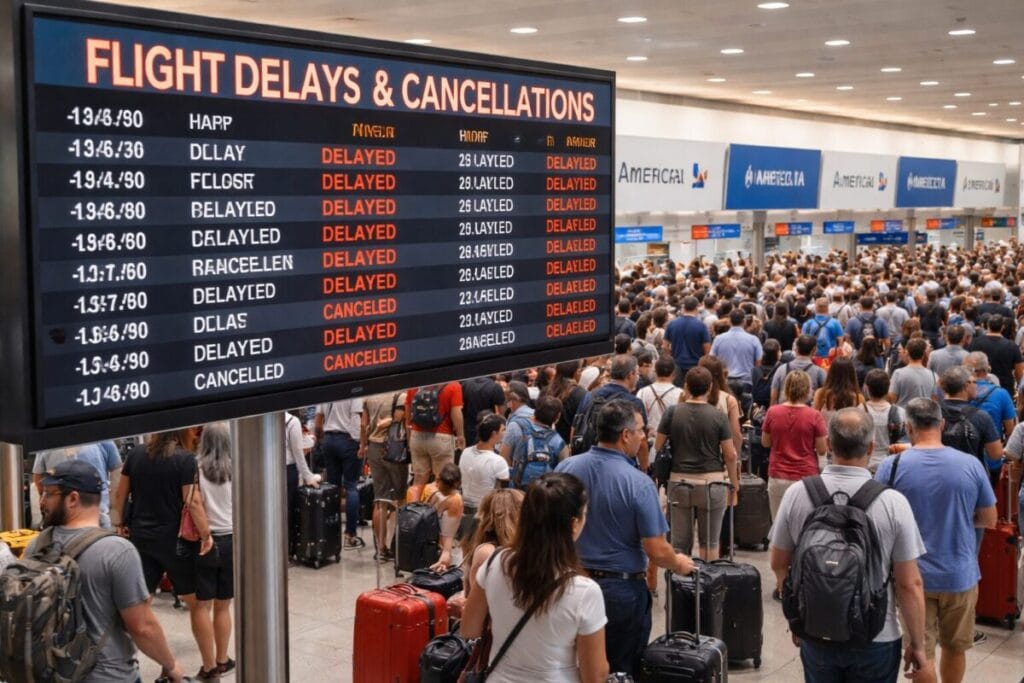
The U.S. aviation system faced heavy strain as airlines canceled over 240 flights and delayed more than 4,000 others across major airports nationwide. Travelers flying through Seattle, Detroit, Los Angeles, Newark, Anchorage, Chicago, and many other hubs dealt with long lines, tight seating space, missed connections, and extended wait times.
Industry sources linked the disruptions to a mix of staffing challenges, winter weather patterns, aircraft rotation delays, and strengthened airport security protocols. The ripple effect extended into both regional and national routes, creating congested terminals and overbooked later flights.
Multiple Airlines Affected as Delays Rise
Several airlines experienced notable operational setbacks. SkyWest, Envoy Air, American Airlines, United, Horizon, Delta, Hawaiian Airlines, and Alaska Airlines all reported cancellations. SkyWest topped the list with more than 70 canceled flights and over 500 delays as crew availability and scheduling pressure intersected.
American Airlines and United also recorded several hundred delayed flights as passenger volumes surged on key domestic routes. Elevated seasonal demand added additional complexity to flight coordination and departure timelines.
Regional Carriers Feel the Strain
Regional airlines, which support many connecting routes into both major and smaller airports, faced some of the toughest impacts. These carriers often feed passengers into larger hubs such as Chicago, Los Angeles, and Seattle for onward travel. When disruptions occur at the regional level, the delays stack up across the network.
Horizon, Republic, and PSA Airlines reported varying degrees of cancellations and schedule adjustments. Hawaiian Airlines and GoJet also experienced operational inconsistencies, affecting island, coastal, and midwestern travelers.
Major Airports Report Strongest Disruptions
Seattle-Tacoma International Airport recorded the highest number of cancellations among major departure points. Detroit Metropolitan Airport followed, facing route modifications and longer hold times on the tarmac. Los Angeles and Newark reported fewer cancellations but saw steady slowdowns through mid-day and evening travel waves.
Anchorage International Airport experienced a rare spike in cancellations due to winter conditions and aircraft repositioning issues. Chicago O’Hare, Atlanta, Houston, and Minneapolis also recorded scattered disruptions across their outbound networks.
Destination Airports Also See Cancellation Clusters
While major hubs wrestled with outbound congestion, several destination airports built up inbound cancellation numbers. Rogue Valley International registered the highest cancellation ratio at roughly one in five scheduled flights. Spokane, Fresno Yosemite, and South Bend followed with elevated cancellation percentages relative to their typical daily traffic patterns.
Miami, Chicago O’Hare, Reagan National, and LaGuardia saw more delays than cancellations, suggesting that inbound operational flow remained intact but slowed.
Why the System Came Under Pressure
A mix of contributing factors aligned to create the disruption produced across the national aviation grid:
Staffing Gaps
Crew shortages and sick leaves remain a major issue in winter periods. Airlines have increased hiring over the past year but training pipelines continue to lag behind peak demand trends.
Weather and Seasonal Conditions
Winter weather patterns disrupted mid-western and northern states, while fog and wind slowed coastal airport operations. Even small time shifts in departure windows compound delays throughout the network.
Security and Screening
Strengthened screening procedures at select airports increased check-in times and security wait durations. This affected early departure windows and pushed some flights beyond scheduled slots.
Aircraft and Scheduling Logistics
Delayed aircraft repositioning, maintenance checks, and tighter turnaround schedules placed pressure on ground crews and gate operations.
Economic and Tourism Impact
Air travel interruptions extend beyond airport inconveniences. Tourism-focused destinations depend heavily on reliable air access for hotels, cruise ports, conferences, and seasonal travel programs. Extended delays create pronounced financial impacts for both tourism operators and travelers.
Visitors heading to Hawaii, Alaska, Florida, and major ski regions in the West encountered itinerary changes and unexpected overnight stays. Hotels near major airports reported increased same-day bookings as stranded travelers sought accommodation.
Officials and Airlines Respond
Airlines communicated schedule adjustments throughout the day to reduce cascading disruptions. Major carriers encouraged passengers to rebook travel during non-peak hours and use mobile apps for gate updates and boarding alerts.
Airport authorities emphasized that improvements to staffing, technology, and weather forecasting tools remain priorities for the year. Tourism agencies also noted that improving air reliability is essential for continued economic growth and traveler confidence.
Travel Outlook
Industry analysts expect seasonal flight disruptions to continue at times during the winter months. Airlines are expanding recruiting efforts for pilots, cabin crew, and ground staff. Infrastructure modernization projects at major airports aim to increase gate capacity and streamline security screening, though many upgrades will take years to complete.
Conclusion
More than 246 cancellations and over 4,200 delays mark a challenging period for U.S. commercial aviation. With both major airlines and regional carriers affected, the disruptions showcase the complex network that supports national tourism and travel. Improvements in staffing, scheduling efficiency, and airport infrastructure will remain key to stabilizing air travel and restoring reliability for millions of passengers.
For more travel news like this, keep reading Global Travel Wire