
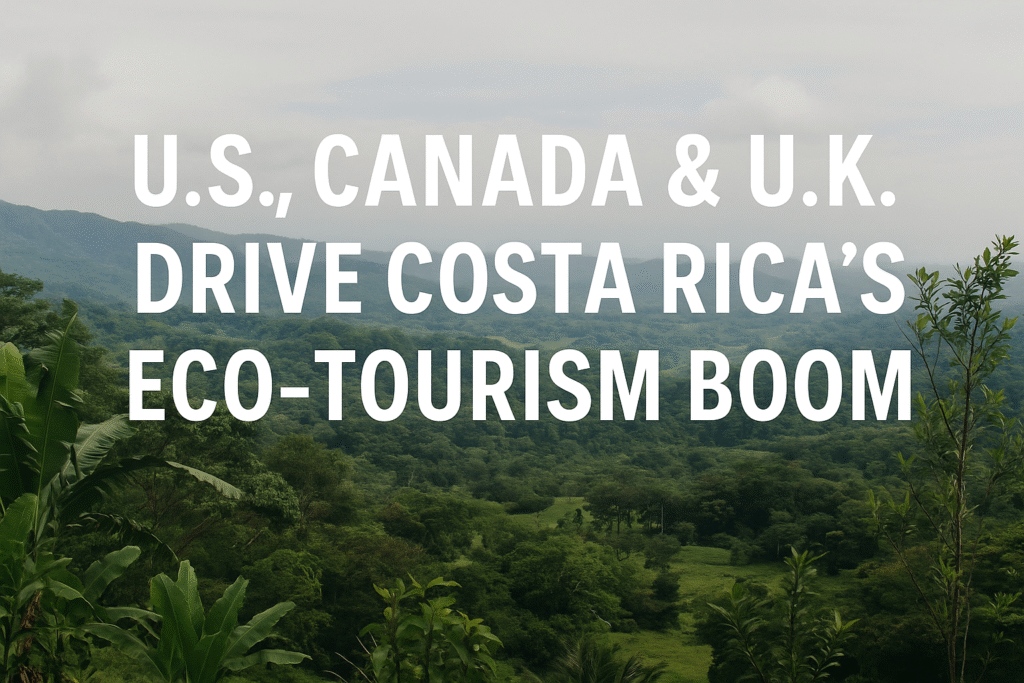
Costa Rica is seeing a fresh wave of eco-tourism growth, largely fueled by visitors from the United States, Canada, and the United Kingdom. Thanks to its unmatched biodiversity, conservation efforts, and a strategic partnership between the Eden Project and the Costa Rica Tourism Board, the country is further solidifying its reputation as a global leader in responsible travel. As more tourists seek nature-immersive experiences and environmentally conscious stays, Costa Rica is rising to meet demand with innovative programs, greener hospitality, and expanded flight connectivity.
North America and Europe Leading Visitor Growth
Recent tourism data shows that a majority of international arrivals to Costa Rica originate in the United States, Canada, and the U.K. In a strong recent year, U.S. travelers accounted for nearly 60 percent of arrivals, while Canada and the U.K. contributed comparably smaller—but growing—shares. Although preliminary figures suggest a slight dip in U.S. visitation for the current year, interest in sustainable travel and nature-based experiences remains high. Canadian and British travelers have shown growing appetite for eco-lodges, cloud forest treks, and wildlife sanctuaries.
This trend aligns with broader shifts in traveler priorities: destinations that champion conservation, ethical tourism, and environmental responsibility are gaining preference. Costa Rica’s long-standing commitment to those ideals gives it a competitive edge.
The Eden Project Collaboration: Planting the Seeds of Eco Innovation
Central to Costa Rica’s push into deeper eco-tourism is a collaboration with the Eden Project, renowned for its botanical and ecological initiatives. This alliance supports reforestation, sustainable agroforestry, and education efforts, particularly in the Nicoya Peninsula, where efforts focus on restoring native forest species, planting cacao trees within mixed systems, and creating interpretive nature trails.
The partnership’s goal: to link tourism with active conservation. Visitors can now engage in immersive experiences—planting saplings, learning about forest restoration, and walking eco-interpretive trails—enhancing their connection to nature while contributing to real ecological outcomes. This model helps shift tourism from passive observation toward active stewardship.
Hospitality Embraces Green Standards
Costa Rica’s lodging sector is rapidly updating to match rising traveler expectations. Major hotel brands—such as Marriott, Hilton, and Four Seasons—alongside boutique eco-lodges, are securing green certifications and embedding sustainable practices across operations. These measures include renewable energy use, rainwater harvesting, solar heating, recycling, and locally sourced organic food offerings.
Eco-lodges, treehouse-style cabins, and rural guesthouses are particularly in demand. Many guests now base their decisions not just on comfort, but also on a property’s environmental credentials. As a result, these green lodgings are attracting a growing share of bookings, especially from travelers from North America and Europe who prioritize sustainability.
Airlines Expand Access to Costa Rica
To accommodate increasing interest, airline connectivity to Costa Rica has expanded substantially. U.S. carriers like American, Delta, and United operate multiple flights daily from major hubs like Miami and Dallas into San José and Liberia. From Canada, non-stop routes now connect Toronto and Vancouver directly to the country, enhancing ease of travel for Canadian tourists.
European access has improved too. The U.K. sees direct flights from London to San José, while seasonal services link Paris and Berlin to Costa Rica through major European airlines. The result: more seamless access for eco-minded travelers across North America and Europe, reducing barriers to visiting Costa Rica’s natural wonders.
Economic & Environmental Benefits for Communities
The eco-tourism focus is not just good for marketing—it’s driving real benefits to communities in rural and forested regions. Local guides, artisans, and small-scale operators are seeing increased participation in the tourism value chain. Indigenous tourism, agroecology visits, and forest conservation programs supported by practice are bringing income to remote areas in harmony with nature.
Restaurants, cafes, and craft studios near protected areas are leaning into sustainability—with menus featuring organic and locally grown produce, and decor using recycled or reclaimed materials. This creates an integrated green economy where visitors support local livelihoods while reinforcing conservation goals.
Responsible Traveler Guidelines
To make the most of this eco-tourism boom and minimize environmental impact, visitors are encouraged to:
- Choose certified green accommodations that prioritize energy efficiency, water conservation, and ecological protection.
- Respect wildlife and habitats by following guidelines, keeping distance, and avoiding behavior that stresses animals.
- Support local communities by buying crafts, engaging local guides, and participating in community-led tours.
- Minimize waste by using reusable water bottles, avoiding single-use plastics, and packing light.
- Prefer direct routes or lower-emission connections if possible, and consider carbon offset options through trusted programs.
Looking Ahead: Sustaining the Momentum
Costa Rica’s strategy—blending tourism growth with ecological protection—offers a case study for other nature-rich destinations. The Eden Project partnership, increasing flight access, and evolving hospitality standards combine to position the country as a top pick for travelers who want beauty and meaning in their journey.
Going forward, continued investment in reforestation, trail maintenance, regulation enforcement, and community training will be vital to ensure the model remains sustainable. As visitor demand from the U.S., Canada, and the U.K. continues, Costa Rica is poised to reap both ecological and economic rewards—while preserving the very landscapes that draw people to its shores.
In short, Costa Rica isn’t just growing its visitor numbers. It is growing more thoughtfully—ensuring that future travelers can enjoy its forests, wildlife, and landscapes without leaving behind harm. The world is watching, and Costa Rica is leading the way.
For more travel news like this, keep reading Global Travel Wire