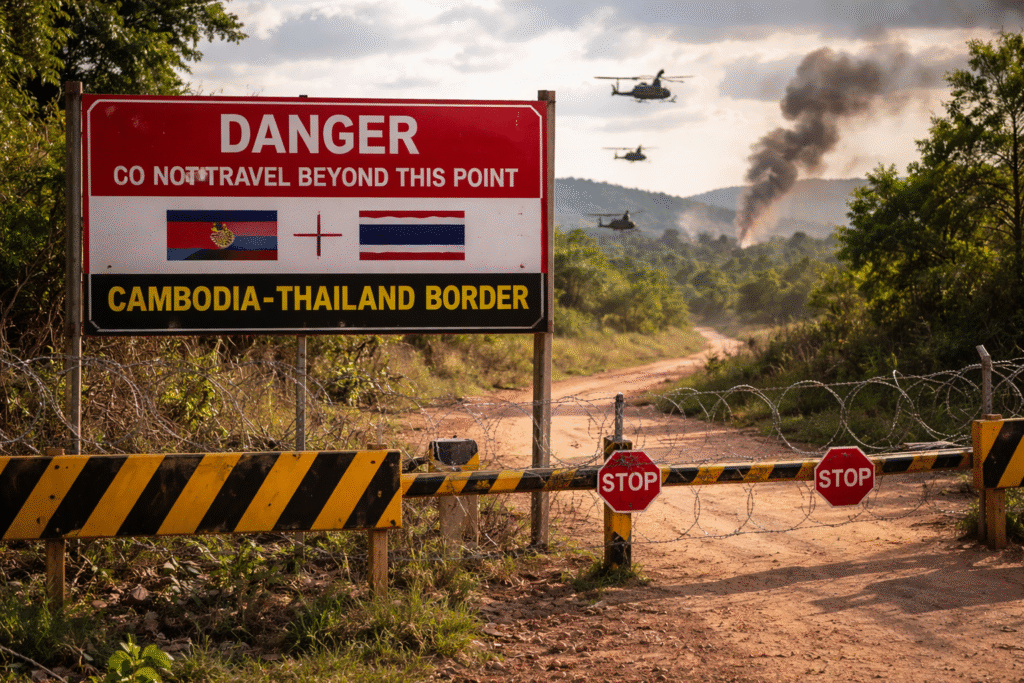
Travel conditions along the Cambodia–Thailand border remain fragile as security concerns continue to affect border-adjacent areas. The U.S. Embassy is closely tracking developments following reports of military activity and cross-border incidents that began in mid-December. These events have raised concerns for travelers and have direct implications for tourism movement in the region.
Isolated air operations and intermittent cross-border fire have contributed to an unstable environment. Some activity has occurred well beyond immediate border zones, reaching deeper into nearby provinces. This has led officials to describe the situation as unpredictable, with conditions capable of changing quickly.
For travelers, especially those unfamiliar with the region, this volatility increases risk. As a result, official guidance now plays a critical role in shaping travel decisions and itinerary planning.
U.S. Embassy Issues Clear Travel Avoidance Guidance
The U.S. Embassy has advised all U.S. citizens to avoid travel within 50 kilometers of the Cambodia–Thailand border. This guidance applies to both tourists and residents currently in the region. Officials cite ongoing hostilities and limited stability as the primary reasons for the warning.
The advisory also notes constraints on emergency response capabilities in affected provinces. Medical, evacuation, and consular assistance may not be readily available if conditions worsen. This limitation adds another layer of risk for travelers considering border-area visits.
Even outside the 50-kilometer zone, travelers are urged to remain alert. Security developments may spill over into nearby areas with little warning. Caution, awareness, and flexibility remain essential for anyone traveling in the broader region.
What Travelers Near the Border Should Know
For travelers already close to affected areas, personal safety remains the top priority. Authorities advise following instructions issued by Cambodian security services at all times. Local guidance may include temporary movement restrictions or shelter-in-place measures if tensions escalate.
Travelers are also encouraged to maintain reliable communication methods. Mobile phones should remain charged, and emergency contacts should stay accessible. Having clear plans for accommodation changes or route adjustments can reduce stress during sudden developments.
Situational awareness matters. Travelers should stay informed through official alerts and avoid unnecessary travel near sensitive areas. Even short trips toward the border may carry increased risk under current conditions.
Impact on Tourism and Cross-Border Travel Plans
Security advisories often reshape tourism behavior, and the current situation is no exception. Border regions that once attracted overland travelers, cultural tourists, and adventure seekers now see reduced activity. Many travelers are choosing alternative destinations or delaying plans altogether.
Tour operators and hotels in nearby regions may also adjust offerings. Routes that pass close to the border may change, while transport schedules may face disruptions. Travelers should confirm arrangements in advance and remain open to last-minute changes.
This shift does not halt tourism across Cambodia or Thailand. Instead, it redirects movement toward areas considered more stable. Urban centers, coastal destinations, and major cultural hubs remain active, though travelers may approach travel planning with greater caution.
Travel Planning in Times of Regional Uncertainty
Periods of uncertainty highlight the importance of flexible travel planning. Travelers are advised to build extra time into itineraries and avoid rigid schedules. Choosing accommodations with flexible cancellation policies can provide peace of mind.
Emergency preparedness also becomes part of responsible tourism. Travelers benefit from knowing nearby hospitals, transport hubs, and safe assembly points. Carrying copies of identification and travel documents adds another layer of preparedness.
Insurance coverage deserves careful review. Policies that include medical evacuation and trip interruption coverage offer added protection in unstable environments.
Tourism Safety and the Role of Travel Awareness
Travel awareness remains a core element of tourism safety during security disruptions. Access to accurate information allows travelers to make informed choices and reduce exposure to risk. The U.S. Embassy’s ongoing monitoring underscores the importance of staying connected to official updates.
Understanding the limits of emergency assistance also shapes traveler expectations. In areas where support may be delayed, self-reliance and caution take on greater importance. This awareness often leads travelers to prioritize safety over proximity to high-risk zones.
Preparedness does not signal fear. Instead, it reflects responsible travel behavior in complex environments. Many travelers integrate these practices into their routines during periods of regional tension.
Ongoing Monitoring and Outlook for Travelers
Security conditions along the Cambodia–Thailand border remain under active observation. Since December 11, reports of cross-border incidents have continued to influence official guidance. Authorities stress that the situation remains fluid.
Travelers in Cambodia or Thailand should expect updates as conditions evolve. Compliance with local instructions and attention to official alerts remain essential. Sudden changes may occur without extensive advance notice.
For now, the central guidance remains unchanged. Travelers should avoid the border zone, stay informed, and prioritize personal safety. Until stability improves, these measures will continue to shape tourism and travel decisions connected to the Cambodia–Thailand border region.
For more travel news like this, keep reading Global Travel Wire