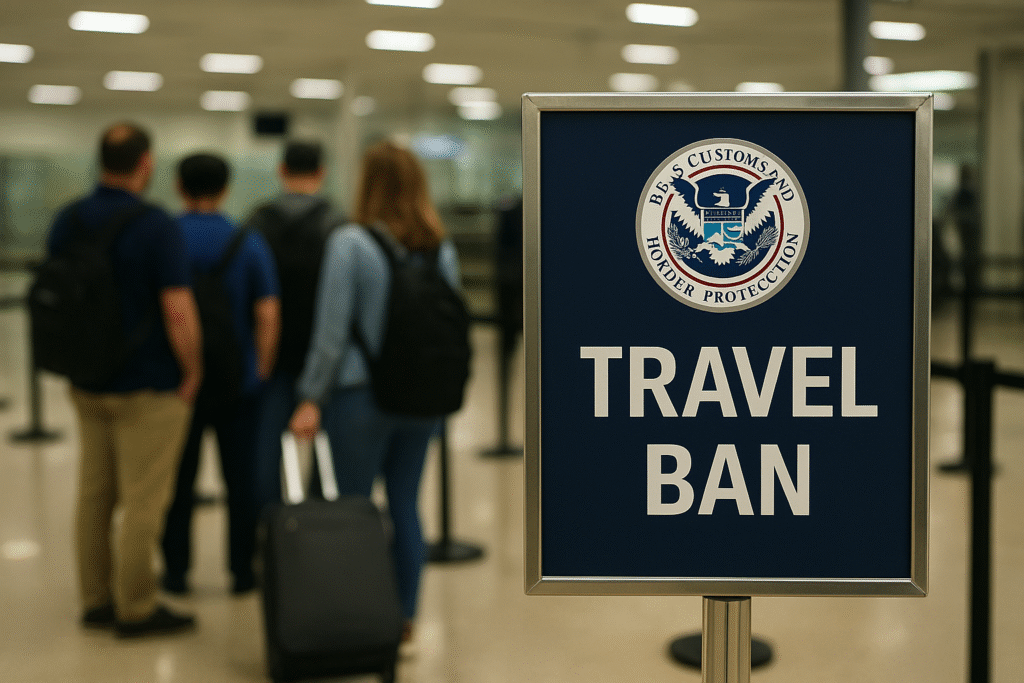
The United States is preparing to widen its travel ban to include more than 30 countries. This move could reshape global mobility and influence millions of travel plans in 2025. The Department of Homeland Security is reviewing a broader list of countries that may face stricter entry limitations due to security and vetting concerns. The expansion builds on existing restrictions and aims to strengthen border controls in response to emerging global risks.
The updated ban is expected to touch travelers from regions facing governance challenges or lacking strong security systems. As countries await the final announcement, uncertainty is already affecting tourism, business travel, and academic mobility.
Why the U.S. Is Expanding Its Travel Ban
The United States cites enhanced national security as the main reason behind the proposed expansion. According to U.S. authorities, several countries do not meet updated global standards for identity verification and background checks. This creates potential risks for visa processing and border control.
The expanded ban focuses on:
- Nations with limited data-sharing capabilities
- Countries with weak passport security
- Regions with ongoing instability
- Areas unable to verify traveler identities reliably
These concerns are part of broader global trends where governments are tightening entry screening to protect national interests. The U.S. is one of many nations modernizing its travel and immigration systems, resulting in new layers of examination for inbound travelers.
How Many Countries Will Be Affected?
The current list includes 19 countries, many in Africa, the Middle East, and Asia. Under the new plan, this number may rise to more than 30. While the final list is not yet public, countries with limited diplomatic cooperation or outdated traveler vetting systems are expected to be considered.
This expansion could impact millions of travelers who were planning vacations, business trips, or higher education programs.
Impact on Tourism: A Major Setback for Global Travel
Tourism is one of the most affected sectors. The United States remains one of the world’s most visited countries, welcoming more than 75 million tourists annually before the pandemic. Any additional restrictions can significantly slow recovery in tourism-dependent regions.
How Tourism Will Be Affected
- Reduced visitor numbers: Travelers from affected countries may face visa suspension or extended processing delays.
- Rising travel cancellations: Families and tourists may postpone or cancel trips due to uncertainty.
- Economic ripple effects: Airlines, hotels, and tour operators may see decreased bookings, especially during peak seasons.
Many popular travel markets that send large numbers of visitors to the U.S. may feel the economic and emotional strain of these developments.
Consequences for Business Travelers
Business mobility is a key driver of global commerce. Companies often rely on international travel for meetings, trade negotiations, conferences, and training.
With the expanded ban:
- Professionals may face longer visa processes.
- International conferences in the U.S. may see fewer participants.
- Global corporations may shift business meetings elsewhere due to uncertainty.
For countries focused on strengthening ties with the U.S., the move could slow cooperation and delay new investments.
Students May Face New Barriers
The U.S. hosts more than one million international students yearly. Many come from regions expected to be reviewed under the new travel guidelines.
Students May Experience:
- Visa delays
- Increased documentation requirements
- The need to explore alternative study destinations
Canada, the U.K., and Australia may become more attractive options as students look for reliable visa timelines and fewer travel uncertainties.
How Travelers Can Prepare for Potential Changes
Although the official list is pending, travelers can begin preparing for possible changes.
Important Steps:
- Check U.S. Embassy updates for entry rules related to your nationality.
- Review visa status and ensure all documents are current.
- Allow extra time for visa processing, as delays may increase.
- Consider travel insurance that covers unexpected cancellations.
- Keep alternative travel plans ready, especially for business and academic trips.
Travelers should also stay in contact with airlines and travel advisers who can help navigate new policy updates.
What This Means for Global Mobility
The expansion comes at a crucial time when many nations are rebuilding travel confidence. Stronger border rules are becoming common worldwide as governments strengthen security systems. This trend suggests a future where international travel may involve stricter digital identity checks, advanced biometric systems, and increased cooperation between countries.
For now, the proposed U.S. expansion raises concerns about fairness, access, and global interconnectedness. Countries added to the list may engage in diplomatic talks to meet U.S. security benchmarks and restore travel privileges.
The Road Ahead for International Travelers
The expanded travel ban highlights the evolving landscape of global movement. While national security remains a priority, the changes bring new challenges for travelers, businesses, and international students. As millions await clearer guidance, the global travel industry prepares for another wave of adjustments.
The coming months will be critical as more details are released. Travelers should remain informed, flexible, and proactive to navigate the developing rules with confidence.
For more travel news like this, keep reading Global Travel Wire