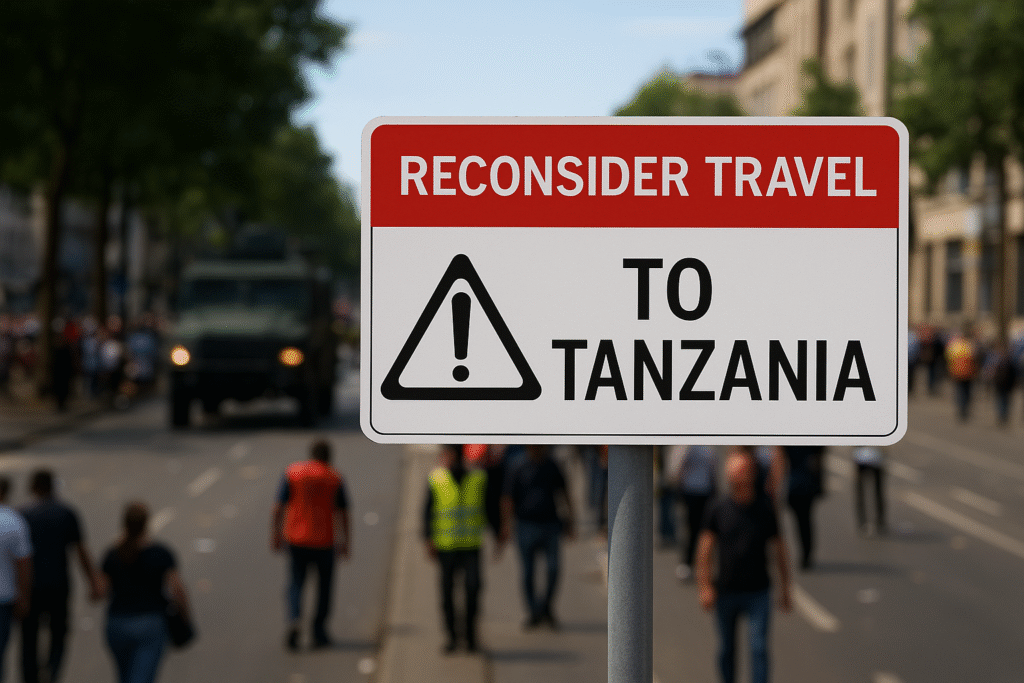
The United States has upgraded its travel advisory for Tanzania to Level 3, meaning “Reconsider Travel.” This shift reflects concerns about civil unrest, rising crime, and terrorism risks in the East African country.
Tourists heading to Tanzania’s famed safari parks, beaches or climbing trails must now more carefully assess safety before booking.
What Triggered the Advisory
Political Unrest and Protest Violence
Tanzania’s recent general election sparked widespread protests and security crackdowns. Demonstrations over alleged unfair voting and opposition exclusion led to curfews, internet shutdowns and reports of fatal violence.
Such conditions disrupt travel logistics and raise unpredictable safety issues for visitors.
Terrorism and Regional Risks
Government warnings highlight potential militant attacks, especially near borders. Some coastal and remote zones are flagged as higher risk—travellers should avoid unescorted trips and isolated routes.
Crime and Tourist Vulnerability
Visitors face increasing threats from robbery, assault and ‘express kidnappings’. Tourist spots and transport hubs require extra vigilance.
Specific Alerts for LGBTQ+ Travellers
Same-sex relations are illegal in Tanzania and LGBTQ+ individuals may face harassment, detention or invasive treatment. The advisory warns of higher risk for these travellers and urges extreme caution.
Implications for Tanzania’s Tourism
Tanzania’s hallmark destinations—wildlife safaris in the Serengeti or Ngorongoro, beach resorts in Zanzibar and treks up Kilimanjaro—now operate amid heightened caution from international travellers.
Many tour operators are offering flexible bookings, while some have temporarily suspended Tanzania itineraries. The hospitality and retail sectors in tourist regions are already feeling the impact as global visitors reassess travel plans.
What Travellers Should Consider
Travellers Already in Tanzania
- Stay updated via local news and your home country’s embassy alerts.
- Avoid demonstrations, large gatherings and areas known for unrest.
- Maintain a low profile; discreet behaviour is recommended for LGBTQ+ visitors.
- Use only licensed transport and stay in secure, well-rated accommodations.
- Have a backup plan for flights and communications—disruptions may occur.
Planning Future Travel
- Confirm flexibility of bookings in case of sudden cancellations.
- Consider alternate destinations if you are risk-averse or part of an LGBTQ+ group.
- If travel proceeds, choose regions with better security and avoid high-risk zones near borders or remote islands.
- Ensure full travel insurance covers trip interruption and medical evacuation.
The Wider Safety Picture
International governments, including the U.K. and Canada, mirror the U.S. stance by advising against all but essential travel to Tanzania, especially in certain regions. Curfews and security checkpoints are active in urban areas.
Human rights groups warn of disproportionate force used during protests, increasing concerns about safety for both locals and foreign visitors.
Balancing Tourism Appeal with Caution
The natural draws of Tanzania remain unchanged: wildlife migrations, pristine coastlines and unique landscapes. But in the current climate, tourists must weigh that appeal against real-world risks.
Selective travel—focused on safer, well-known destinations, structured excursions, and reliable local operators—may still be possible. But flexibility, informed decision-making and awareness of the evolving situation are now more important than ever.
Final Takeaways
Tanzania remains an extraordinary destination—but right now, it demands extra caution. Whether you are already there or planning a trip, monitor local developments, adjust expectations, and prioritize personal safety above all. The Level 3 advisory signals a shift: this is no longer a routine holiday booking but a decision that must reflect current realities.
For more travel news like this, keep reading Global Travel Wire